Wilson Caroline L, Mann Jelena, Walsh Meagan, Perrugoria Maria J, Oakley Fiona, Wright Matthew C, Brignole Chiara, Di Paolo Daniela, Perri Patrizia, Ponzoni Mirco, Karin Michael, Mann Derek A
Institute of Cellular Medicine, Faculty of Medical Sciences, Newcastle University, Newcastle upon Tyne, United Kingdom.
Experimental Therapy Unit, Laboratory of Oncology, Istituto Giannina Gaslini, Genoa, Italy.
PLoS One. 2014 Jan 8;9(1):e83391. doi: 10.1371/journal.pone.0083391. eCollection 2014.
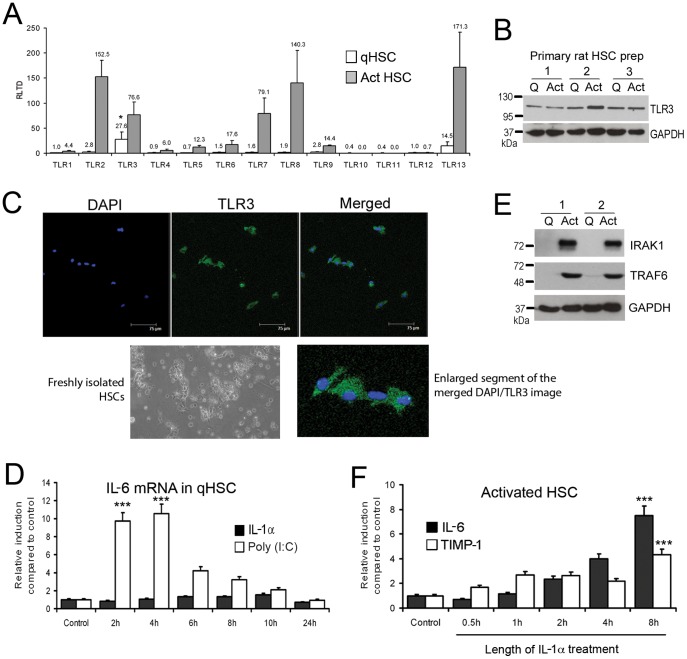
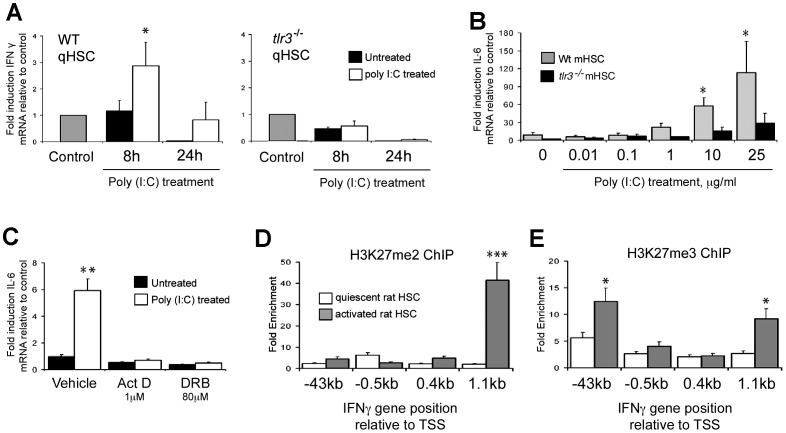
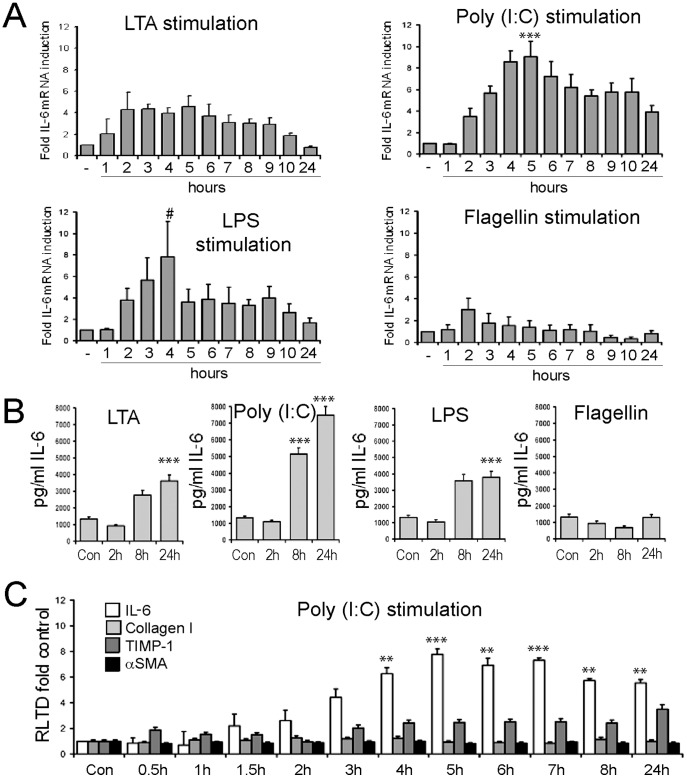
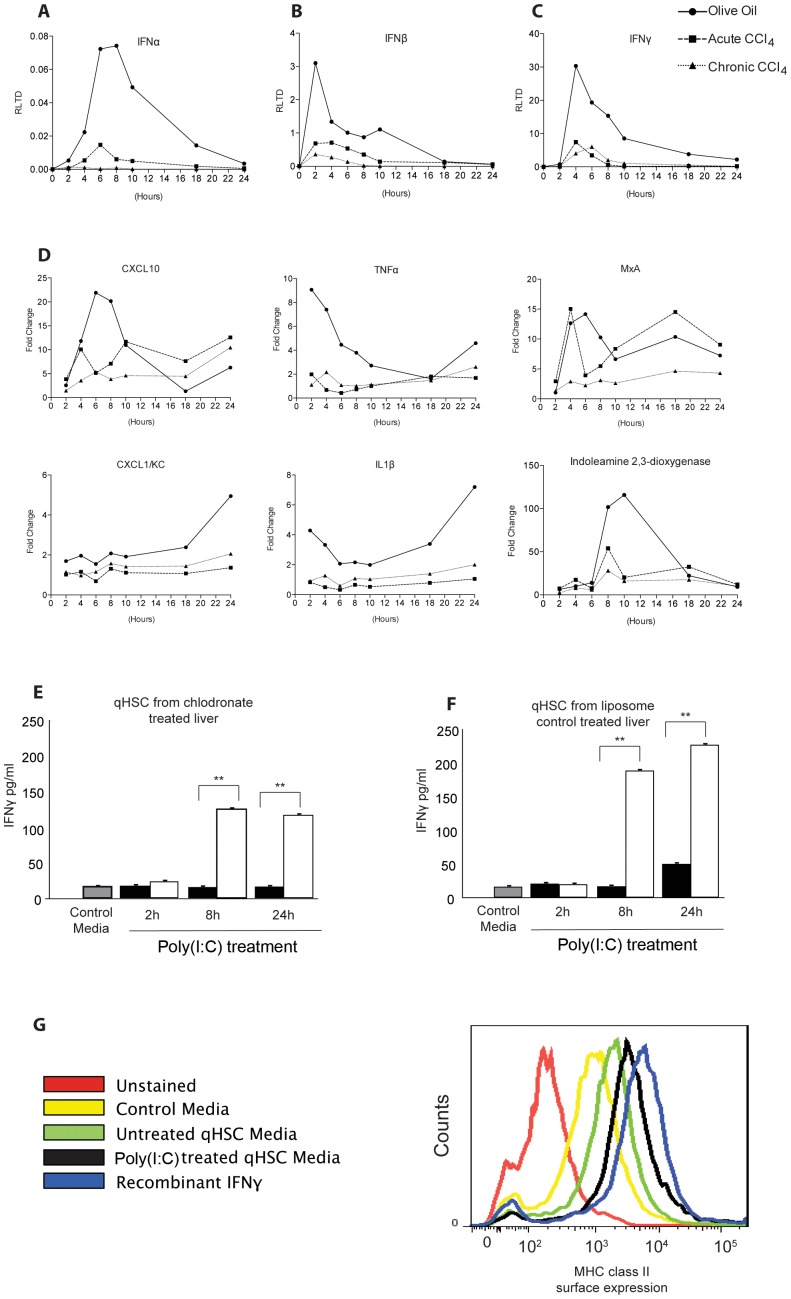
Toll-like Receptor 3 (TLR3) is a pathogen pattern recognition receptor that plays a key role in innate immunity. TLR3 signalling has numerous functions in liver, both in health and disease. Here we report that TLR3 is expressed by quiescent hepatic stellate cells (HSC) where it functions to induce transcription and secretion of functional interferons as well as a number of other cytokines and chemokines. Upon transdifferentiation into myofibroblasts, HSCs rapidly loose the ability to produce interferon gamma (IFNγ). Mechanistically, this gene silencing may be due to Polycomb complex mediated repression via methylation of histone H3 lysine 27. In contrast to wild type, quiescent HSC isolated from tlr3 knockout mice do not produce IFNγ in response to Poly(I∶C) treatment. Therefore, quiescent HSC may contribute to induction of the hepatic innate immune system in response to injury or infection.
Toll样受体3(TLR3)是一种病原体模式识别受体,在固有免疫中起关键作用。TLR3信号传导在肝脏的健康和疾病状态下均具有多种功能。在此我们报告,静止的肝星状细胞(HSC)表达TLR3,其功能是诱导功能性干扰素以及许多其他细胞因子和趋化因子的转录和分泌。在转分化为肌成纤维细胞后,肝星状细胞迅速丧失产生干扰素γ(IFNγ)的能力。从机制上讲,这种基因沉默可能是由于多梳蛋白复合体通过组蛋白H3赖氨酸27的甲基化介导的抑制作用。与野生型相比,从tlr3基因敲除小鼠分离出的静止肝星状细胞在接受聚肌苷酸-聚胞苷酸(Poly(I∶C))处理时不产生IFNγ。因此,静止的肝星状细胞可能有助于在肝脏受到损伤或感染时诱导固有免疫系统。