Gilead Sciences Inc., Foster City, California, United States of America.
PLoS One. 2014 Jan 9;9(1):e84808. doi: 10.1371/journal.pone.0084808. eCollection 2014.
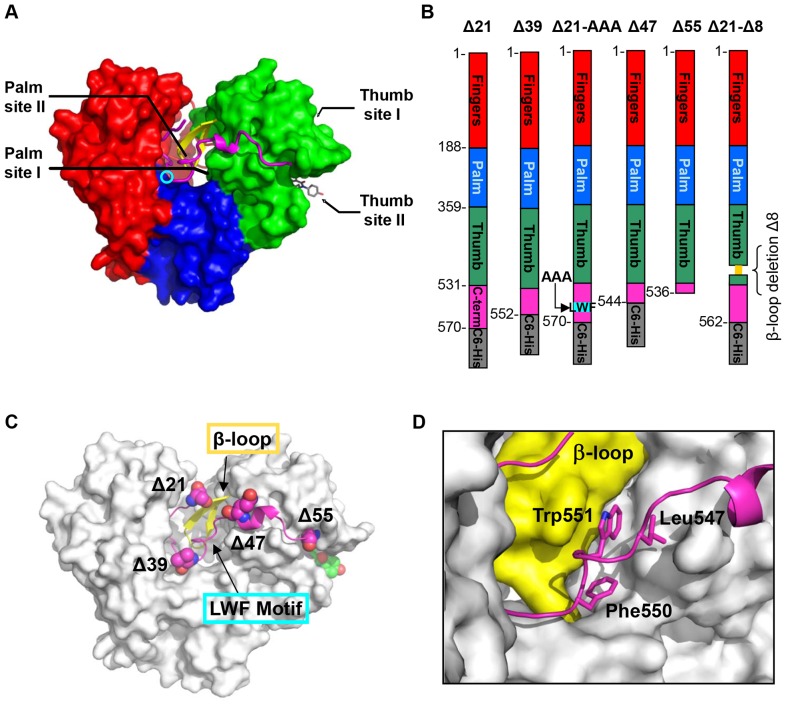
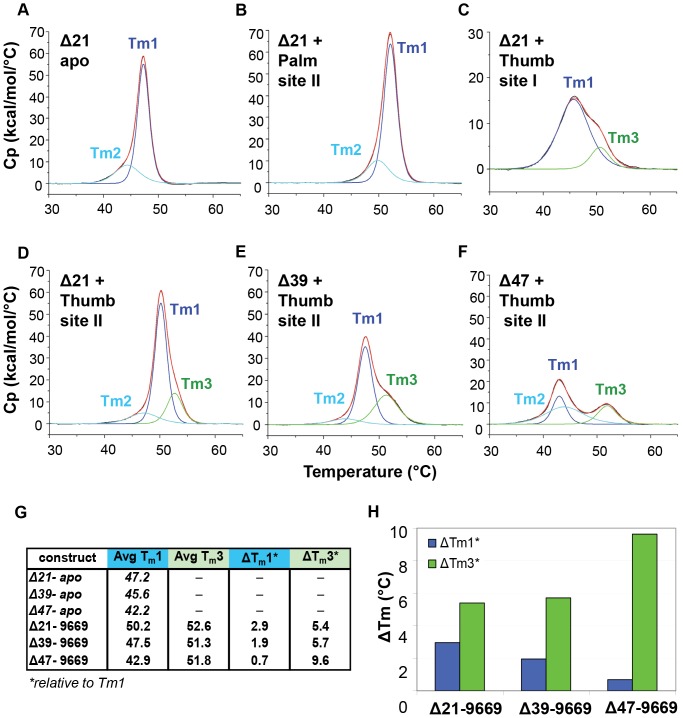
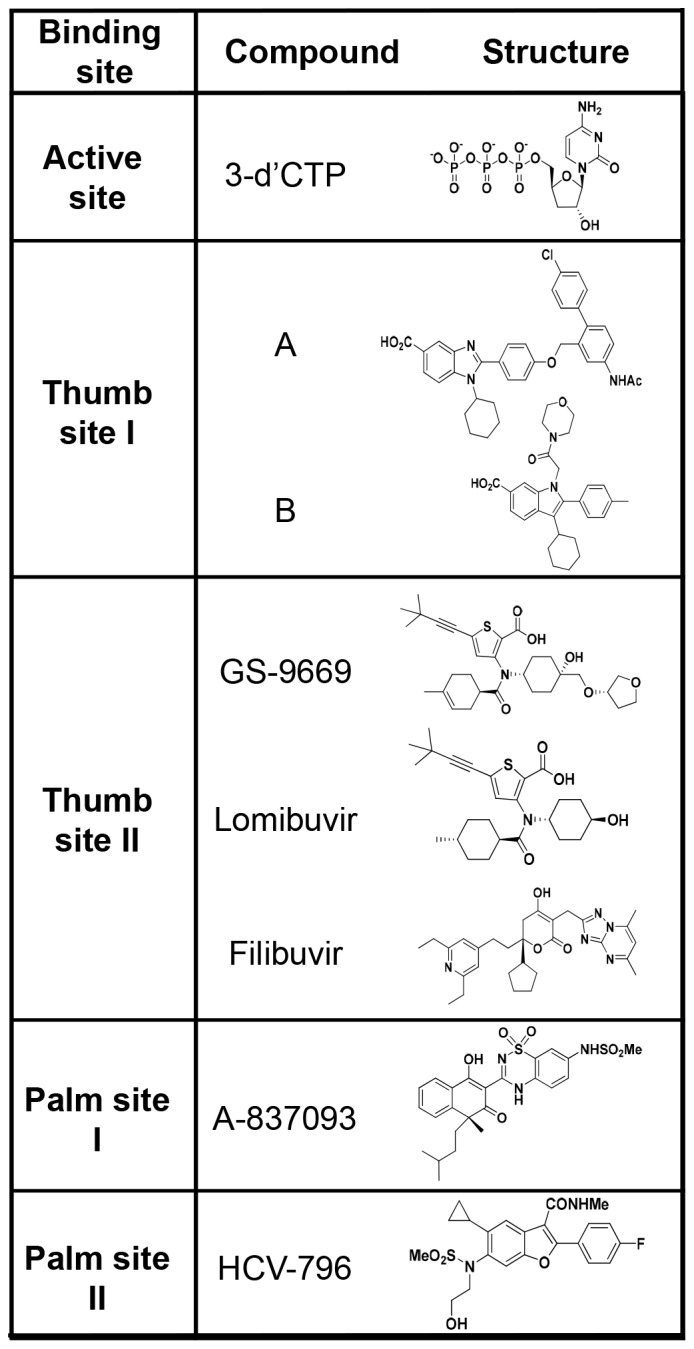
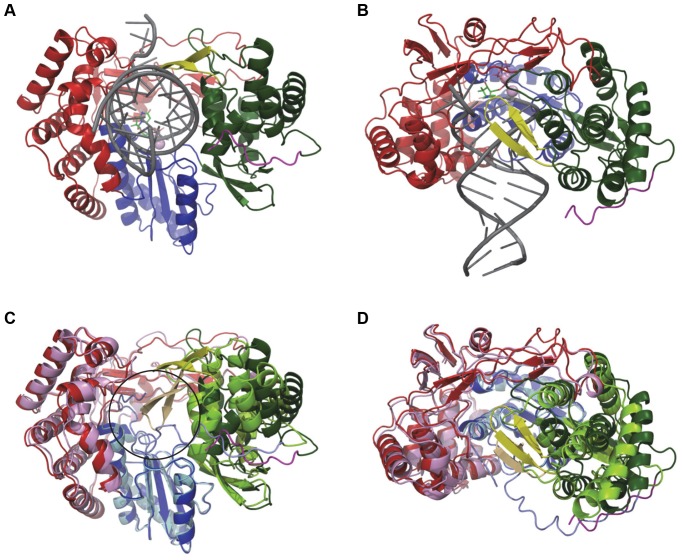
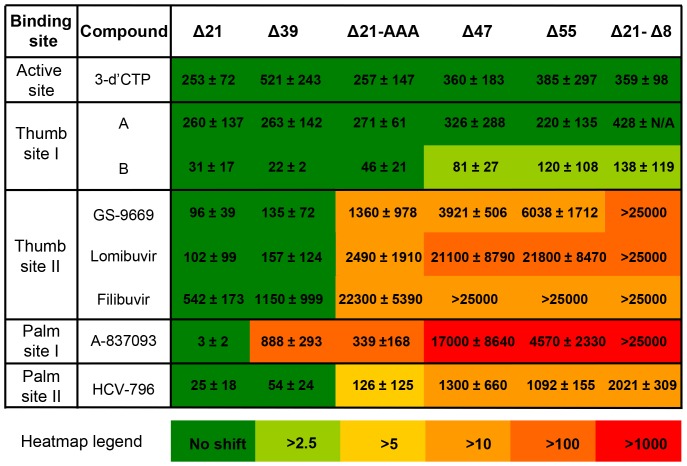
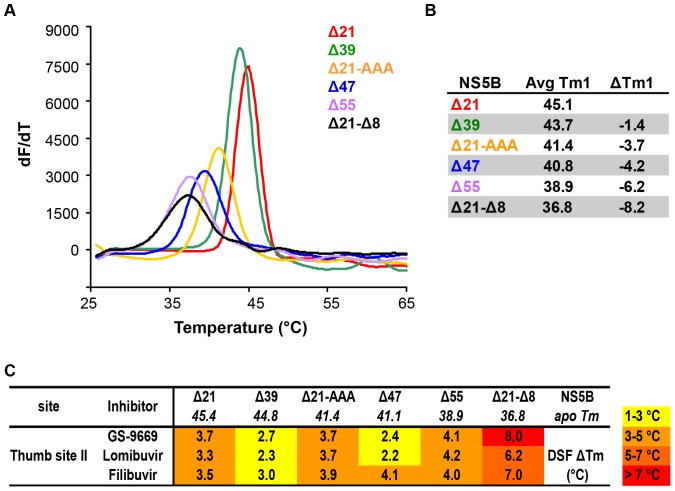
Elucidation of the mechanism of action of the HCV NS5B polymerase thumb site II inhibitors has presented a challenge. Current opinion holds that these allosteric inhibitors stabilize the closed, inactive enzyme conformation, but how this inhibition is accomplished mechanistically is not well understood. Here, using a panel of NS5B proteins with mutations in key regulatory motifs of NS5B--the C-terminal tail and β-loop--in conjunction with a diverse set of NS5B allosteric inhibitors, we show that thumb site II inhibitors possess a distinct mechanism of action. A combination of enzyme activity studies and direct binding assays reveals that these inhibitors require both regulatory elements to maintain the polymerase inhibitory activity. Removal of either element has little impact on the binding affinity of thumb site II inhibitors, but significantly reduces their potency. NS5B in complex with a thumb site II inhibitor displays a characteristic melting profile that suggests stabilization not only of the thumb domain but also the whole polymerase. Successive truncations of the C-terminal tail and/or removal of the β-loop lead to progressive destabilization of the protein. Furthermore, the thermal unfolding transitions characteristic for thumb site II inhibitor-NS5B complex are absent in the inhibitor-bound constructs in which interactions between C-terminal tail and β-loop are abolished, pointing to the pivotal role of both regulatory elements in communication between domains. Taken together, a comprehensive picture of inhibition by compounds binding to thumb site II emerges: inhibitor binding provides stabilization of the entire polymerase in an inactive, closed conformation, propagated via coupled interactions between the C-terminal tail and β-loop.
阐明 HCV NS5B 聚合酶拇指结构域 II 抑制剂的作用机制一直是一个挑战。目前的观点认为,这些变构抑制剂稳定了闭合的、无活性的酶构象,但这种抑制作用的机制尚不清楚。在这里,我们使用一组带有 NS5B 关键调节模体(C 端尾巴和β环)突变的 NS5B 蛋白,结合一组不同的 NS5B 变构抑制剂,表明拇指结构域 II 抑制剂具有独特的作用机制。酶活性研究和直接结合测定的组合表明,这些抑制剂需要两个调节元件来维持聚合酶抑制活性。去除任何一个元件对拇指结构域 II 抑制剂的结合亲和力几乎没有影响,但显著降低了它们的效力。与拇指结构域 II 抑制剂结合的 NS5B 显示出特征性的熔融曲线,这表明不仅稳定了拇指结构域,而且稳定了整个聚合酶。C 端尾巴和/或β环的连续截短导致蛋白的逐渐不稳定。此外,在结合抑制剂的结构中,没有特征性的拇指结构域 II 抑制剂-NS5B 复合物的热变性转变,这表明 C 端尾巴和β环之间的相互作用在结构域之间的通讯中起着关键作用。综上所述,化合物结合到拇指结构域 II 的抑制作用的综合图景出现了:抑制剂结合提供了整个聚合酶在无活性的闭合构象中的稳定性,通过 C 端尾巴和β环之间的偶联相互作用来传递。