Department of Animal and Plant Sciences, University of Sheffield, Western Bank, Sheffield, S10 2TN, UK; Department of Biosciences, University of Helsinki, PO Box 65 (Viikinkaari 1), FI-00014, Helsinki, Finland.
Mol Ecol. 2014 Mar;23(5):1071-84. doi: 10.1111/mec.12673. Epub 2014 Feb 17.
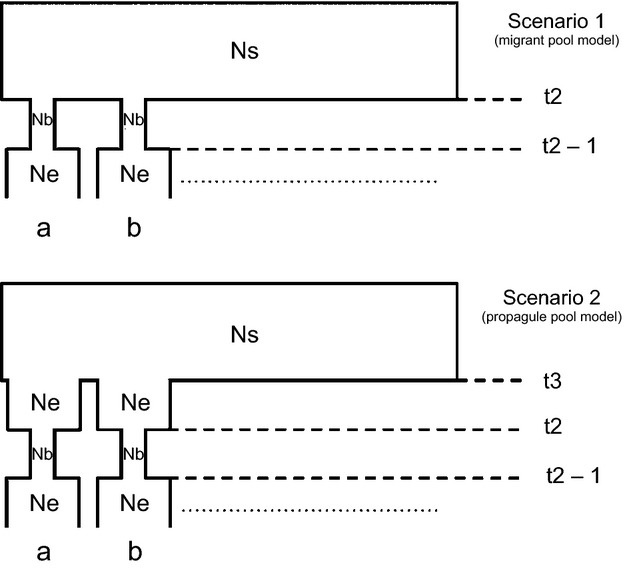
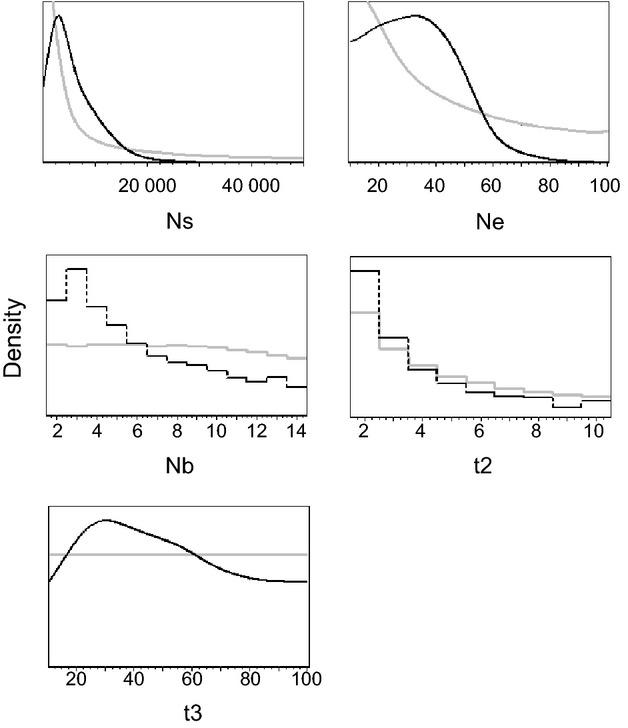
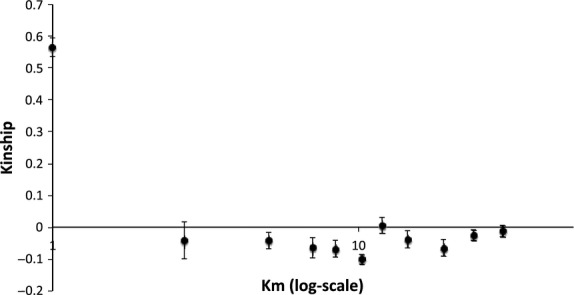
The number and demographic history of colonists can have dramatic consequences for the way in which genetic diversity is distributed and maintained in a metapopulation. The bed bug (Cimex lectularius) is a re-emerging pest species whose close association with humans has led to frequent local extinction and colonization, that is, to metapopulation dynamics. Pest control limits the lifespan of subpopulations, causing frequent local extinctions, and human-facilitated dispersal allows the colonization of empty patches. Founder events often result in drastic reductions in diversity and an increased influence of genetic drift. Coupled with restricted migration, this can lead to rapid population differentiation. We therefore predicted strong population structuring. Here, using 21 newly characterized microsatellite markers and approximate Bayesian computation (ABC), we investigate simplified versions of two classical models of metapopulation dynamics, in a coalescent framework, to estimate the number and genetic composition of founders in the common bed bug. We found very limited diversity within infestations but high degrees of structuring across the city of London, with extreme levels of genetic differentiation between infestations (FST = 0.59). ABC results suggest a common origin of all founders of a given subpopulation and that the numbers of colonists were low, implying that even a single mated female is enough to found a new infestation successfully. These patterns of colonization are close to the predictions of the propagule pool model, where all founders originate from the same parental infestation. These results show that aspects of metapopulation dynamics can be captured in simple models and provide insights that are valuable for the future targeted control of bed bug infestations.
殖民者的数量和人口统计学历史可能会对基因多样性在集合种群中的分布和维持方式产生巨大影响。臭虫(Cimex lectularius)是一种重新出现的害虫物种,由于与人类密切相关,导致其经常发生局部灭绝和殖民化,即集合种群动态。害虫防治会限制亚种群的寿命,导致经常发生局部灭绝,而人类促进的扩散则允许空斑块的殖民化。奠基事件通常会导致多样性急剧减少和遗传漂变的影响增加。再加上迁移受限,这可能会导致种群迅速分化。因此,我们预测种群结构会很强。在这里,我们使用 21 个新表征的微卫星标记和近似贝叶斯计算(ABC),在合并框架中研究了两个经典集合种群动态模型的简化版本,以估计常见臭虫的奠基者数量和遗传组成。我们发现感染内的多样性非常有限,但在伦敦市的高度结构,感染之间的遗传分化程度极高(FST=0.59)。ABC 结果表明,给定亚种群的所有奠基者都来自同一个亲本感染,并且殖民者的数量很少,这意味着即使是一只交配的雌性也足以成功地建立一个新的感染。这些殖民化模式接近繁殖池模型的预测,其中所有的奠基者都来自同一个亲代感染。这些结果表明,集合种群动态的某些方面可以用简单的模型来捕捉,并为未来针对臭虫感染的目标控制提供有价值的见解。