Thresher Ronald, Althaus Franziska, Adkins Jess, Gowlett-Holmes Karen, Alderslade Phil, Dowdney Jo, Cho Walter, Gagnon Alex, Staples David, McEnnulty Felicity, Williams Alan
CSIRO Wealth from Oceans Flagship, Hobart, Tasmania, Australia.
California Institute of Technology, Pasadena, California, United States of America.
PLoS One. 2014 Jan 22;9(1):e85872. doi: 10.1371/journal.pone.0085872. eCollection 2014.
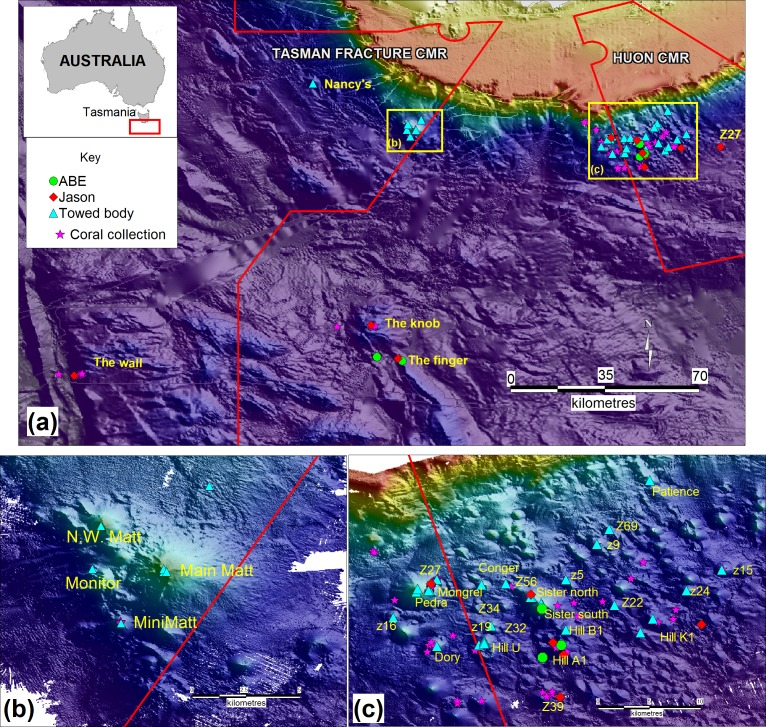
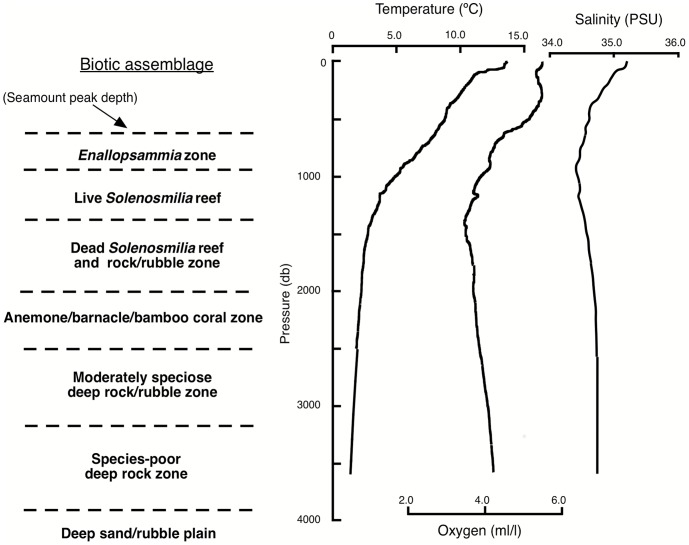
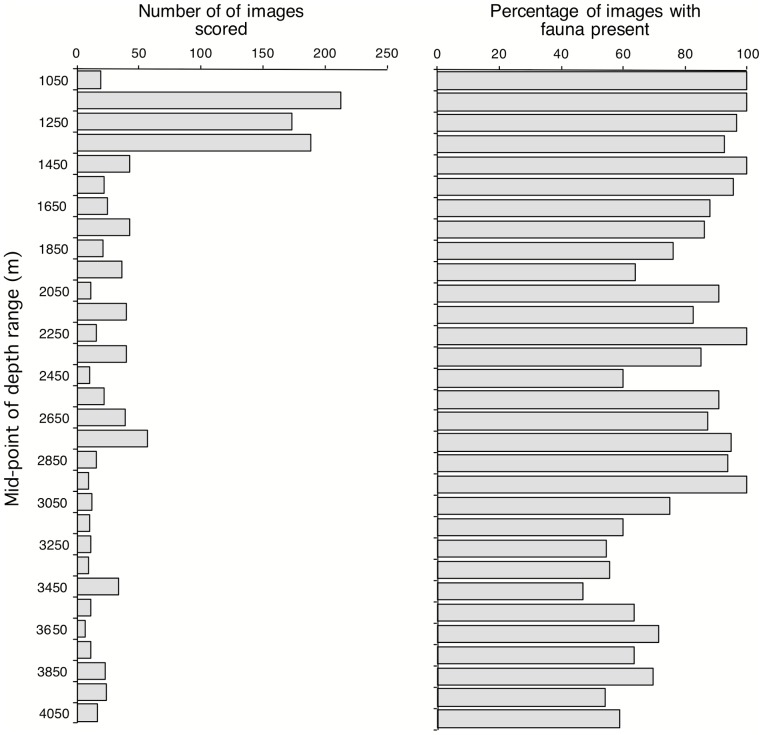
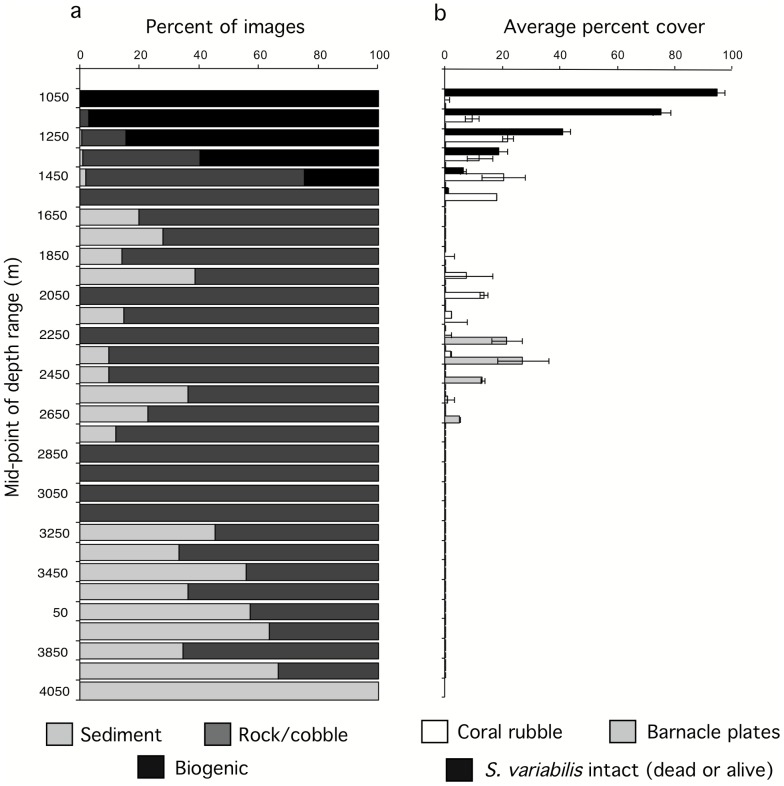
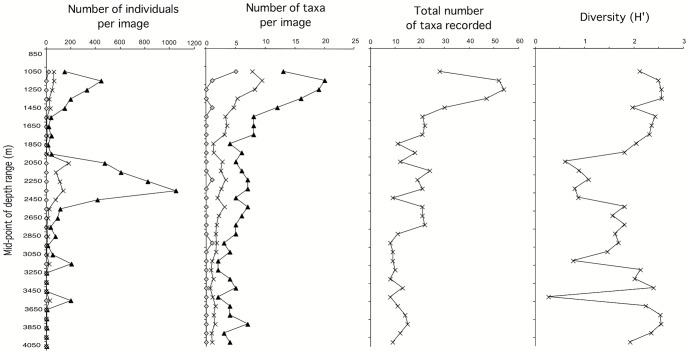
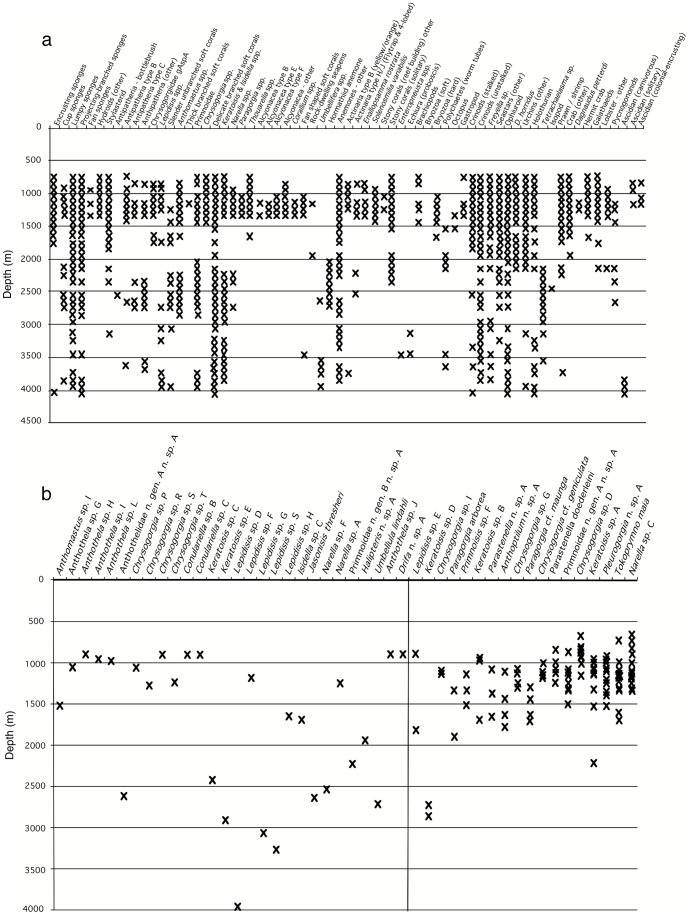
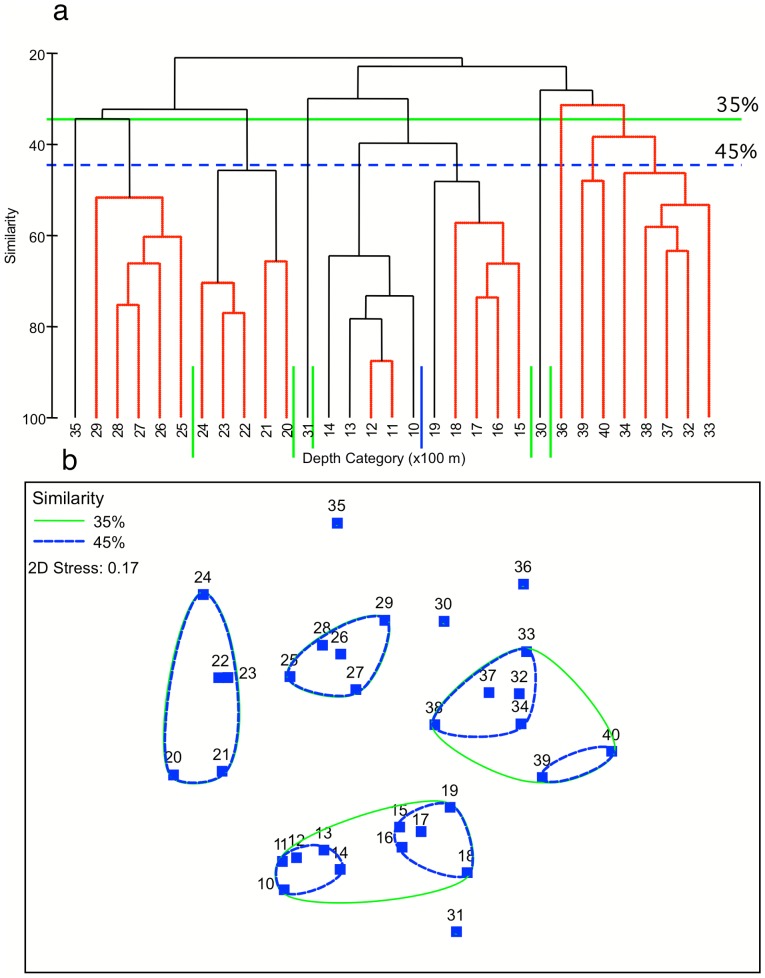
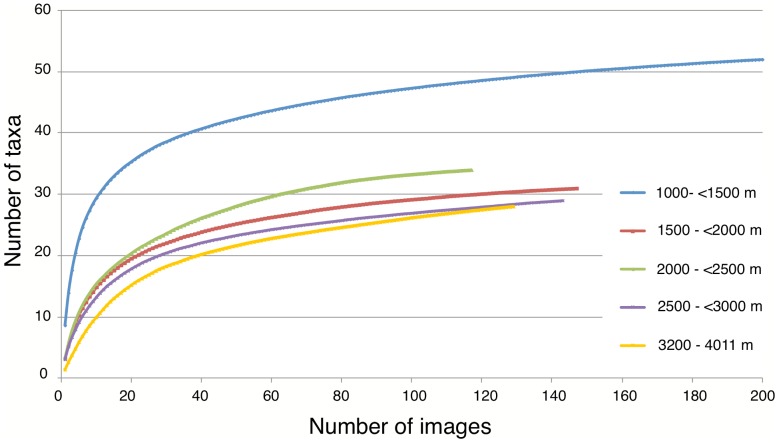
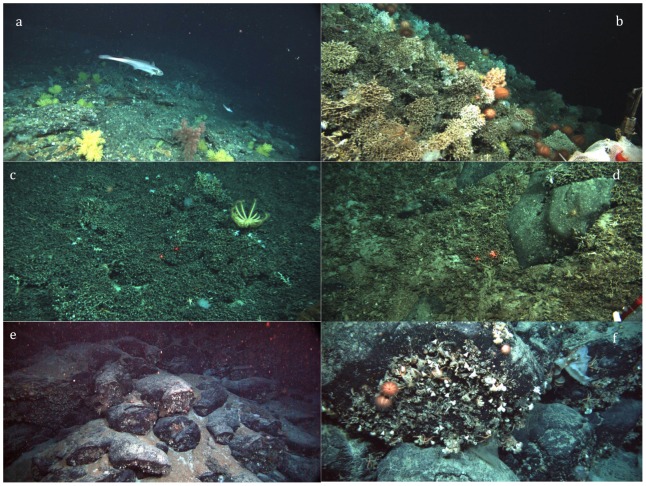
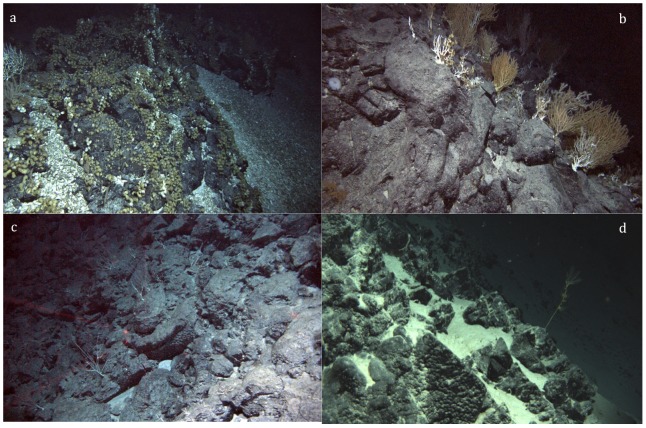
Assemblages of megabenthos are structured in seven depth-related zones between ∼700 and 4000 m on the rocky and topographically complex continental margin south of Tasmania, southeastern Australia. These patterns emerge from analysis of imagery and specimen collections taken from a suite of surveys using photographic and in situ sampling by epibenthic sleds, towed video cameras, an autonomous underwater vehicle and a remotely operated vehicle (ROV). Seamount peaks in shallow zones had relatively low biomass and low diversity assemblages, which may be in part natural and in part due to effects of bottom trawl fishing. Species richness was highest at intermediate depths (1000-1300 m) as a result of an extensive coral reef community based on the bioherm-forming scleractinian Solenosmilia variabilis. However, megabenthos abundance peaked in a deeper, low diversity assemblage at 2000-2500 m. The S. variabilis reef and the deep biomass zone were separated by an extensive dead, sub-fossil S. variabilis reef and a relatively low biomass stratum on volcanic rock roughly coincident with the oxygen minimum layer. Below 2400 m, megabenthos was increasingly sparse, though punctuated by occasional small pockets of relatively high diversity and biomass. Nonetheless, megabenthic organisms were observed in the vast majority of photographs on all seabed habitats and to the maximum depths observed--a sandy plain below 3950 m. Taxonomic studies in progress suggest that the observed depth zonation is based in part on changing species mixes with depth, but also an underlying commonality to much of the seamount and rocky substrate biota across all depths. Although the mechanisms supporting the extraordinarily high biomass in 2000-2500 m depths remains obscure, plausible explanations include equatorwards lateral transport of polar production and/or a response to depth-stratified oxygen availability.
在澳大利亚东南部塔斯马尼亚岛以南地形复杂的岩石大陆边缘,深度约700至4000米的区域内,大型底栖生物群落可分为七个与深度相关的区域。这些模式是通过对一系列调查所获取的图像和标本进行分析得出的,这些调查采用了底栖雪橇摄影、拖曳式摄像机、自主水下航行器和遥控潜水器(ROV)进行原位采样。浅水区的海山顶部生物量相对较低,群落多样性也较低,这可能部分是自然原因,部分是底拖网捕捞的影响。由于以造礁石珊瑚可变异杯珊瑚为基础的广泛珊瑚礁群落,物种丰富度在中间深度(1000 - 1300米)最高。然而,大型底栖生物的丰度在2000 - 2500米的较深、低多样性群落中达到峰值。可变异杯珊瑚礁和深层生物量区被一个广泛的死亡、亚化石可变异杯珊瑚礁以及一个大致与最小含氧层重合的火山岩上生物量相对较低的地层隔开。在2400米以下,大型底栖生物越来越稀少,不过偶尔会有一些相对高多样性和生物量的小区域。尽管如此,在所有海底栖息地的绝大多数照片中都观察到了大型底栖生物,直至观测到的最大深度——3950米以下的沙地平原。正在进行的分类学研究表明,并观察到的深度分区部分基于物种随深度的变化组合,但也基于所有深度的海山和岩石基质生物群的潜在共性。尽管支持2000 - 2500米深度异常高生物量的机制仍不清楚,但合理的解释包括极地生产的赤道侧向运输和/或对深度分层氧气可用性的响应。