Bertocci M A, Bebko G, Olino T, Fournier J, Hinze A K, Bonar L, Almeida J R C, Perlman S B, Versace A, Travis M, Gill M K, Demeter C, Diwadkar V A, White R, Schirda C, Sunshine J L, Arnold L E, Holland S K, Kowatch R A, Birmaher B, Axelson D, Youngstrom E A, Findling R L, Horwitz S M, Fristad M A, Phillips M L
Department of Psychiatry, Western Psychiatric Institute and Clinic, University of Pittsburgh Medical Center,University of Pittsburgh,Pittsburgh, PA,USA.
University Hospitals Case Medical Center/Case Western Reserve University,Cleveland, OH,USA.
Psychol Med. 2014 Sep;44(12):2603-15. doi: 10.1017/S0033291714000087. Epub 2014 Jan 27.
Neuroimaging measures of behavioral and emotional dysregulation can yield biomarkers denoting developmental trajectories of psychiatric pathology in youth. We aimed to identify functional abnormalities in emotion regulation (ER) neural circuitry associated with different behavioral and emotional dysregulation trajectories using latent class growth analysis (LCGA) and neuroimaging.
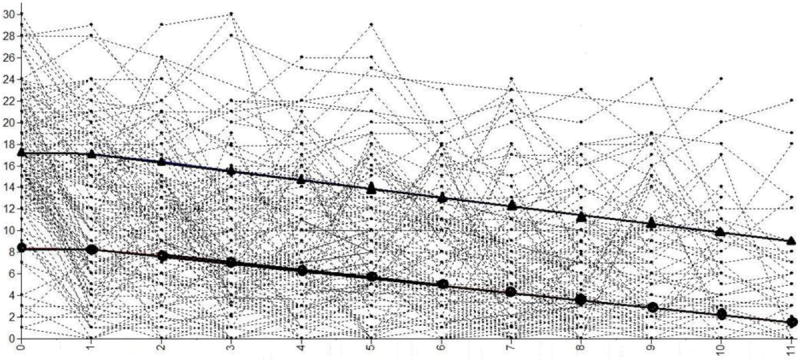
A total of 61 youth (9-17 years) from the Longitudinal Assessment of Manic Symptoms study, and 24 healthy control youth, completed an emotional face n-back ER task during scanning. LCGA was performed on 12 biannual reports completed over 5 years of the Parent General Behavior Inventory 10-Item Mania Scale (PGBI-10M), a parental report of the child's difficulty regulating positive mood and energy.
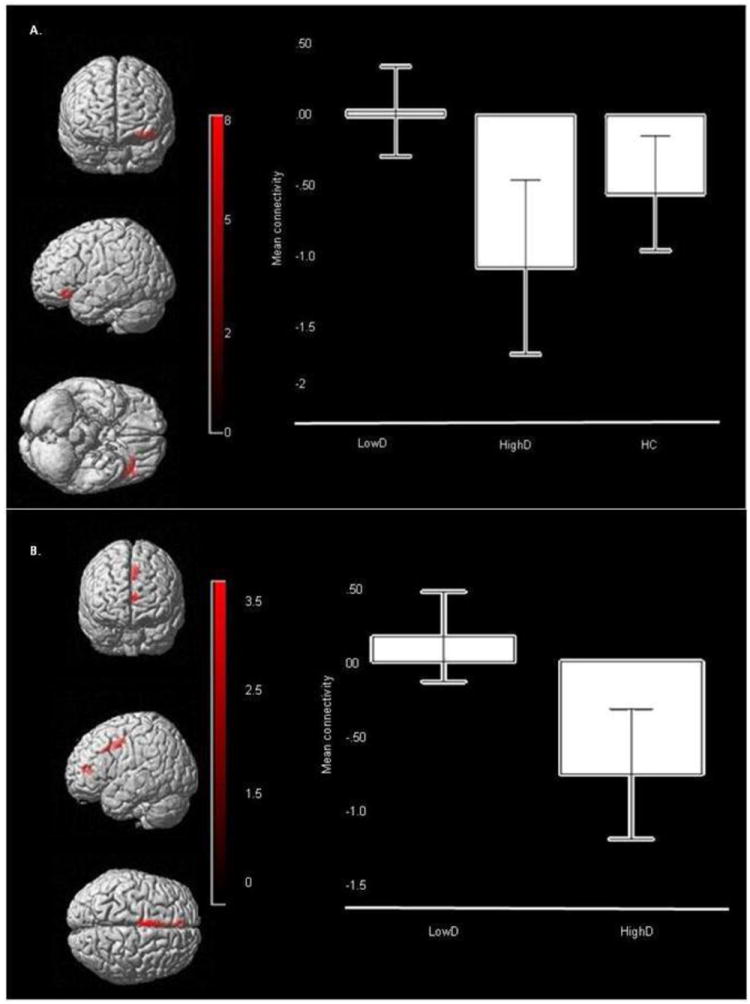
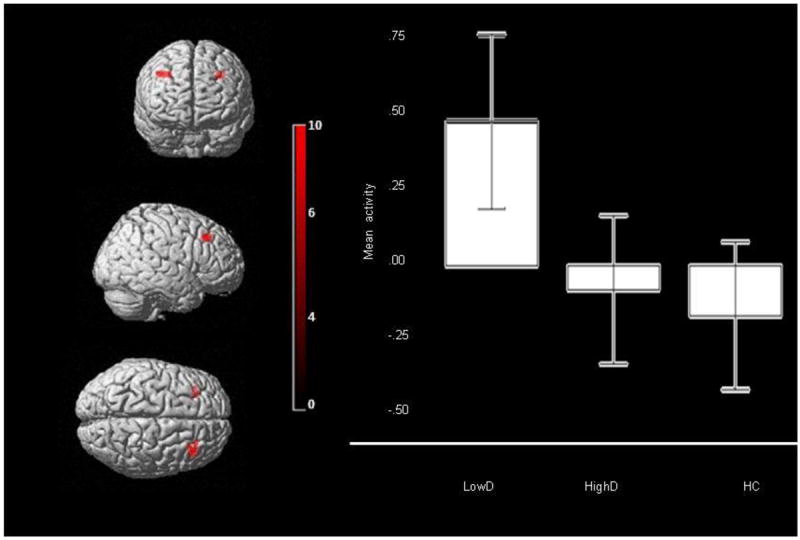
There were two latent classes of PGBI-10M trajectories: high and decreasing (HighD; n=22) and low and decreasing (LowD; n=39) course of behavioral and emotional dysregulation over the 12 time points. Task performance was >89% in all youth, but more accurate in healthy controls and LowD versus HighD (p<0.001). During ER, LowD had greater activity than HighD and healthy controls in the dorsolateral prefrontal cortex, a key ER region, and greater functional connectivity than HighD between the amygdala and ventrolateral prefrontal cortex (p's<0.001, corrected).
Patterns of function in lateral prefrontal cortical-amygdala circuitry in youth denote the severity of the developmental trajectory of behavioral and emotional dysregulation over time, and may be biological targets to guide differential treatment and novel treatment development for different levels of behavioral and emotional dysregulation in youth.
行为和情绪调节障碍的神经影像学测量能够产生生物标志物,用以指示青少年精神病理学的发展轨迹。我们旨在通过潜在类别增长分析(LCGA)和神经影像学,识别与不同行为和情绪调节障碍轨迹相关的情绪调节(ER)神经回路中的功能异常。
来自躁狂症状纵向评估研究的61名青少年(9 - 17岁)和24名健康对照青少年在扫描过程中完成了一项情绪面孔n-back ER任务。对在5年期间完成的12份半年期报告进行LCGA,这些报告来自家长一般行为量表10项躁狂量表(PGBI - 10M),这是一份关于孩子调节积极情绪和精力困难程度的家长报告。
PGBI - 10M轨迹有两个潜在类别:在12个时间点上行为和情绪调节障碍程度高且呈下降趋势(HighD;n = 22),以及程度低且呈下降趋势(LowD;n = 39)。所有青少年的任务表现均>89%,但健康对照组和LowD组比HighD组更准确(p<0.001)。在情绪调节过程中,LowD组在背外侧前额叶皮层(一个关键的情绪调节区域)的活动比HighD组和健康对照组更强,并且杏仁核与腹外侧前额叶皮层之间的功能连接比HighD组更强(p值<0.001,校正后)。
青少年外侧前额叶皮层 - 杏仁核回路的功能模式表明了行为和情绪调节障碍随时间发展轨迹的严重程度,并且可能是指导针对青少年不同程度行为和情绪调节障碍进行差异化治疗和新治疗方法开发的生物学靶点。