Al-Balas Qosay A, Sowaileh Munia F, Hassan Mohammad A, Qandil Amjad M, Alzoubi Karem H, Mhaidat Nizar M, Almaaytah Ammar M, Khabour Omar F
Department of Medicinal Chemistry and Pharmacognosy, Faculty of Pharmacy, Jordan University of Science and Technology, Irbid, Jordan.
Department of Medicinal Chemistry and Pharmacognosy, Faculty of Pharmacy, Jordan University of Science and Technology, Irbid, Jordan ; Pharmaceutical Sciences Department, College of Pharmacy, King Saud bin Abdulaziz University for Health Sciences, Riyadh, Saudi Arabia.
Drug Des Devel Ther. 2014 Jan 16;8:129-63. doi: 10.2147/DDDT.S53522. eCollection 2014.
The dipeptidyl peptidase-IV (DPP-IV) enzyme is considered a pivotal target for controlling normal blood sugar levels in the body. Incretins secreted in response to ingestion of meals enhance insulin release to the blood, and DPP-IV inactivates these incretins within a short period and stops their action. Inhibition of this enzyme escalates the action of incretins and induces more insulin to achieve better glucose control in diabetic patients. Thus, inhibition of this enzyme will lead to better control of blood sugar levels.
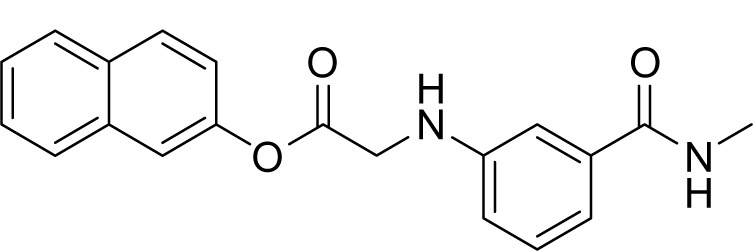
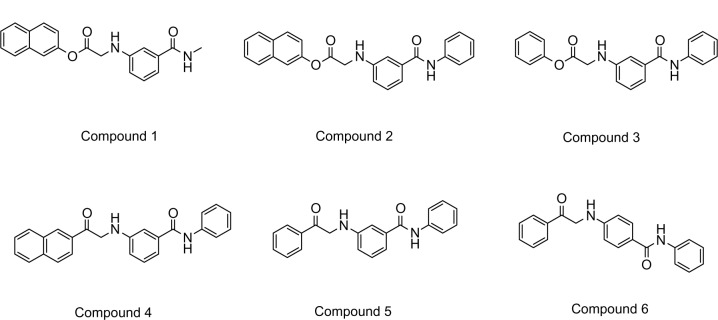
In this study, computer-aided drug design was used to help establish a novel N-substituted aminobenzamide scaffold as a potential inhibitor of DPP-IV. CDOCKER software available from Discovery Studio 3.5 was used to evaluate a series of designed compounds and assess their mode of binding to the active site of the DPP-IV enzyme. The designed compounds were synthesized and tested against a DPP-IV enzyme kit provided by Enzo Life Sciences. The synthesized compounds were characterized using proton and carbon nuclear magnetic resonance, mass spectrometry, infrared spectroscopy, and determination of melting point.
Sixty-nine novel compounds having an N-aminobenzamide scaffold were prepared, with full characterization. Ten of these compounds showed more in vitro activity against DPP-IV than the reference compounds, with the most active compounds scoring 38% activity at 100 μM concentration.
The N-aminobenzamide scaffold was shown in this study to be a valid scaffold for inhibiting the DPP-IV enzyme. Continuing work could unravel more active compounds possessing the same scaffold.
二肽基肽酶-IV(DPP-IV)酶被认为是控制体内正常血糖水平的关键靶点。进食后分泌的肠促胰岛素可促进胰岛素释放至血液中,而DPP-IV会在短时间内使这些肠促胰岛素失活并终止其作用。抑制该酶可增强肠促胰岛素的作用,并诱导更多胰岛素分泌,从而在糖尿病患者中实现更好的血糖控制。因此,抑制该酶将有助于更好地控制血糖水平。
在本研究中,利用计算机辅助药物设计来帮助建立一种新型的N-取代氨基苯甲酰胺支架,作为DPP-IV的潜在抑制剂。使用Discovery Studio 3.5提供的CDOCKER软件来评估一系列设计的化合物,并评估它们与DPP-IV酶活性位点的结合模式。合成设计的化合物,并针对Enzo Life Sciences提供的DPP-IV酶试剂盒进行测试。使用质子和碳核磁共振、质谱、红外光谱以及熔点测定对合成的化合物进行表征。
制备了69种具有N-氨基苯甲酰胺支架的新型化合物,并进行了全面表征。其中10种化合物在体外对DPP-IV的活性高于参考化合物,活性最高的化合物在100μM浓度下的活性为38%。
本研究表明N-氨基苯甲酰胺支架是抑制DPP-IV酶的有效支架。后续工作可能会揭示更多具有相同支架的活性化合物。