Mhatre Siddhita D, Satyasi Vivek, Killen Mark, Paddock Brie E, Moir Robert D, Saunders Aleister J, Marenda Daniel R
Department of Biology, Drexel University, Philadelphia, PA 19104, USA.
Dis Model Mech. 2014 Mar;7(3):373-85. doi: 10.1242/dmm.012104. Epub 2014 Jan 30.
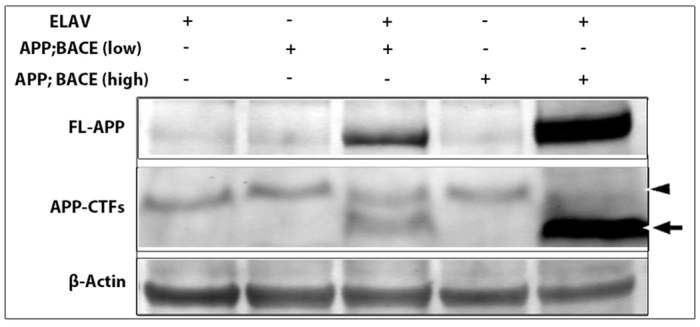
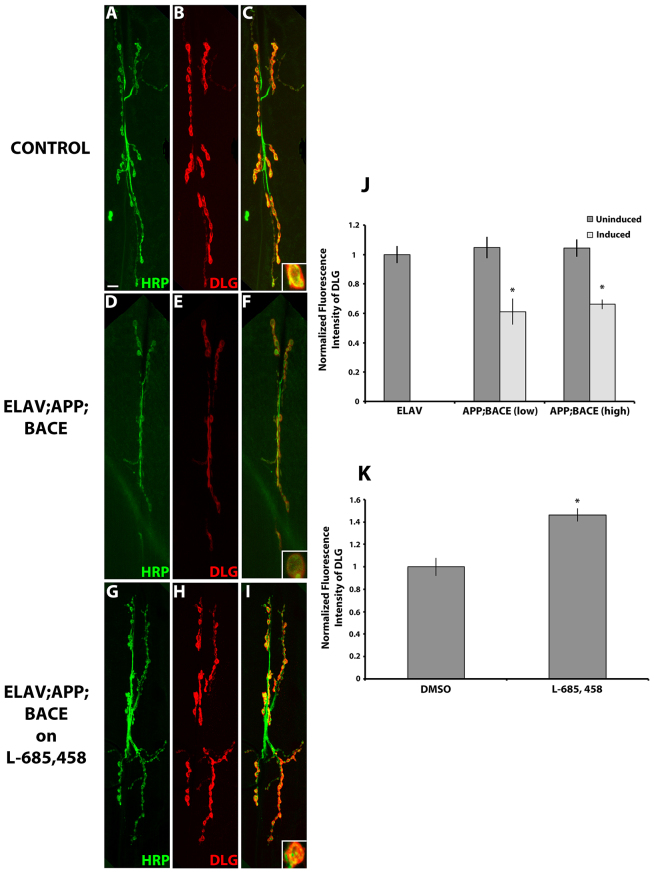
Alzheimer's disease (AD) is an age-related neurodegenerative disease characterized by memory loss and decreased synaptic function. Advances in transgenic animal models of AD have facilitated our understanding of this disorder, and have aided in the development, speed and efficiency of testing potential therapeutics. Recently, we have described the characterization of a novel model of AD in the fruit fly, Drosophila melanogaster, where we expressed the human AD-associated proteins APP and BACE in the central nervous system of the fly. Here we describe synaptic defects in the larval neuromuscular junction (NMJ) in this model. Our results indicate that expression of human APP and BACE at the larval NMJ leads to defective larval locomotion behavior, decreased presynaptic connections, altered mitochondrial localization in presynaptic motor neurons and decreased postsynaptic protein levels. Treating larvae expressing APP and BACE with the γ-secretase inhibitor L-685,458 suppresses the behavioral defects as well as the pre- and postsynaptic defects. We suggest that this model will be useful to assess and model the synaptic dysfunction normally associated with AD, and will also serve as a powerful in vivo tool for rapid testing of potential therapeutics for AD.
阿尔茨海默病(AD)是一种与年龄相关的神经退行性疾病,其特征为记忆丧失和突触功能减退。AD转基因动物模型的进展促进了我们对这种疾病的理解,并有助于潜在治疗方法测试的开发、速度和效率。最近,我们描述了果蝇中一种新型AD模型的特征,我们在果蝇的中枢神经系统中表达了与人类AD相关的蛋白质APP和BACE。在此,我们描述该模型中幼虫神经肌肉接头(NMJ)的突触缺陷。我们的结果表明,在幼虫NMJ处表达人类APP和BACE会导致幼虫运动行为缺陷、突触前连接减少、突触前运动神经元中线粒体定位改变以及突触后蛋白水平降低。用γ-分泌酶抑制剂L-685,458处理表达APP和BACE的幼虫可抑制行为缺陷以及突触前和突触后缺陷。我们认为该模型将有助于评估和模拟通常与AD相关的突触功能障碍,并且还将作为一种强大的体内工具,用于快速测试AD的潜在治疗方法。