Alamo Patricia, Gallardo Alberto, Pavón Miguel A, Casanova Isolda, Trias Manuel, Mangues Maria A, Vázquez Esther, Villaverde Antonio, Mangues Ramon, Céspedes Maria V
Oncogenesis and Antitumour Drug Group, Biomedical Research Institute Sant Pau (IIB-SantPau), Hospital de la Santa Creu i Sant Pau, C/Sant Antoni Maria Claret, 167, 08025 Barcelona, Spain.
Dis Model Mech. 2014 Mar;7(3):387-96. doi: 10.1242/dmm.013995. Epub 2014 Jan 30.
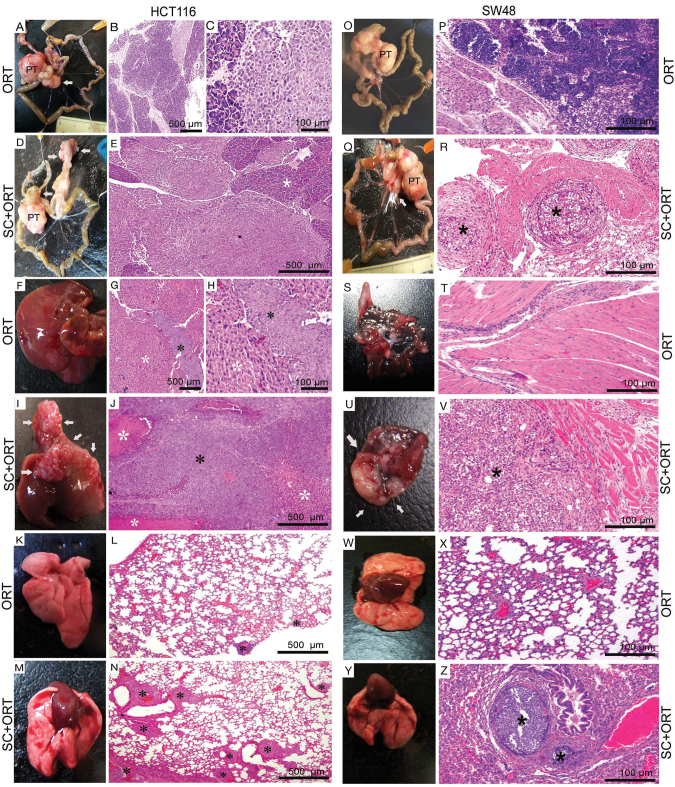
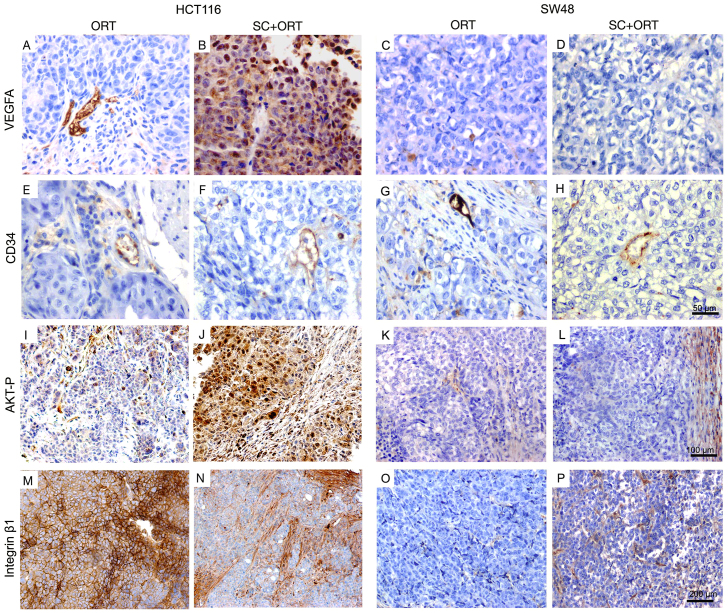
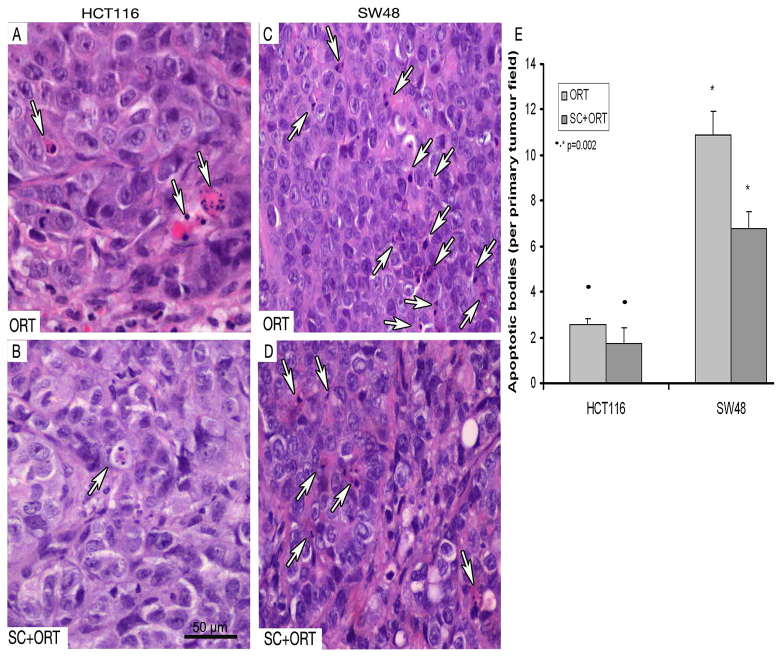
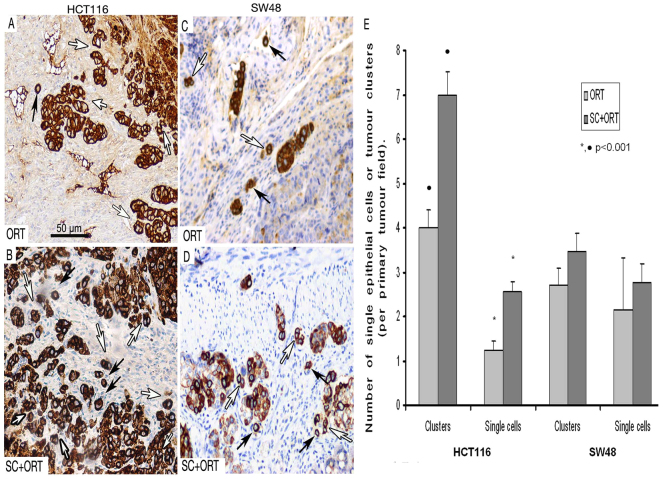
Mouse colorectal cancer (CRC) models generated by orthotopic microinjection of human CRC cell lines reproduce the pattern of lymphatic, haematological and transcoelomic spread but generate low metastatic efficiency. Our aim was to develop a new strategy that could increase the metastatic efficiency of these models. We used subcutaneous implantation of the human CRC cell lines HCT116 or SW48 prior to their orthotopic microinjection in the cecum of nude mice (SC+ORT). This subcutaneous preconditioning significantly enhanced metastatic dissemination. In the HCT116 model it increased the number and size of metastatic foci in lymph nodes, lung, liver and peritoneum, whereas, in the SW48 model, it induced a shift from non-metastatic to metastatic. In both models the number of apoptotic bodies in the primary tumour in the SC+ORT group was significantly reduced compared with that in the direct orthotopic injection (ORT) group. Moreover, in HCT116 tumours the number of keratin-positive tumour buddings and single epithelial cells increased at the invasion front in SC+ORT mice. In the SW48 tumour model, we observed a trend towards a higher number of tumour buds and single cells in the SC+ORT group but this did not reach statistical significance. At a molecular level, the enhanced metastatic efficiency observed in the HCT116 SC+ORT model was associated with an increase in AKT activation, VEGF-A overexpression and downregulation of β1 integrin in primary tumour tissue, whereas, in SW48 SC+ORT mice, the level of expression of these proteins remained unchanged. In summary, subcutaneous preconditioning increased the metastatic dissemination of both orthotopic CRC models by increasing tumour cell survival and invasion at the tumour invasion front. This approach could be useful to simultaneously study the mechanisms of metastases and to evaluate anti-metastatic drugs against CRC.
通过原位显微注射人结肠直肠癌(CRC)细胞系构建的小鼠CRC模型可重现淋巴、血液和经体腔扩散模式,但转移效率较低。我们的目的是开发一种新策略,以提高这些模型的转移效率。我们在将人CRC细胞系HCT116或SW48原位显微注射到裸鼠盲肠之前,先进行皮下植入(SC+ORT)。这种皮下预处理显著增强了转移扩散。在HCT116模型中,它增加了淋巴结、肺、肝和腹膜中转移灶的数量和大小,而在SW48模型中,它诱导了从非转移性到转移性的转变。在两个模型中,与直接原位注射(ORT)组相比,SC+ORT组原发肿瘤中的凋亡小体数量显著减少。此外,在HCT116肿瘤中,SC+ORT小鼠侵袭前沿的角蛋白阳性肿瘤芽和单个上皮细胞数量增加。在SW48肿瘤模型中,我们观察到SC+ORT组肿瘤芽和单个细胞数量有增加的趋势,但未达到统计学意义。在分子水平上,HCT116 SC+ORT模型中观察到的转移效率增强与原发肿瘤组织中AKT激活增加、VEGF-A过表达和β1整合素下调有关,而在SW48 SC+ORT小鼠中,这些蛋白的表达水平保持不变。总之,皮下预处理通过增加肿瘤细胞在肿瘤侵袭前沿的存活和侵袭,提高了两种原位CRC模型的转移扩散。这种方法可能有助于同时研究转移机制,并评估针对CRC的抗转移药物。