Tsumuraya Tomoyuki, Matsushita Masayuki
Department of Molecular and Cellular Physiology, Graduate School of Medicine, University of the Ryukyus, Okinawa, Japan.
PLoS One. 2014 Jan 28;9(1):e86639. doi: 10.1371/journal.pone.0086639. eCollection 2014.
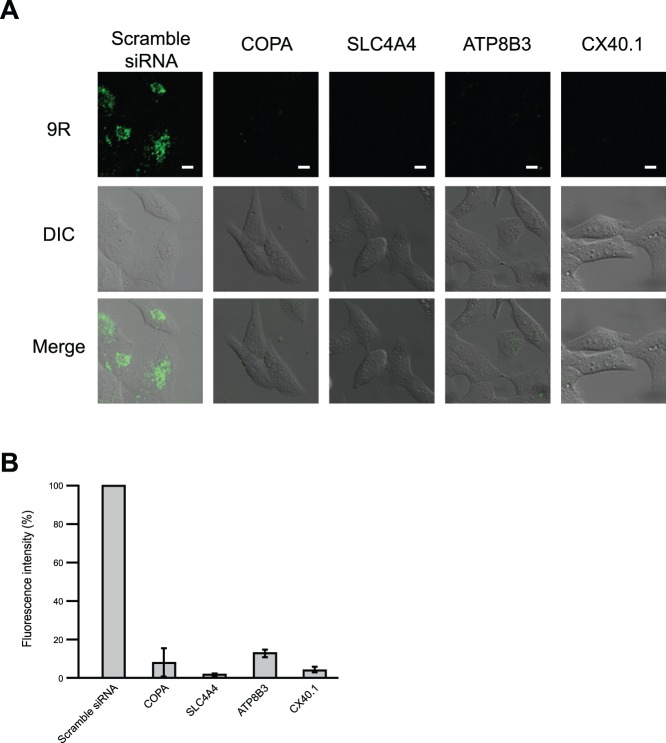
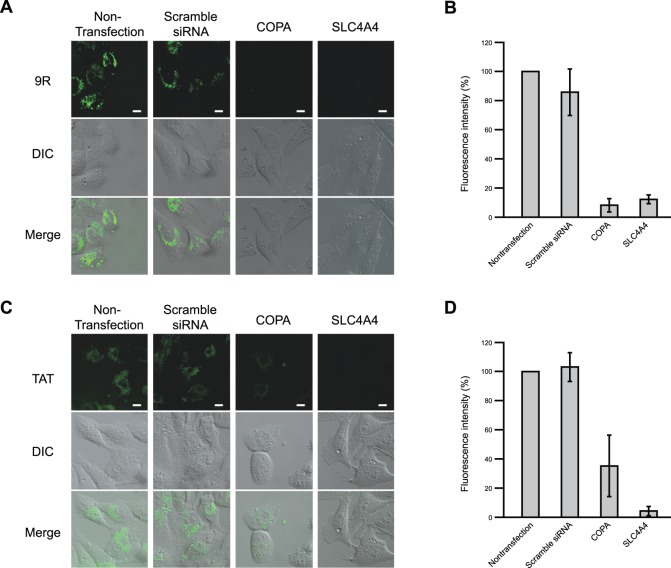
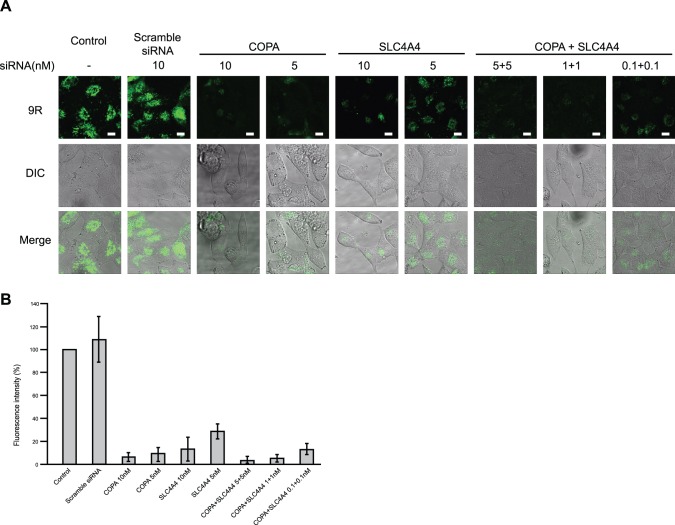
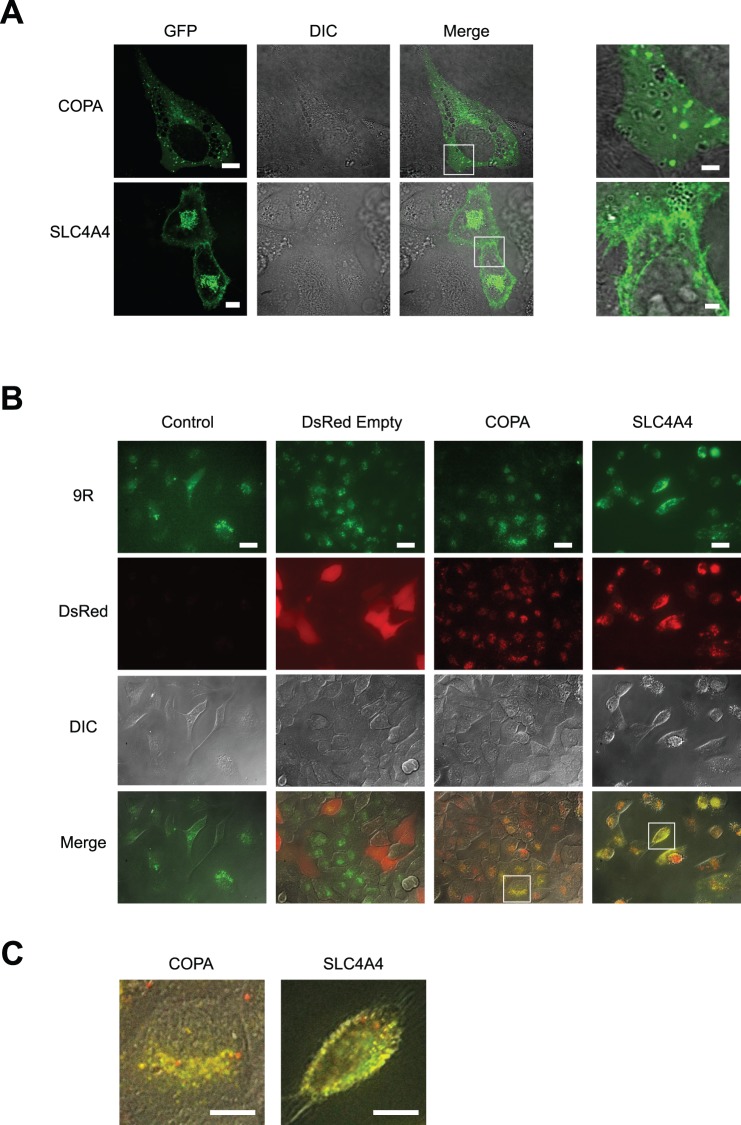
Cell-penetrating peptides (CPPs) have gained attention as promising tools to enable the delivery of various molecules in a non-invasive manner. Among the CPPs, TAT and poly-arginine have been extensively utilized in numerous studies for the delivery of functional proteins, peptides, and macromolecules to analyze cellular signaling. However, the molecular mechanisms of cellular entry remain largely unknown. Here, we applied siRNA library screening to identify the regulatory genes for the cellular entry of poly-arginine peptide based on microscopic observation of the entry of fluorescent peptides in siRNA-treated cells. In this screening, we identified the cell membrane gene SLC4A4 and the trafficking regulator gene COPA, which also plays an important role in early endosome maturation. These results demonstrated that cellular entry of poly-arginine requires at least two different steps, probably binding on the cell surface and endosomal entry. The identification of genes for cellular entry of poly-arginine provides insights into its mechanisms and should further aid in the development of highly efficient cell-penetrating peptides.
细胞穿透肽(CPPs)作为一种有望以非侵入性方式递送各种分子的工具而受到关注。在CPPs中,TAT和聚精氨酸已在众多研究中被广泛用于递送功能蛋白、肽和大分子,以分析细胞信号传导。然而,细胞内吞的分子机制在很大程度上仍然未知。在此,我们基于对经siRNA处理的细胞中荧光肽内吞的显微镜观察,应用siRNA文库筛选来鉴定聚精氨酸肽细胞内吞的调控基因。在该筛选中,我们鉴定出细胞膜基因SLC4A4和运输调节基因COPA,COPA在早期内体成熟中也起重要作用。这些结果表明,聚精氨酸的细胞内吞至少需要两个不同步骤,可能是在细胞表面结合和进入内体。聚精氨酸细胞内吞基因的鉴定为其机制提供了见解,并应进一步有助于开发高效的细胞穿透肽。