Cardani Diego, Sardi Claudia, La Ferla Barbara, D'Orazio Giuseppe, Sommariva Michele, Marcucci Fabrizio, Olivero Daniela, Tagliabue Elda, Koepsell Hermann, Nicotra Francesco, Balsari Andrea, Rumio Cristiano
Department of Pharmacology and Biomolecular Sciences, Università degli Studi di Milano, Via Trentacoste 2, 20133 Milan, Italy.
Mol Cancer. 2014 Feb 5;13:23. doi: 10.1186/1476-4598-13-23.
Recent studies demonstrated that engagement of sodium glucose transporter 1 (SGLT-1) by orally administered D-glucose protects the intestinal mucosa from lipopolysaccharide (LPS)-induced injury. We tested whether SGLT-1 engagement might protect the intestinal mucosa from doxorubicin (DXR)- and 5-fluorouracil (5-FU)-induced injury in animal models mimicking acute or chronic mucositis.
Mice were treated intraperitoneally with DXR, alone or in combination with 5-FU, and orally with BLF501, a glucose-derived synthetic compound with high affinity for SGLT-1. Intestinal mucosal epithelium integrity was assessed by histological analysis, cellular proliferation assays, real-time PCR gene expression assays and Western blot assays. Student's t-test (paired two-tailed) and χ2 analyses were used for comparisons between groups. Differences were considered significant at p < 0.05.
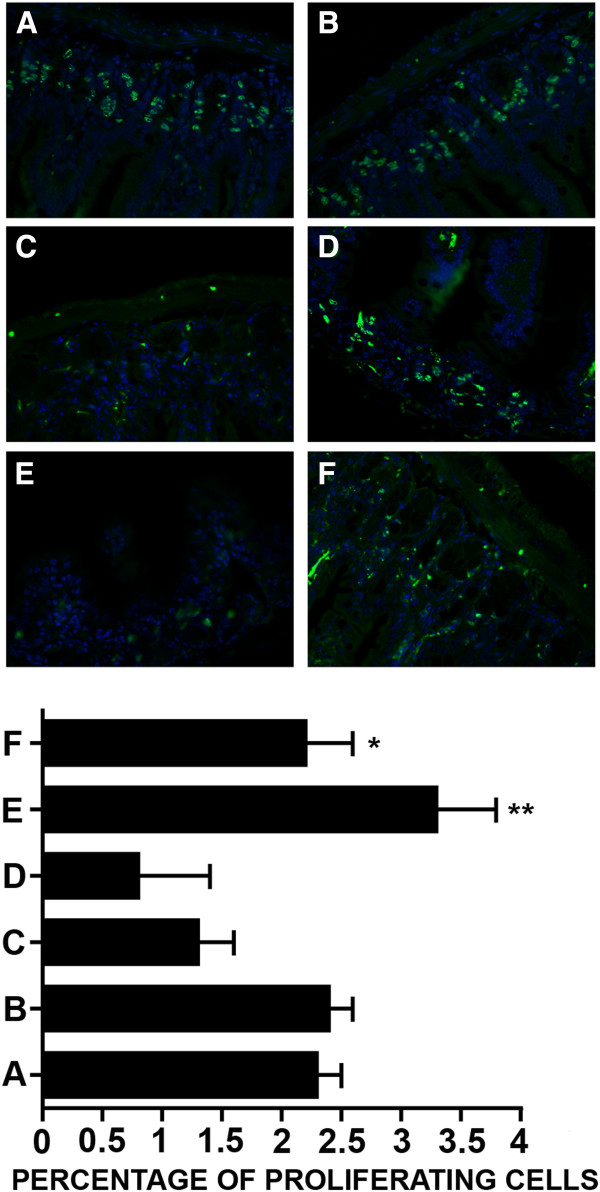
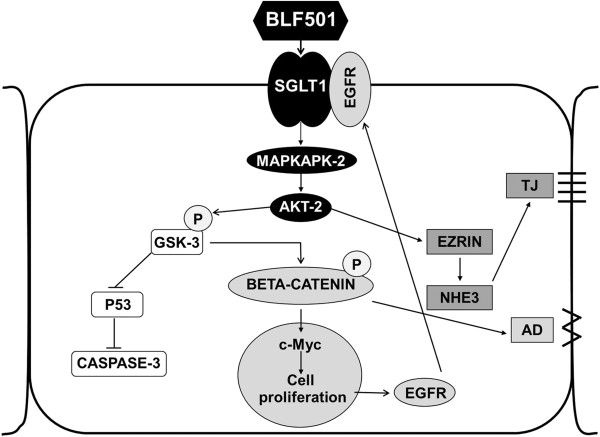
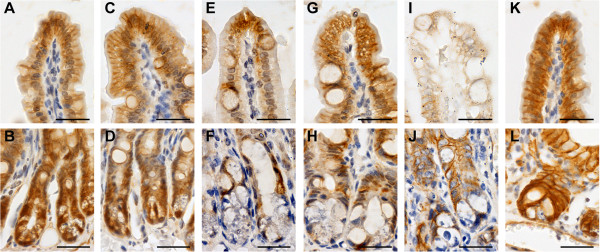
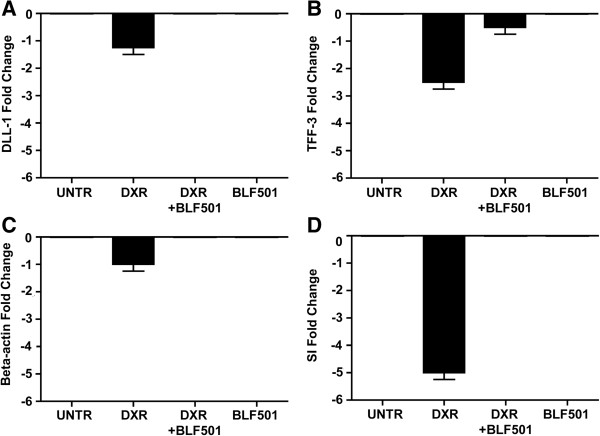
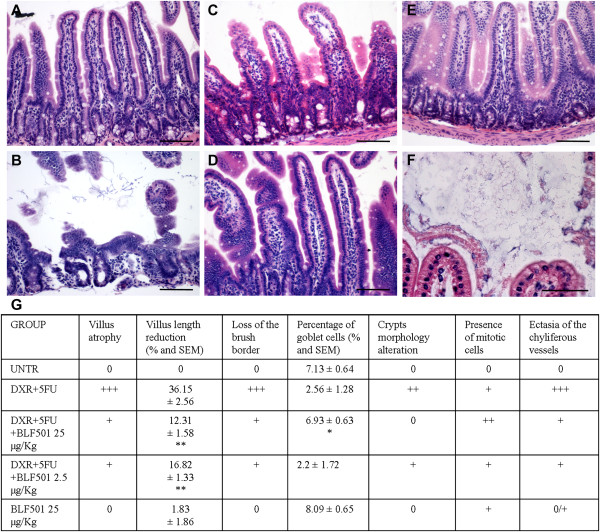
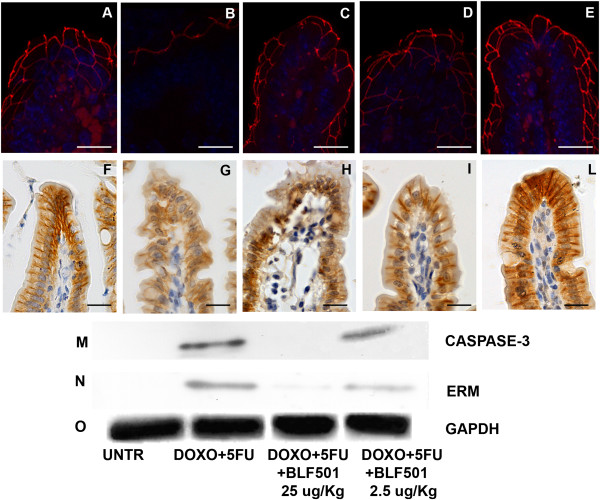
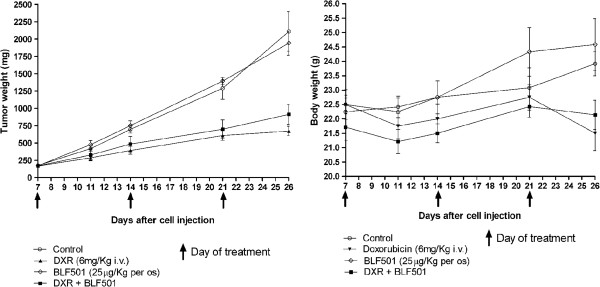
BLF501 administration in mice treated with DXR and/or 5-FU decreased the injuries to the mucosa in terms of epithelial integrity and cellular proliferative ability. Co-treatment with BLF501 led to a normal expression and distribution of both zonula occludens-1 (ZO-1) and beta-catenin, which were underexpressed after treatment with either chemotherapeutic agent alone. BLF501 administration also restored normal expression of caspase-3 and ezrin/radixin/moesin (ERM), which were overexpressed after treatment with DXR and 5-FU. In SGLT1-/- mice, BLF501 had no detectable effects. BLF501 administration in wild-type mice with growing A431 tumors did not modify antitumor activity of DXR.
BLF501-induced protection of the intestinal mucosa is a promising novel therapeutic approach to reducing the severity of chemotherapy-induced mucositis.
近期研究表明,口服D-葡萄糖激活钠葡萄糖转运蛋白1(SGLT-1)可保护肠黏膜免受脂多糖(LPS)诱导的损伤。我们在模拟急性或慢性黏膜炎的动物模型中测试了激活SGLT-1是否能保护肠黏膜免受阿霉素(DXR)和5-氟尿嘧啶(5-FU)诱导的损伤。
小鼠腹腔注射DXR,单独或与5-FU联合使用,并口服BLF501,一种对SGLT-1具有高亲和力的葡萄糖衍生合成化合物。通过组织学分析、细胞增殖测定、实时PCR基因表达测定和蛋白质印迹分析评估肠黏膜上皮的完整性。采用学生t检验(配对双尾)和χ2分析进行组间比较。p < 0.05时差异被认为具有统计学意义。
在接受DXR和/或5-FU治疗的小鼠中给予BLF501,可减轻黏膜上皮完整性和细胞增殖能力方面的损伤。与BLF501联合治疗可使闭合蛋白-1(ZO-1)和β-连环蛋白的表达和分布恢复正常,而单独使用任何一种化疗药物治疗后这两种蛋白的表达均降低。给予BLF501还可使半胱天冬酶-3和埃兹蛋白/根蛋白/膜突蛋白(ERM)的表达恢复正常,而在接受DXR和5-FU治疗后这两种蛋白的表达均上调。在SGLT1基因敲除小鼠中,BLF501没有可检测到的作用。在患有A431肿瘤的野生型小鼠中给予BLF501不会改变DXR的抗肿瘤活性。
BLF501诱导的肠黏膜保护是一种有前景的新型治疗方法,可降低化疗诱导的黏膜炎的严重程度。