Interfakultäres Institut für Zellbiologie, Abteilung Immunologie, Universität Tübingen, Auf der Morgenstelle 15, 72076, Tübingen, Germany,
Cell Mol Life Sci. 2014 Jul;71(13):2429-42. doi: 10.1007/s00018-014-1559-6. Epub 2014 Feb 5.
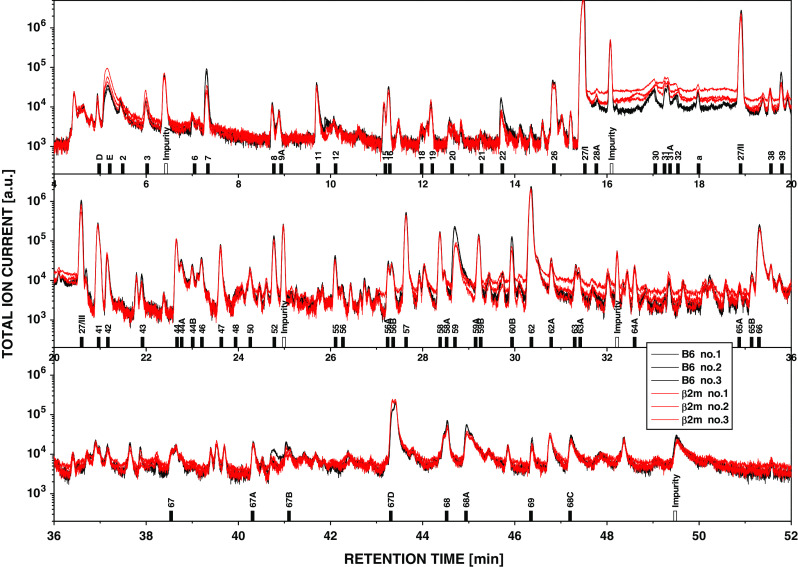
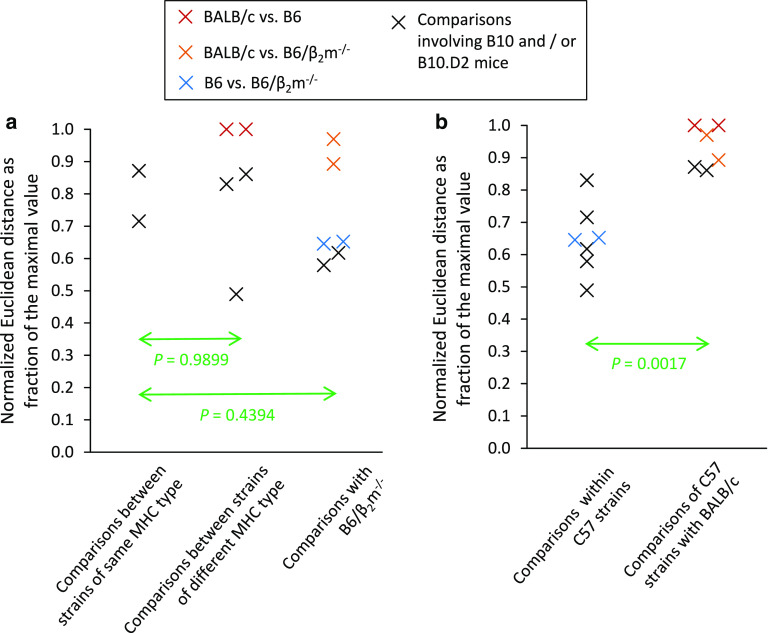
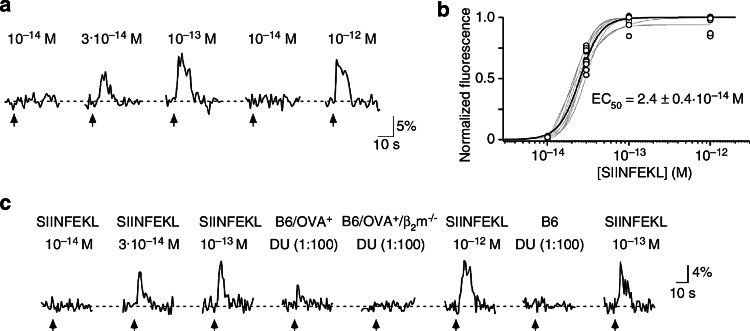
Genes of the major histocompatibility complex (MHC), which play a critical role in immune recognition, are considered to influence social behaviors in mice, fish, humans, and other vertebrates via olfactory cues. As studied most extensively in mice, the polymorphism of MHC class I genes is considered to bring about a specific scent signature, which is decoded by the olfactory system resulting in an individual-specific reaction such as mating. On the assumption that this signature resides in volatiles, extensive attempts to identify these MHC-specific components in urine failed. Alternatively, it has been suggested that peptide ligands of MHC class I molecules are released into urine and can elicit an MHC-haplotype-specific behavioral response after uptake into the nose by sniffing. Analysis of the urinary peptide composition of mice shows that MHC-derived peptides are present, albeit in extremely low concentrations. In contrast, urine contains abundant peptides which differ between mouse strains due to genomic variations such as single-nucleotide variations or complex polymorphisms in multigene families as well as in their concentration. Thus, urinary peptides represent a real-time sampling of the expressed genome available for sensory evaluation. It is suggested that peptide variation caused by genomic differences contains sufficient information for individual recognition beyond or instead of an influence of the MHC in mice and other vertebrates.
主要组织相容性复合体(MHC)基因在免疫识别中发挥着关键作用,被认为通过嗅觉线索影响老鼠、鱼类、人类和其他脊椎动物的社交行为。在老鼠身上的研究最为广泛,MHC Ⅰ类基因的多态性被认为带来了一种特定的气味特征,这种气味特征被嗅觉系统解码,导致特定个体的反应,如交配。假设这种特征存在于挥发物中,人们曾广泛尝试在尿液中识别这些 MHC 特异性成分,但没有成功。相反,有人认为 MHC Ⅰ类分子的肽配体被释放到尿液中,并在被嗅探吸入鼻腔后,引起 MHC 单倍型特异性的行为反应。对老鼠尿液中肽组成的分析表明,存在 MHC 衍生的肽,尽管浓度极低。相比之下,尿液中含有丰富的肽,由于基因组变异,如单核苷酸变异或多基因家族的复杂多态性,以及它们的浓度不同,不同的老鼠品系的肽也不同。因此,尿液中的肽代表了可供感官评估的表达基因组的实时采样。有人认为,由于基因组差异导致的肽变异包含了足够的个体识别信息,而不仅仅是 MHC 在老鼠和其他脊椎动物中的影响。