von Gillhaussen Philipp, Rascher Uwe, Jablonowski Nicolai D, Plückers Christine, Beierkuhnlein Carl, Temperton Vicky M
Institute of Bio- and Geosciences: Plant Sciences (IBG-2), Forschungszentrum Jülich GmbH, Jülich, Germany ; Department of Biogeography, University of Bayreuth, Bayreuth, Germany.
Institute of Bio- and Geosciences: Plant Sciences (IBG-2), Forschungszentrum Jülich GmbH, Jülich, Germany.
PLoS One. 2014 Jan 31;9(1):e86906. doi: 10.1371/journal.pone.0086906. eCollection 2014.
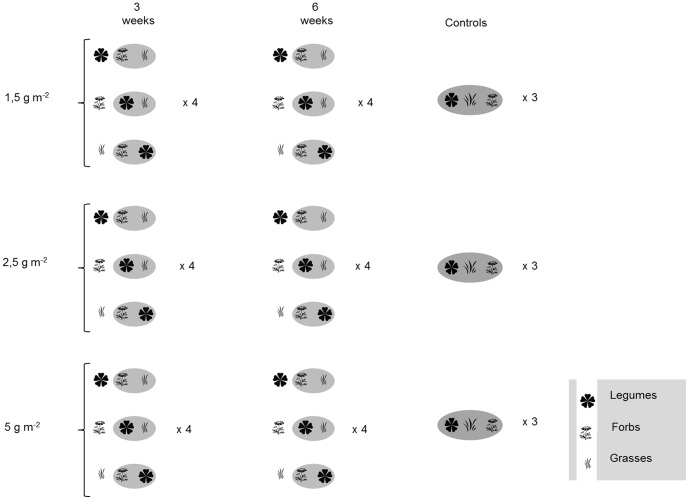
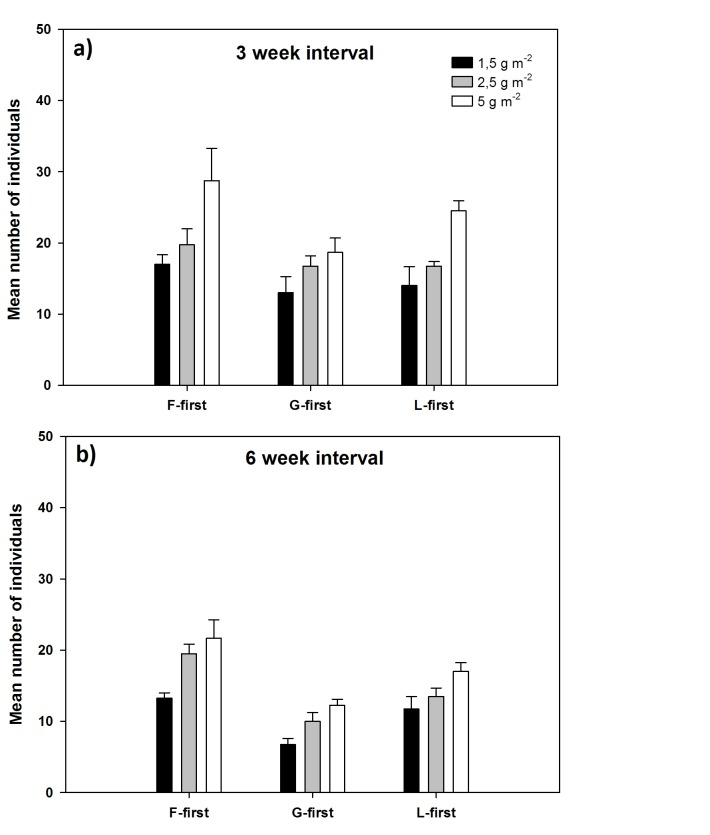
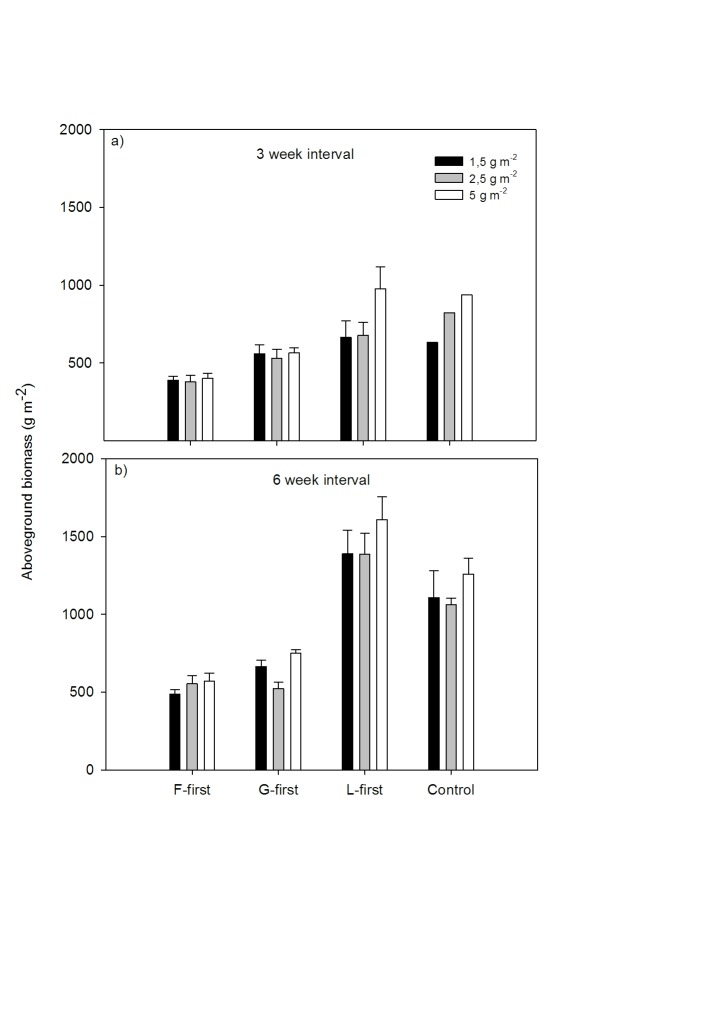
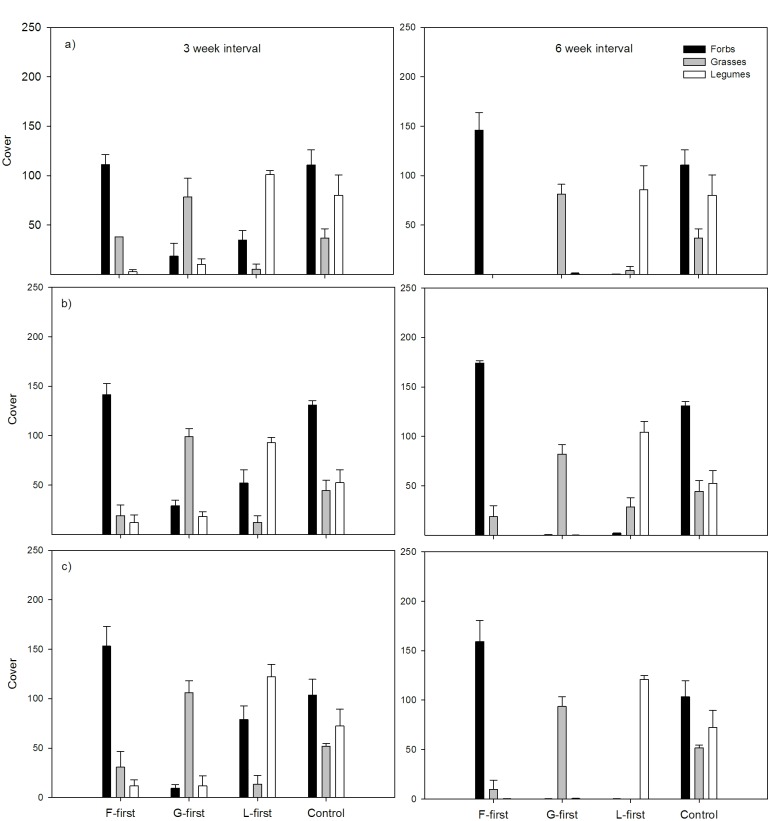
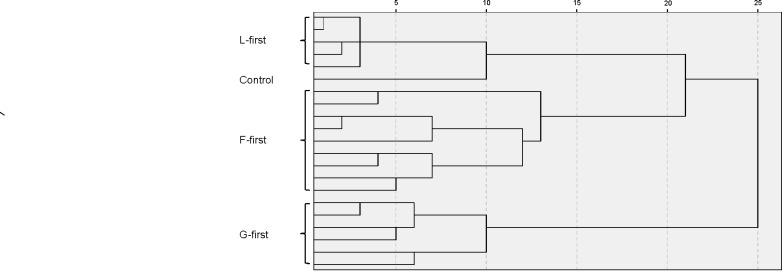
Priority effects occur when species that arrive first in a habitat significantly affect the establishment, growth, or reproduction of species arriving later and thus affect functioning of communities. However, we know little about how the timing of arrival of functionally different species may alter structure and function during assembly. Even less is known about how plant density might interact with initial assembly. In a greenhouse experiment legumes, grasses or forbs were sown a number of weeks before the other two plant functional types were sown (PFT) in combination with a sowing density treatment. Legumes, grasses or non-legume forbs were sown first at three different density levels followed by sowing of the remaining PFTs after three or six-weeks. We found that the order of arrival of different plant functional types had a much stronger influence on aboveground productivity than sowing density or interval between the sowing events. The sowing of legumes before the other PFTs produced the highest aboveground biomass. The larger sowing interval led to higher asymmetric competition, with highest dominance of the PFT sown first. It seems that legumes were better able to get a head-start and be productive before the later groups arrived, but that their traits allowed for better subsequent establishment of non-legume PFTs. Our study indicates that the manipulation of the order of arrival can create priority effects which favour functional groups of plants differently and thus induce different assembly routes and affect community composition and functioning.
当最早到达某一栖息地的物种显著影响后来到达物种的定居、生长或繁殖,进而影响群落功能时,就会出现优先效应。然而,我们对于功能不同的物种到达时间如何在群落构建过程中改变群落结构和功能知之甚少。对于植物密度如何与初始群落构建相互作用,我们了解得更少。在一项温室实验中,豆科植物、禾本科植物或非豆科草本植物在其他两种植物功能类型(PFT)播种前数周播种,并设置了播种密度处理。豆科植物、禾本科植物或非豆科草本植物先以三种不同密度水平播种,然后在三周或六周后播种其余的植物功能类型。我们发现,不同植物功能类型的到达顺序对地上生产力的影响远大于播种密度或播种事件之间的间隔。在其他植物功能类型之前播种豆科植物产生了最高的地上生物量。播种间隔时间越长,不对称竞争越激烈,最早播种的植物功能类型占主导地位的程度越高。似乎豆科植物能够在其他植物到达之前更好地抢占先机并实现高产,但其特性也有利于非豆科植物功能类型随后更好地定居。我们的研究表明,控制物种到达顺序可以产生优先效应,这些效应以不同方式有利于植物功能群,从而诱导不同的群落构建路径,并影响群落组成和功能。