Chen Zhenguang, Wang Jiancheng, Cai Lie, Zhong Beilong, Luo Honghe, Hao Yuantao, Yu Weihua, Wang Binchao, Su Chunhua, Lei Yiyan, Bella Amos Ela, Xiang Andy Peng, Wang Tao
Department of Thoracic Surgery, the First Affiliated Hospital, Sun Yat-sen University, Guangzhou, Guangdong, China ; Department of Cardiothoracic Surgery, Huangpu Division of the First Affiliated Hospital, Sun Yat-sen University, Guangzhou, Guangdong, China ; Lung Cancer Research Center of Sun Yat-sen University, Guangzhou, Guangdong, China.
Center for Stem Cell Biology and Tissue Engineering, Sun Yat-sen University, Key Laboratory for Stem Cells and Tissue Engineering, Ministry of Education, Guangzhou, Guangdong, China.
PLoS One. 2014 Feb 3;9(2):e85584. doi: 10.1371/journal.pone.0085584. eCollection 2014.
Nestin is associated with neoplastic transformation, but the mechanisms by which nestin contributes to invasion and malignancy of lung cancer remain unknown. Considering that proliferation is necessary for malignant behavior, we investigated the mechanism of nestin action in association with the proliferative properties of non-small cell lung cancer (NSCLC).
Nestin expression was examined in NSCLC specimens and cell lines. Associations with clinicopathological features, including prognosis and proliferative markers, were evaluated. Effects of nestin knockdown on proliferation and the signaling pathways involved were further investigated.
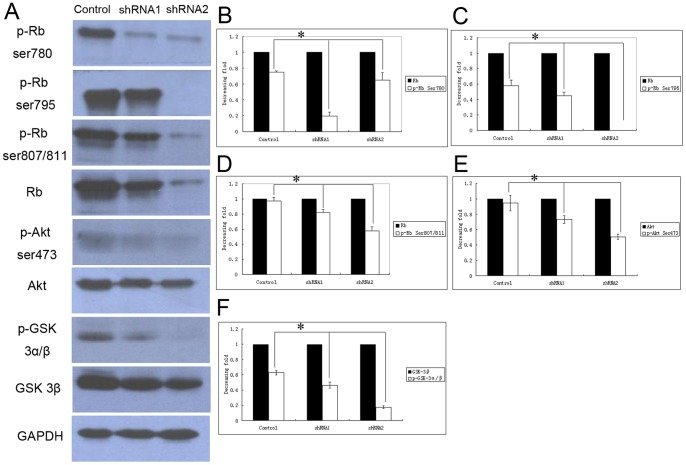
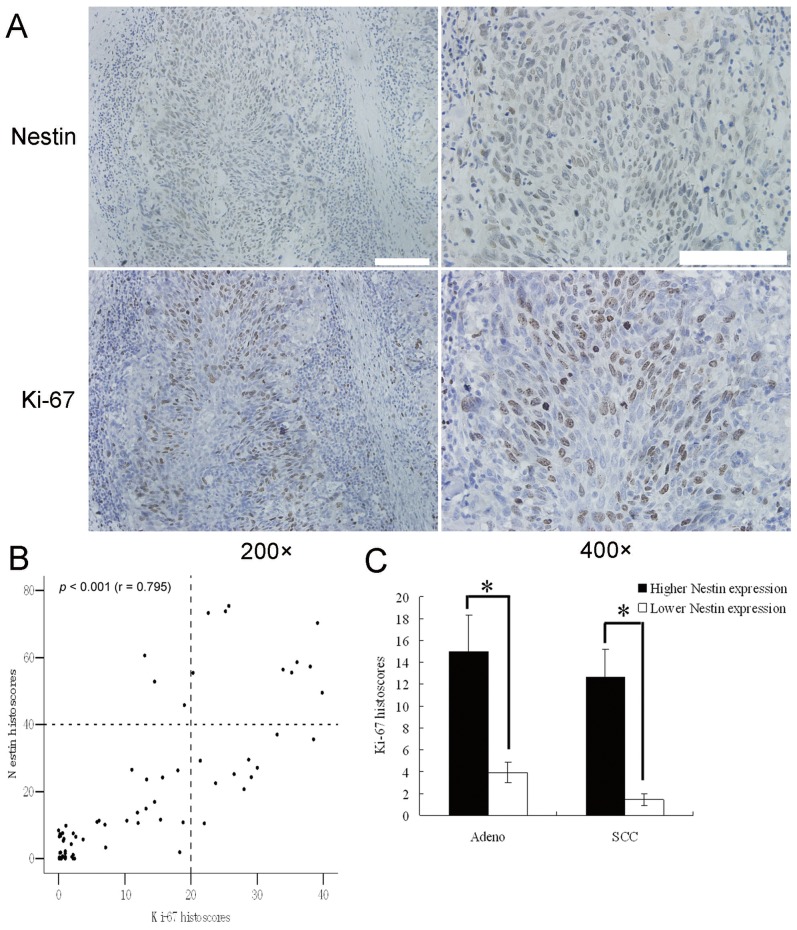
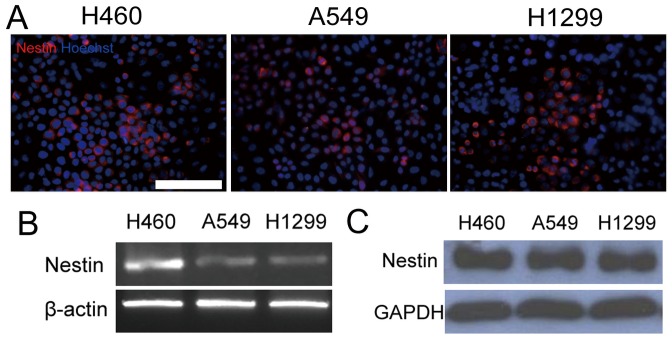
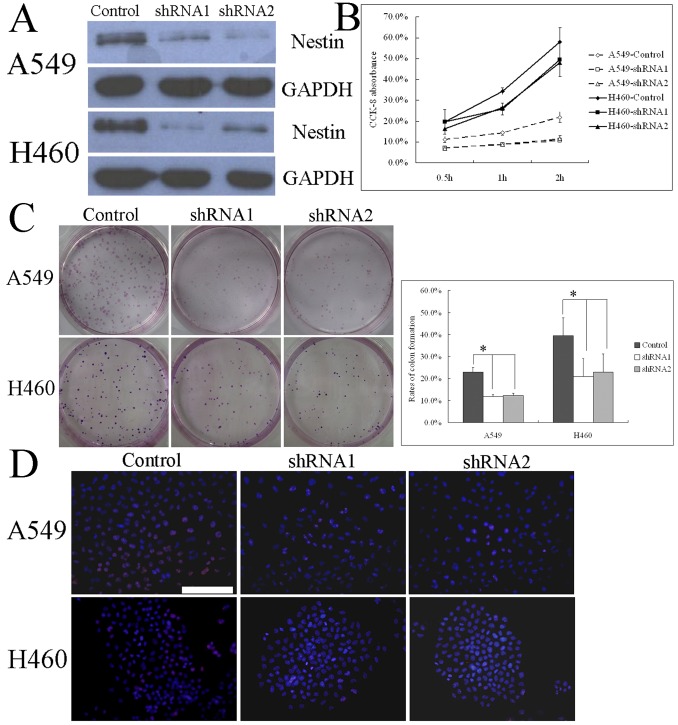
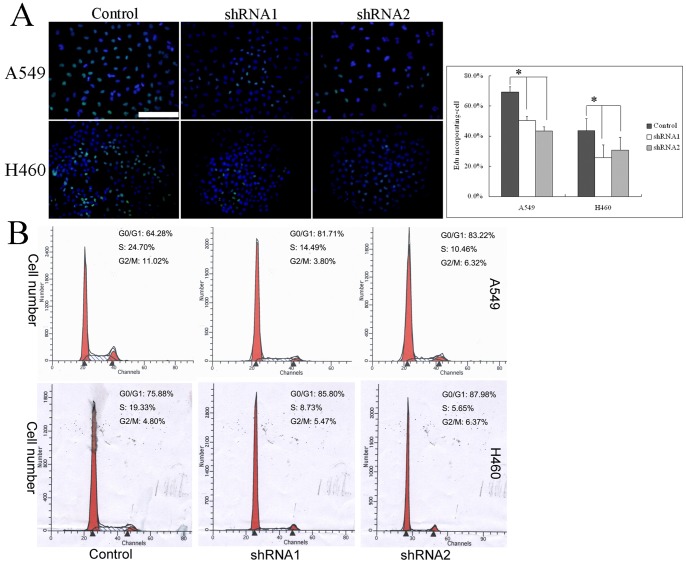
Nestin was expressed in most cancer specimens and all the tumor cell lines analyzed. High nestin expression in malignant tissue was associated with high Ki-67 or PCNA levels and poor patient outcomes. Conversely, knockdown of nestin expression led to significant inhibition of tumor cell proliferation, decreased colony forming ability, and cell cycle G1 arrest. Furthermore, nestin knockdown resulted in inhibition of Akt and GSK3β activation.
Our data demonstrate that nestin expression in NSCLC cells is associated with poor prognosis of patients and tumor cell proliferation pathway. Downregulation of nestin efficiently inhibited lung cancer cell proliferation, which might be through affecting cell cycle arrest and Akt-GSK3β-Rb signaling pathway.
巢蛋白与肿瘤转化相关,但巢蛋白促进肺癌侵袭和恶性肿瘤形成的机制仍不清楚。鉴于增殖是恶性行为所必需的,我们研究了巢蛋白与非小细胞肺癌(NSCLC)增殖特性相关的作用机制。
检测NSCLC标本和细胞系中巢蛋白的表达。评估其与临床病理特征(包括预后和增殖标志物)的相关性。进一步研究巢蛋白敲低对增殖及相关信号通路的影响。
巢蛋白在大多数癌症标本和所有分析的肿瘤细胞系中均有表达。恶性组织中巢蛋白高表达与Ki-67或PCNA水平高及患者预后差相关。相反,巢蛋白表达敲低导致肿瘤细胞增殖显著抑制、集落形成能力降低和细胞周期G1期阻滞。此外,巢蛋白敲低导致Akt和GSK3β激活受到抑制。
我们的数据表明,NSCLC细胞中巢蛋白表达与患者预后不良及肿瘤细胞增殖途径相关。巢蛋白下调有效抑制肺癌细胞增殖,这可能是通过影响细胞周期阻滞和Akt-GSK3β-Rb信号通路实现的。