Division of Virology, Department of Pathology, University of Cambridge, Cambridge, United Kingdom.
J Virol. 2014 Apr;88(8):3965-75. doi: 10.1128/JVI.03497-13. Epub 2014 Feb 5.
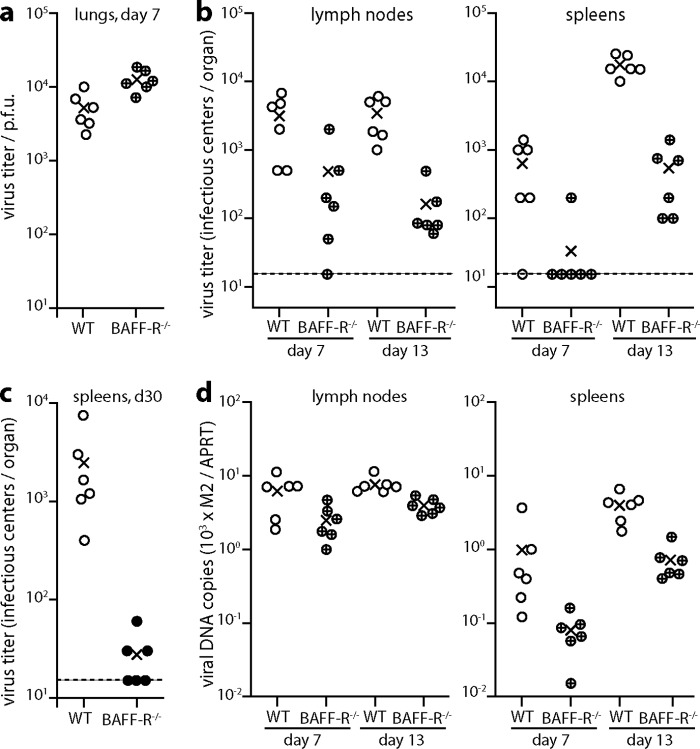
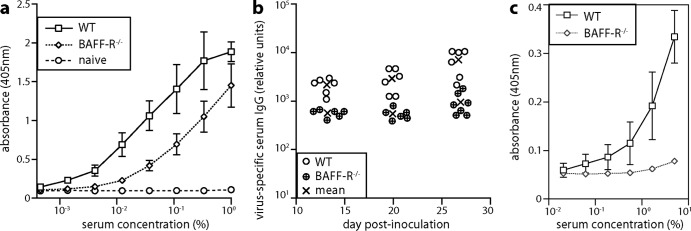
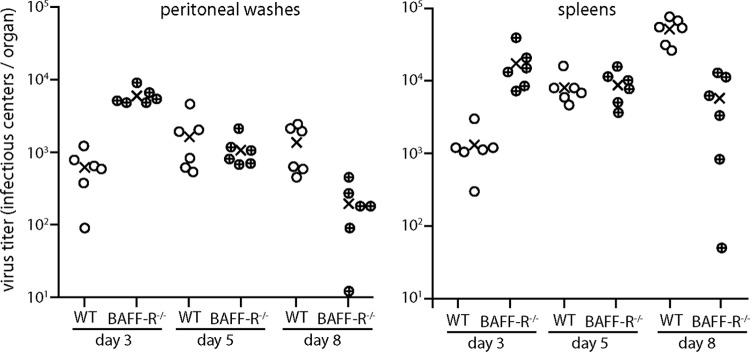
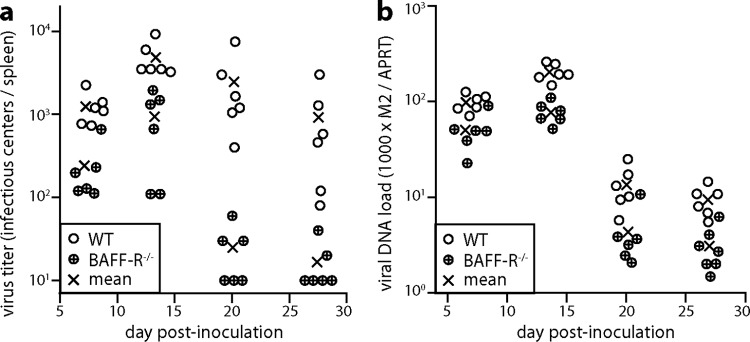
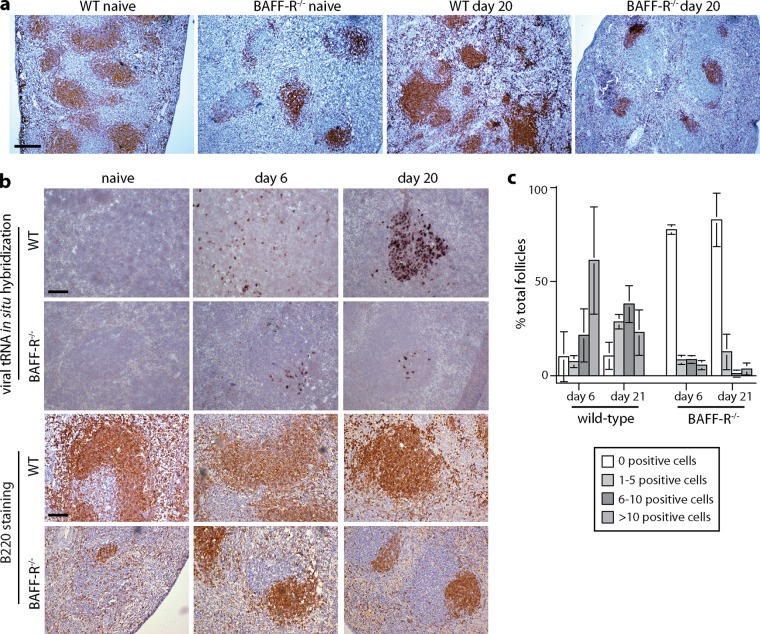
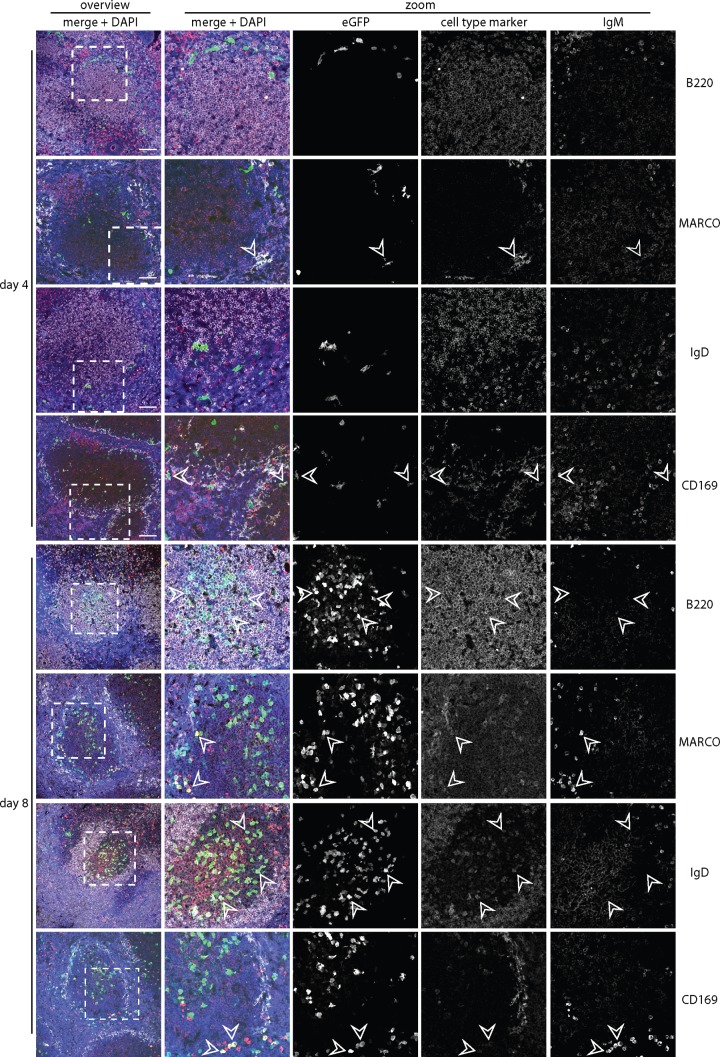
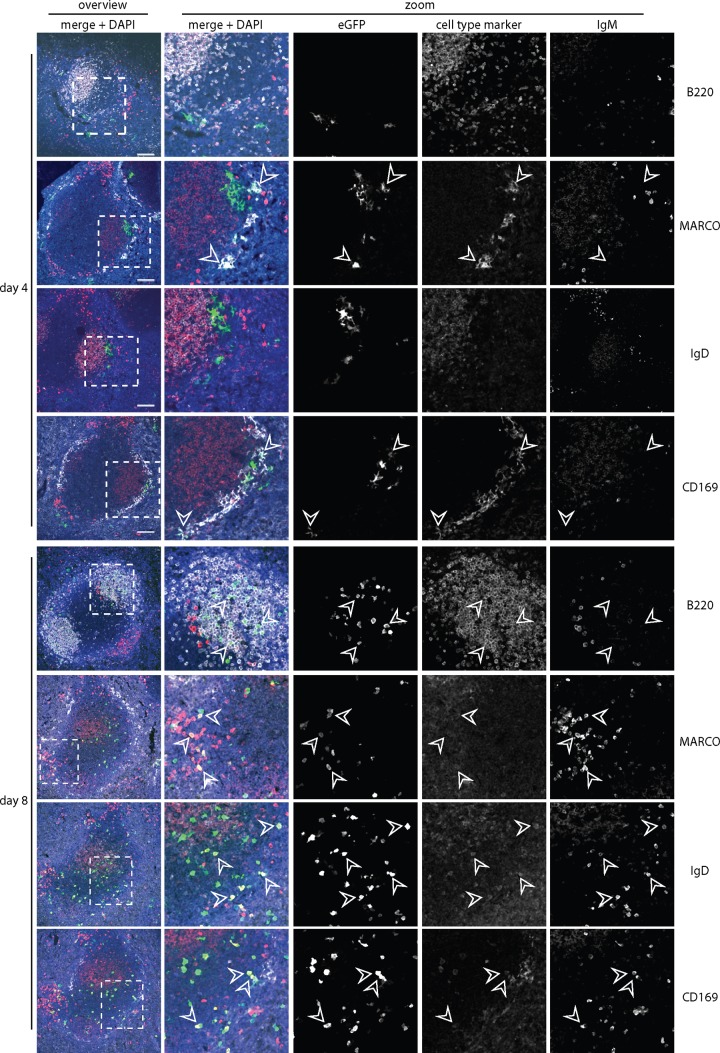
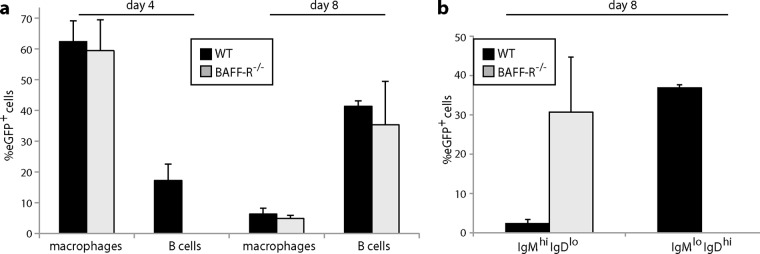
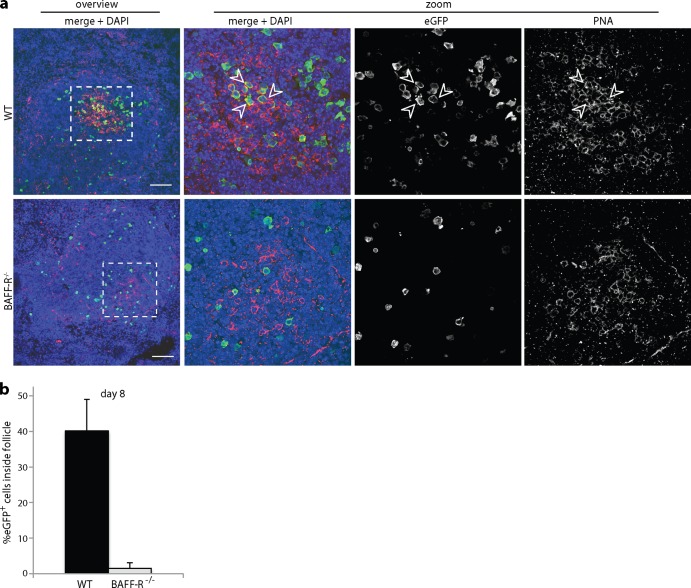
Lymphocyte colonization by gammaherpesviruses (γHVs) is an important target for cancer prevention. However, how it works is not clear. Epstein-Barr virus drives autonomous B cell proliferation in vitro but in vivo may more subtly exploit the proliferative pathways provided by lymphoid germinal centers (GCs). Murid herpesvirus 4 (MuHV-4), which realistically infects inbred mice, provides a useful tool with which to understand further how a γHV colonizes B cells in vivo. Not all γHVs necessarily behave the same, but common events can with MuHV-4 be assigned an importance for host colonization and so a potential as therapeutic targets. MuHV-4-driven B cell proliferation depends quantitatively on CD4(+) T cell help. Here we show that it also depends on T cell-independent survival signals provided by the B cell-activating factor (BAFF) receptor (BAFF-R). B cells could be infected in BAFF-R(-/-) mice, but virus loads remained low. This corresponded to a BAFF-R-dependent defect in GC colonization. The close parallels between normal, antigen-driven B cell responses and virus-infected B cell proliferation argue that in vivo, γHVs mostly induce infected B cells into normal GC reactions rather than generating large numbers of autonomously proliferating blasts.
γHVs cause cancers by driving the proliferation of infected cells. B cells are a particular target. Thus, we need to know how virus-driven B cell proliferation works. Controversy exists as to whether viral genes drive it directly or less directly orchestrate the engagement of normal, host-driven pathways. Here we show that the B cell proliferation driven by a murid γHV requires BAFF-R. This supports the idea that γHVs exploit host proliferation pathways and suggests that interfering with BAFF-R could more generally reduce γHV-associated B cell proliferation.
γ 型疱疹病毒(γHV)对淋巴细胞的感染是癌症预防的重要靶点。然而,其作用机制尚不清楚。EB 病毒在体外能驱动自主的 B 细胞增殖,但在体内可能更微妙地利用淋巴生发中心(GC)提供的增殖途径。鼠疱疹病毒 4(MuHV-4)能真实感染近交系小鼠,为进一步了解 γHV 如何在体内感染 B 细胞提供了有用的工具。并非所有 γHV 都一定表现相同,但可以将 MuHV-4 中的共同事件确定为宿主感染的重要因素,因此也可能成为治疗靶点。MuHV-4 驱动的 B 细胞增殖在数量上依赖于 CD4(+)T 细胞的辅助。在这里,我们还表明,它还依赖于 B 细胞激活因子(BAFF)受体(BAFF-R)提供的非 T 细胞依赖性存活信号。在 BAFF-R(-/-) 小鼠中可以感染 B 细胞,但病毒载量仍然很低。这与 GC 感染的 BAFF-R 依赖性缺陷相对应。正常抗原驱动的 B 细胞反应与病毒感染的 B 细胞增殖之间的密切相似性表明,在体内,γHV 主要诱导受感染的 B 细胞进入正常 GC 反应,而不是产生大量自主增殖的母细胞。
γHV 通过驱动受感染细胞的增殖而导致癌症。B 细胞是一个特别的靶点。因此,我们需要了解病毒驱动的 B 细胞增殖是如何发生的。关于病毒基因是直接驱动它还是间接地协调正常的、宿主驱动的途径存在争议。在这里,我们表明由鼠 γHV 驱动的 B 细胞增殖需要 BAFF-R。这支持了 γHV 利用宿主增殖途径的观点,并表明干扰 BAFF-R 可能更普遍地减少与 γHV 相关的 B 细胞增殖。