Bluestone Center for Clinical Research, New York University, New York, USA.
Behav Brain Funct. 2014 Feb 13;10:5. doi: 10.1186/1744-9081-10-5.
Cancer pain severely limits function and significantly reduces quality of life. Subtypes of sensory neurons involved in cancer pain and proliferation are not clear.
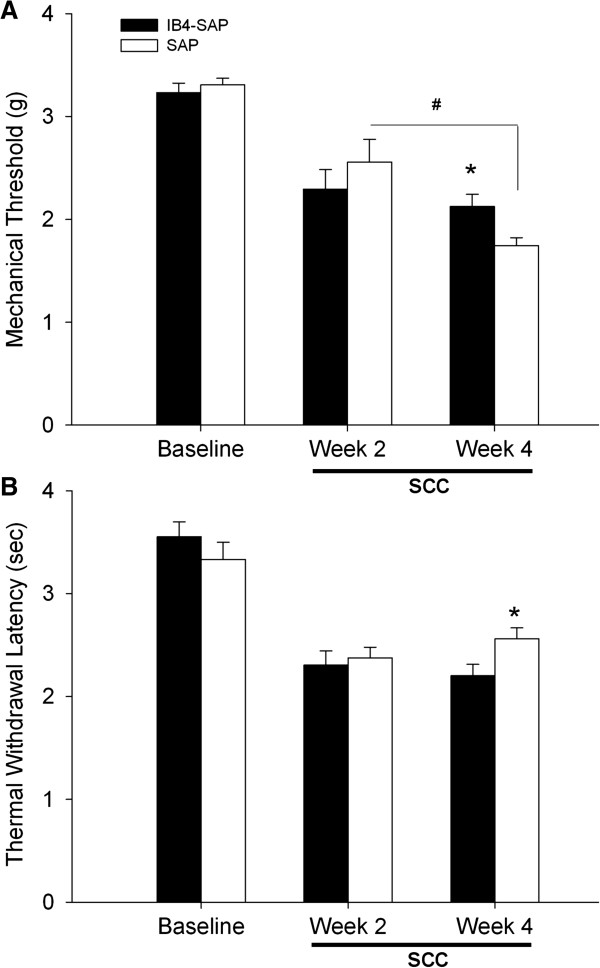
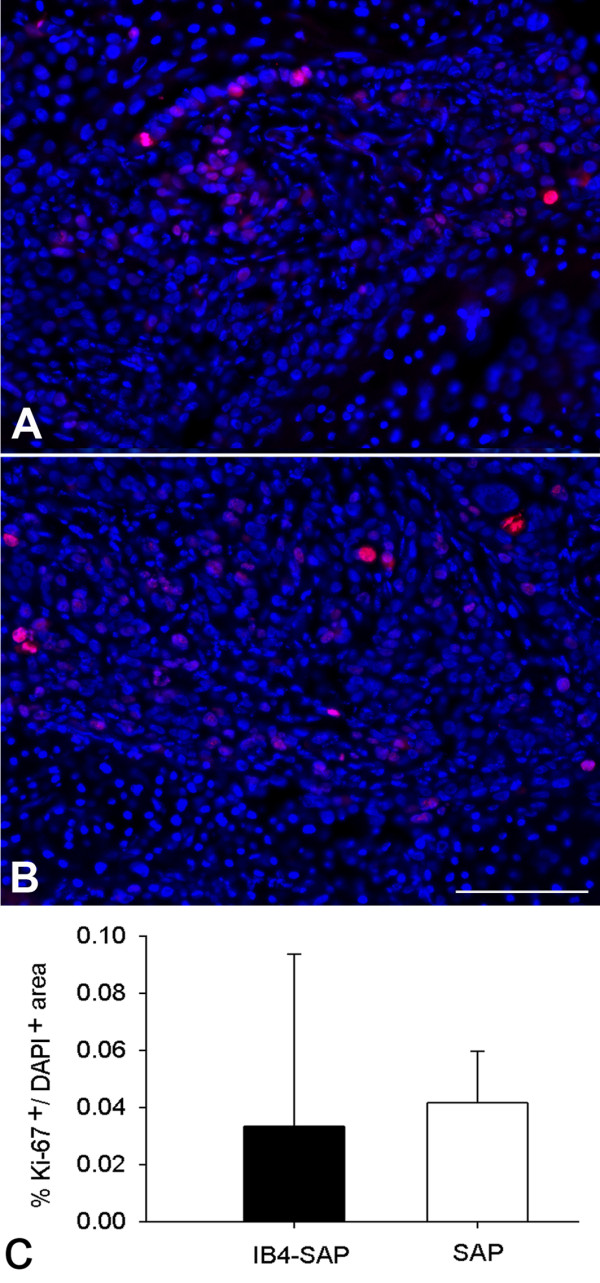
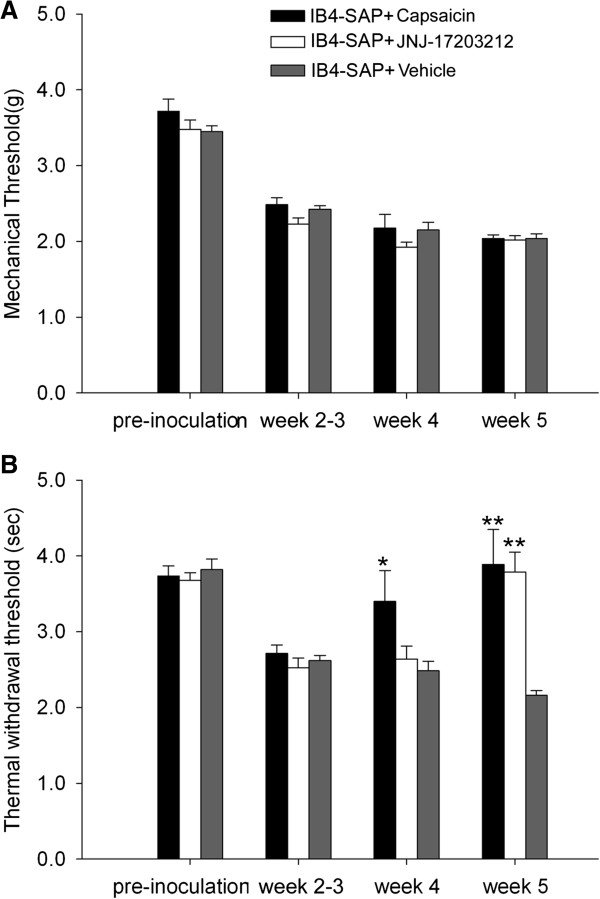
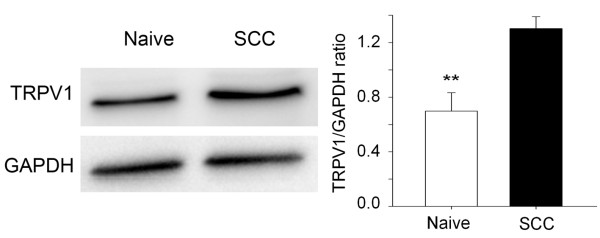
We produced a cancer model by inoculating human oral squamous cell carcinoma (SCC) cells into the hind paw of athymic mice. We quantified mechanical and thermal nociception using the paw withdrawal assays. Neurotoxins isolectin B4-saporin (IB4-SAP), or capsaicin was injected intrathecally to selectively ablate IB4(+) neurons or TRPV1(+) neurons, respectively. JNJ-17203212, a TRPV1 antagonist, was also injected intrathecally. TRPV1 protein expression in the spinal cord was quantified with western blot. Paw volume was measured by a plethysmometer and was used as an index for tumor size. Ki-67 immunostaining in mouse paw sections was performed to evaluate cancer proliferation in situ.
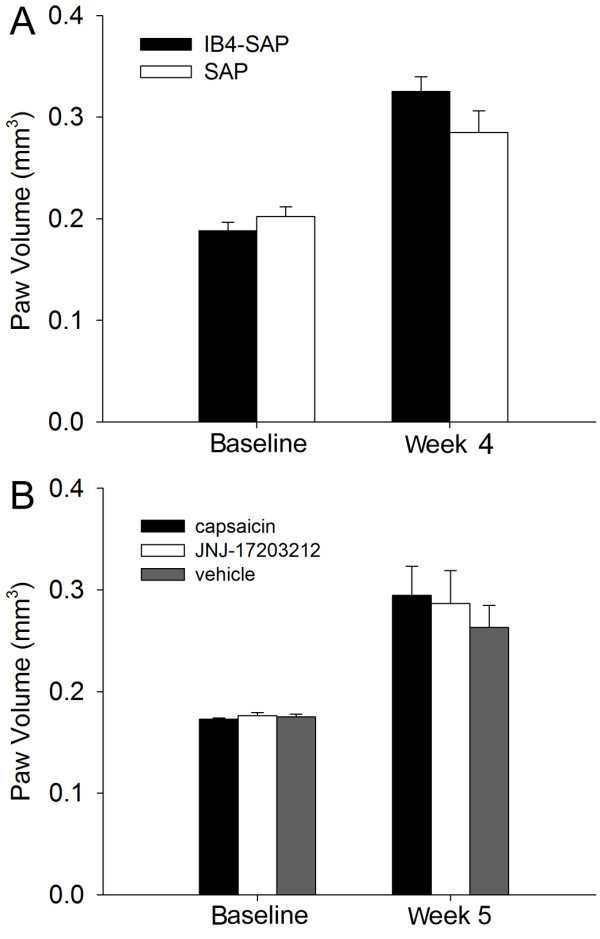
We showed that mice with SCC exhibited both mechanical and thermal hypersensitivity. Selective ablation of IB4(+) neurons by IB4-SAP decreased mechanical allodynia in mice with SCC. Selective ablation of TRPV1(+) neurons by intrathecal capsaicin injection, or TRPV1 antagonism by JNJ-17203212 in the IB4-SAP treated mice completely reversed SCC-induced thermal hyperalgesia, without affecting mechanical allodynia. Furthermore, TRPV1 protein expression was increased in the spinal cord of SCC mice compared to normal mice. Neither removal of IB4(+) or TRPV1(+) neurons affected SCC proliferation.
We show in a mouse model that IB4(+) neurons play an important role in cancer-induced mechanical allodynia, while TRPV1 mediates cancer-induced thermal hyperalgesia. Characterization of the sensory fiber subtypes responsible for cancer pain could lead to the development of targeted therapeutics.
癌症疼痛严重限制了功能,显著降低了生活质量。涉及癌症疼痛和增殖的感觉神经元亚型尚不清楚。
我们通过将人口腔鳞状细胞癌(SCC)细胞接种到裸鼠后爪中来产生癌症模型。我们使用足底撤回测定法来量化机械和热痛觉过敏。分别用异硫氰酸荧光素 B4-相思豆毒素(IB4-SAP)或辣椒素鞘内注射以选择性地破坏 IB4(+)神经元或 TRPV1(+)神经元。TRPV1 拮抗剂 JNJ-17203212 也鞘内注射。用 Western blot 定量脊髓中 TRPV1 蛋白表达。用测容法测量足底体积,作为肿瘤大小的指标。对小鼠足底切片进行 Ki-67 免疫染色,以原位评估癌症增殖。
我们表明,患有 SCC 的小鼠表现出机械和热过敏。IB4-SAP 选择性破坏 IB4(+)神经元可减轻 SCC 小鼠的机械性痛觉过敏。通过鞘内辣椒素注射选择性破坏 TRPV1(+)神经元,或在 IB4-SAP 处理的小鼠中用 JNJ-17203212 进行 TRPV1 拮抗作用,完全逆转了 SCC 诱导的热痛觉过敏,而不影响机械性痛觉过敏。此外,与正常小鼠相比,SCC 小鼠脊髓中的 TRPV1 蛋白表达增加。IB4(+)或 TRPV1(+)神经元的去除均不影响 SCC 增殖。
我们在小鼠模型中表明,IB4(+)神经元在癌症引起的机械性痛觉过敏中起重要作用,而 TRPV1 介导癌症引起的热痛觉过敏。负责癌症疼痛的感觉纤维亚型的特征可能导致靶向治疗的发展。