Shao Dan, Zhai Peiyong, Del Re Dominic P, Sciarretta Sebastiano, Yabuta Norikazu, Nojima Hiroshi, Lim Dae-Sik, Pan Duojia, Sadoshima Junichi
Department of Cell Biology and Molecular Medicine, Cardiovascular Research Institute, New Jersey Medical School, Rutgers Biomedical and Health Sciences, Newark, New Jersey 07103, USA.
Department of Molecular Genetics, Research Institute for Microbial Diseases, Osaka University, Osaka 565-0871, Japan.
Nat Commun. 2014;5:3315. doi: 10.1038/ncomms4315.
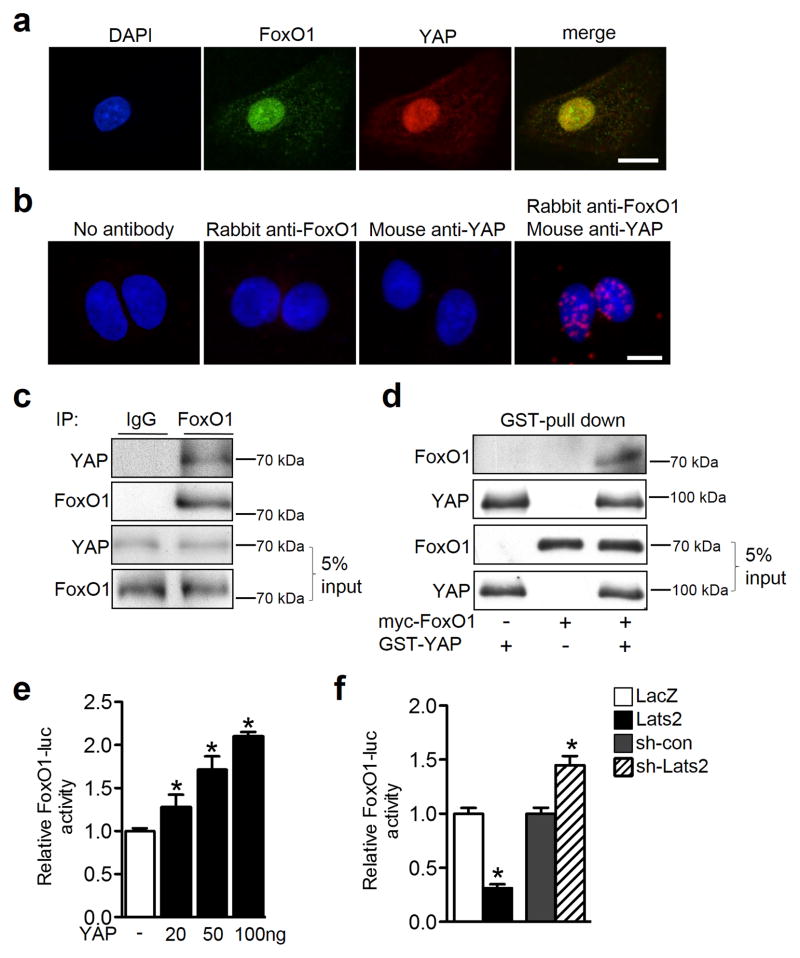
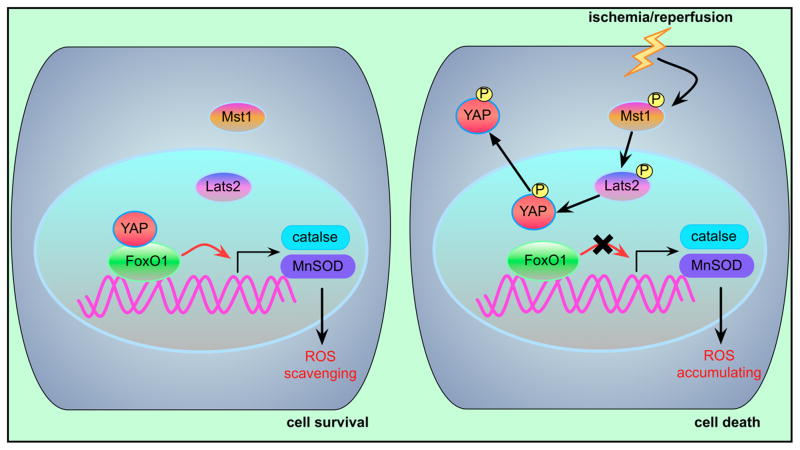
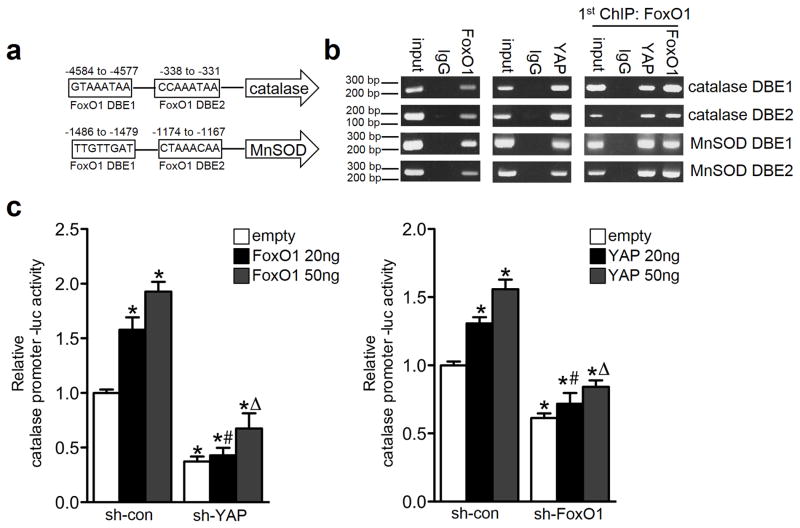
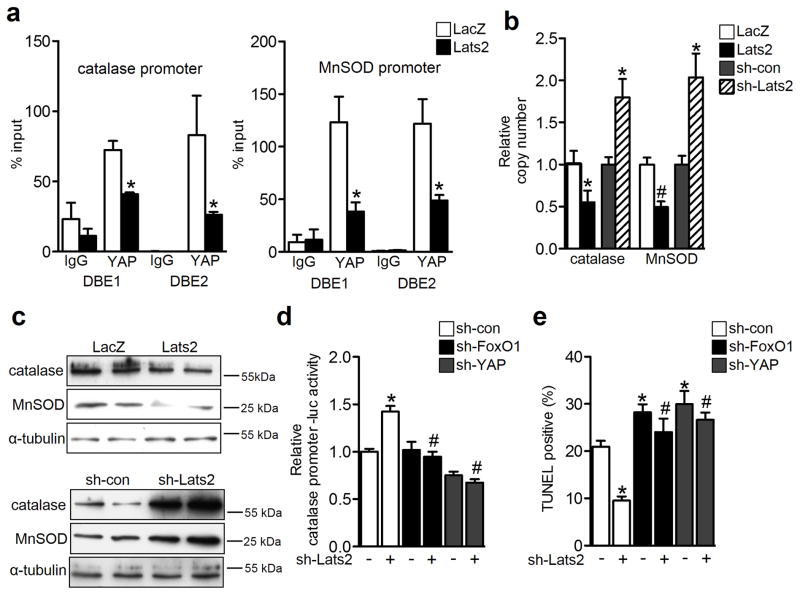
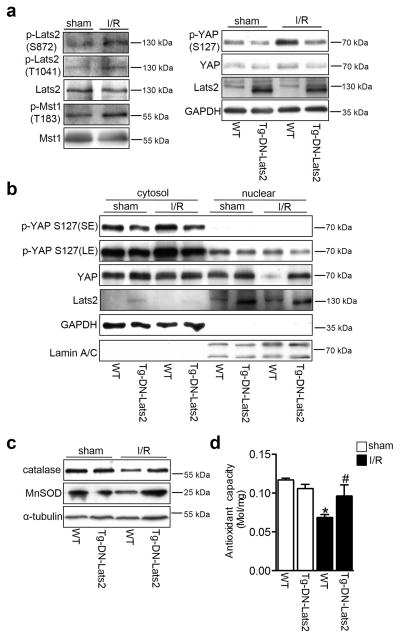
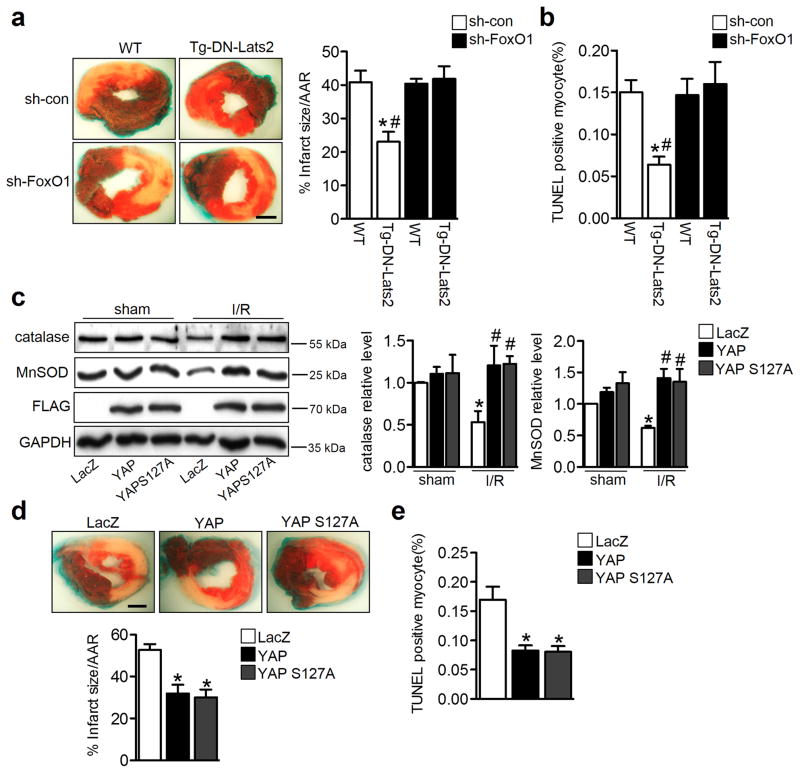
The Hippo pathway is an evolutionarily conserved regulator of organ size and tumorigenesis that negatively regulates cell growth and survival. Here we report that Yes-associated protein (YAP), the terminal effector of the Hippo pathway, interacts with FoxO1 in the nucleus of cardiomyocytes, thereby promoting survival. YAP and FoxO1 form a functional complex on the promoters of the catalase and manganese superoxide dismutase (MnSOD) antioxidant genes and stimulate their transcription. Inactivation of YAP, induced by Hippo activation, suppresses FoxO1 activity and decreases antioxidant gene expression, suggesting that Hippo signalling modulates the FoxO1-mediated antioxidant response. In the setting of ischaemia/reperfusion (I/R) in the heart, activation of Hippo antagonizes YAP-FoxO1, leading to enhanced oxidative stress-induced cell death through downregulation of catalase and MnSOD. Conversely, restoration of YAP activity protects against I/R injury. These results suggest that YAP is a nuclear co-factor of FoxO1 and that the Hippo pathway negatively affects cardiomyocyte survival by inhibiting the function of YAP-FoxO1.
Hippo信号通路是一种在进化上保守的器官大小和肿瘤发生调节因子,对细胞生长和存活起负调节作用。在此,我们报告Hippo信号通路的终末效应因子Yes相关蛋白(YAP)在心肌细胞的细胞核中与FoxO1相互作用,从而促进细胞存活。YAP和FoxO1在过氧化氢酶和锰超氧化物歧化酶(MnSOD)抗氧化基因的启动子上形成功能复合物,并刺激它们的转录。由Hippo激活诱导的YAP失活会抑制FoxO1活性并降低抗氧化基因表达,这表明Hippo信号传导调节FoxO1介导的抗氧化反应。在心脏缺血/再灌注(I/R)情况下,Hippo的激活会拮抗YAP-FoxO1,通过下调过氧化氢酶和MnSOD导致氧化应激诱导的细胞死亡增加。相反,恢复YAP活性可预防I/R损伤。这些结果表明YAP是FoxO1的核辅因子,并且Hippo信号通路通过抑制YAP-FoxO1的功能对心肌细胞存活产生负面影响。