School of Chemical and Bioprocess Engineering and Conway Institute of Biomolecular and Biomedical Research, University College Dublin, Dublin, Ireland.
BMC Biotechnol. 2014 Feb 17;14:15. doi: 10.1186/1472-6750-14-15.
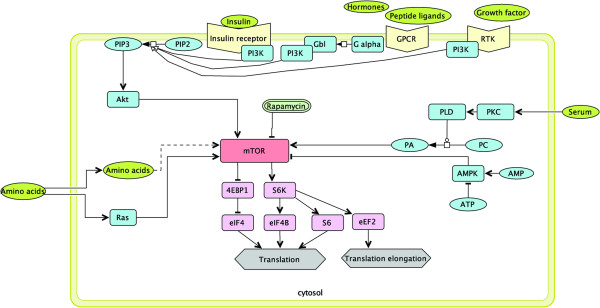
High recombinant protein productivity in mammalian cell lines is often associated with phenotypic changes in protein content, energy metabolism, and cell growth, but the key determinants that regulate productivity are still not clearly understood. The mammalian target of rapamycin (mTOR) signalling pathway has emerged as a central regulator for many cellular processes including cell growth, apoptosis, metabolism, and protein synthesis. This role of this pathway changes in response to diverse environmental cues and allows the upstream proteins that respond directly to extracellular signals (such as nutrient availability, energy status, and physical stresses) to communicate with downstream effectors which, in turn, regulate various essential cellular processes.
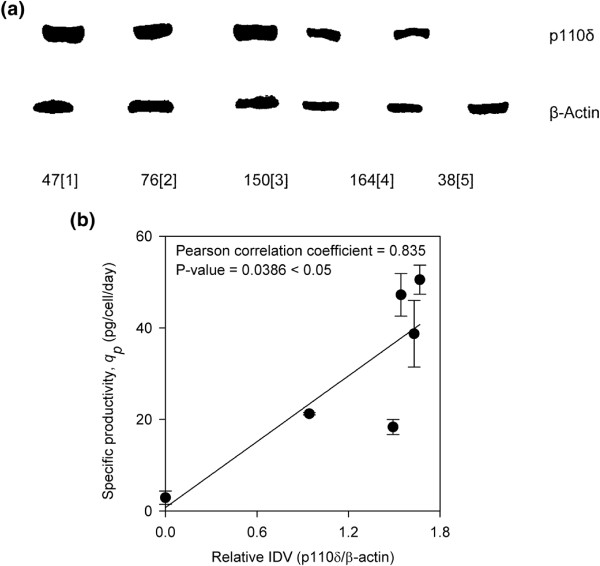
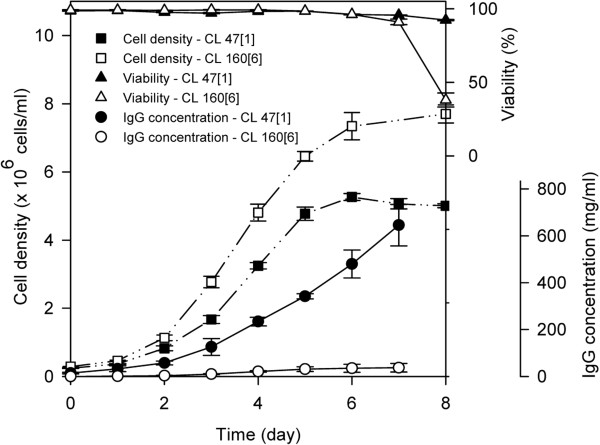
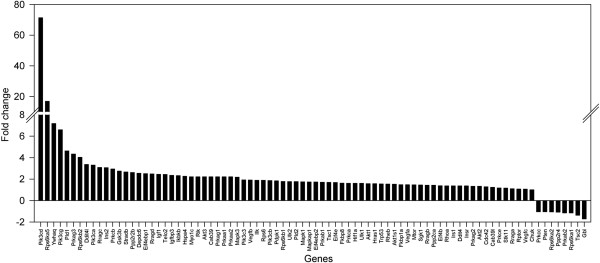
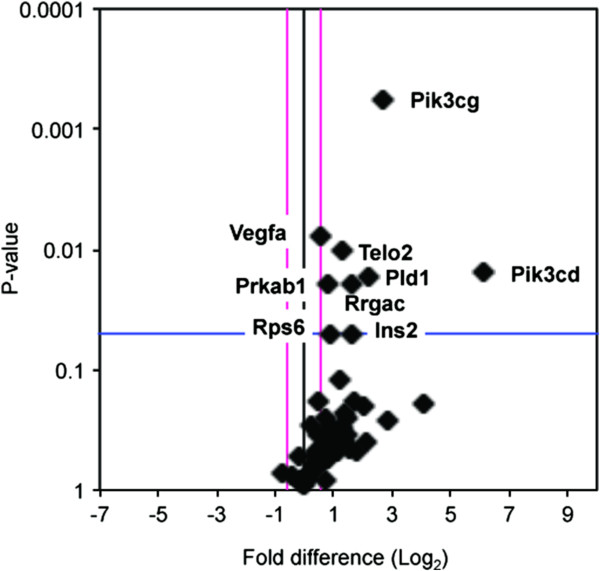
In this study, we have performed a transcriptomic analysis using a pathway-focused polymerase chain reaction (PCR) array to compare the expression of 84 target genes related to the mTOR signalling in two recombinant CHO cell lines with a 17.4-fold difference in specific monoclonal antibody productivity (qp). Eight differentially expressed genes that exhibited more than a 1.5-fold change were identified. Pik3cd (encoding the Class 1A catalytic subunit of phosphatidylinositol 3-kinase [PI3K]) was the most differentially expressed gene having a 71.3-fold higher level of expression in the high producer cell line than in the low producer. The difference in the gene's transcription levels was confirmed at the protein level by examining expression of p110δ.
Expression of p110δ correlated with specific productivity (qp) across six different CHO cell lines, with a range of expression levels from 3 to 51 pg/cell/day, suggesting that p110δ may be a key factor in regulating productivity in recombinant cell lines.
哺乳动物细胞系中高重组蛋白的产量通常与蛋白质含量、能量代谢和细胞生长的表型变化有关,但调节产量的关键决定因素仍不清楚。哺乳动物雷帕霉素靶蛋白(mTOR)信号通路已成为许多细胞过程的中央调节剂,包括细胞生长、细胞凋亡、代谢和蛋白质合成。该途径的作用会根据不同的环境线索而变化,允许直接响应细胞外信号(如营养可用性、能量状态和物理应激)的上游蛋白与下游效应物进行通讯,而下游效应物反过来又调节各种基本的细胞过程。
在这项研究中,我们使用针对途径的聚合酶链反应(PCR)阵列进行了转录组分析,以比较两个重组 CHO 细胞系中与 mTOR 信号相关的 84 个靶基因的表达,这两个细胞系的特异性单克隆抗体产量(qp)差异为 17.4 倍。鉴定出 8 个表达差异超过 1.5 倍的差异表达基因。Pik3cd(编码磷脂酰肌醇 3-激酶[PI3K]的 1A 类催化亚基)是表达差异最大的基因,在高产物细胞系中的表达水平比低产物细胞系高 71.3 倍。通过检查 p110δ 的表达,在蛋白质水平上证实了基因转录水平的差异。
p110δ 的表达与六个不同 CHO 细胞系的特异性生产力(qp)相关,表达水平范围为 3 至 51pg/细胞/天,表明 p110δ 可能是调节重组细胞系生产力的关键因素。