Siu Kin Lung, Miao Xiao Niu, Cai Hua
Divisions of Molecular Medicine and Cardiology, Departments of Anesthesiology and Medicine, Cardiovascular Research Laboratories, David Geffen School of Medicine at University of California Los Angeles, Los Angeles, California, United States of America.
PLoS One. 2014 Feb 18;9(2):e88899. doi: 10.1371/journal.pone.0088899. eCollection 2014.
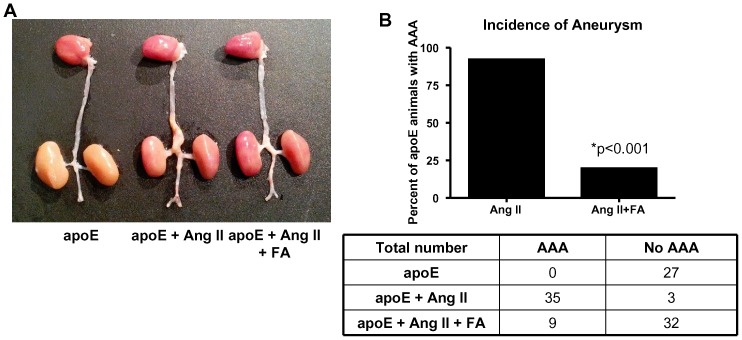
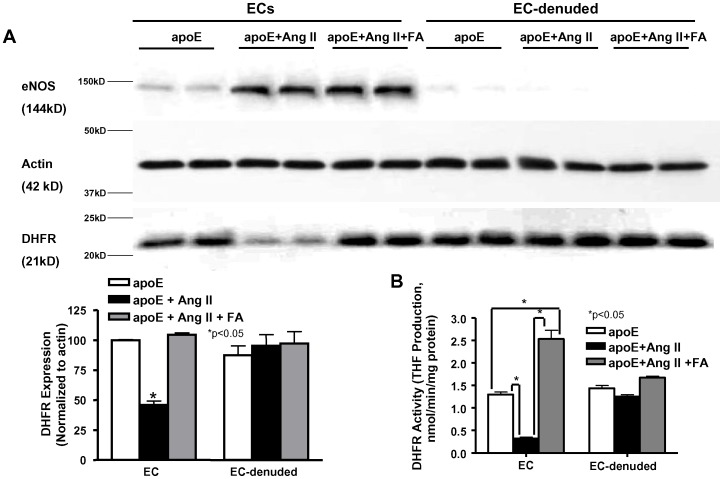
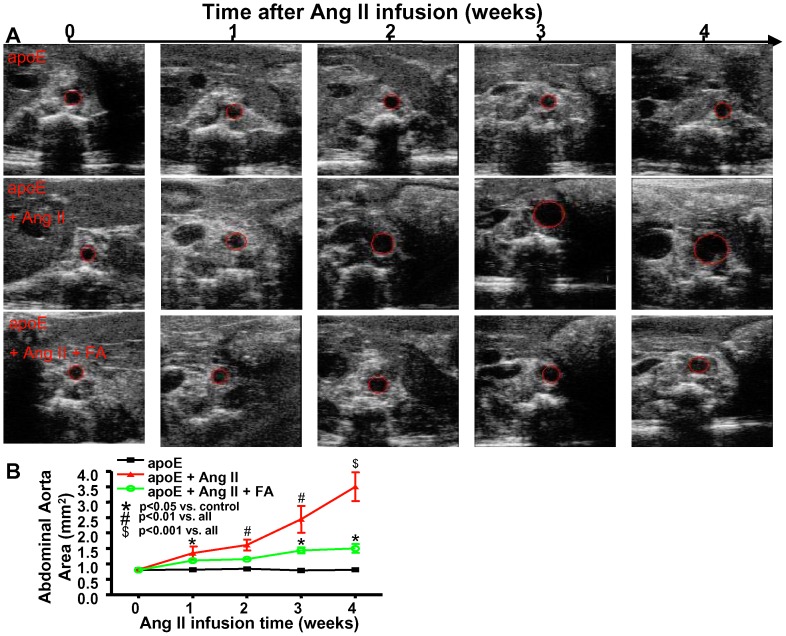
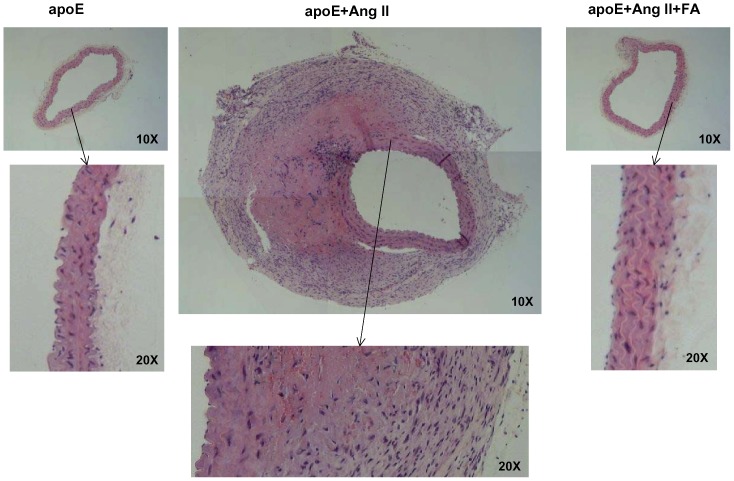
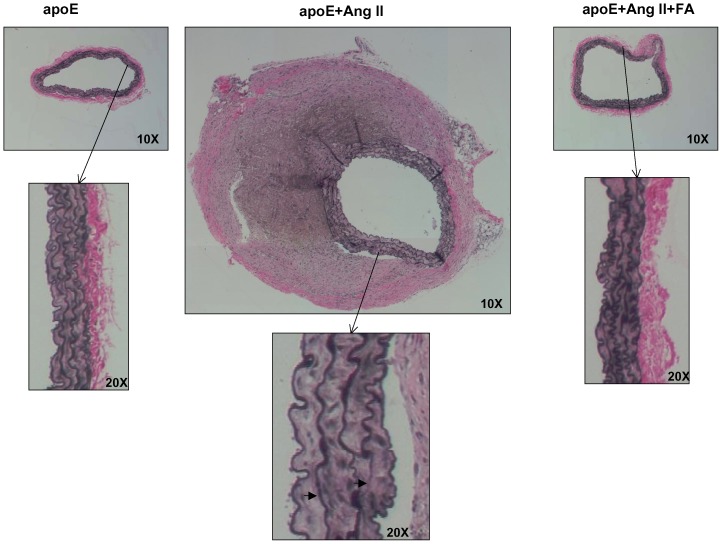
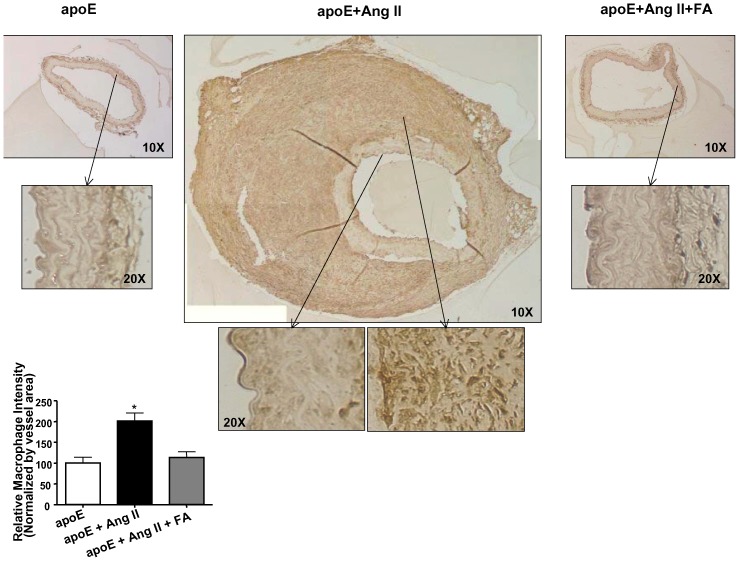
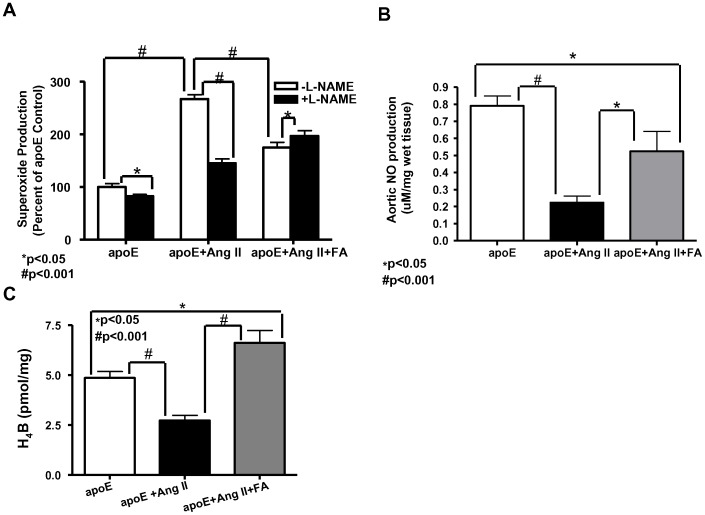
We have previously shown that eNOS uncoupling mediates abdominal aortic aneurysm (AAA) formation in hph-1 mice. In the present study we examined whether recoupling of eNOS prevents AAA formation in a well-established model of Angiotensin II-infused apolipoprotein E (apoE) null mice by targeting some common pathologies of AAA. Infusion of Ang II resulted in a 92% incidence rate of AAA in the apoE null animals. In a separate group, animals were treated orally with folic acid (FA), which is known to recouple eNOS through augmentation of dihydrofolate reductase (DHFR) function. This resulted in a reduction of AAA rate to 19.5%. Imaging with ultrasound showed that FA markedly inhibited expansion of abdominal aorta. FA also abolished elastin breakdown and macrophage infiltration in the AAA animals. The eNOS uncoupling activity, assessed by L-NAME-sensitive superoxide production, was minimal at baseline but greatly exaggerated with Ang II infusion, which was completely attenuated by FA. This was accompanied by markedly improved tetrahydrobiopterin and nitric oxide bioavailability. Furthermore, the expression and activity of DHFR was decreased in Ang II-infused apoE null mice specifically in the endothelial cells, while FA administration resulted in its recovery. Taken together, these data further establish a significant role of uncoupled eNOS in mediating AAA formation, and a universal efficacy of FA in preventing AAA formation via restoration of DHFR to restore eNOS function.
我们之前已经表明,内皮型一氧化氮合酶(eNOS)解偶联介导了hph-1小鼠腹主动脉瘤(AAA)的形成。在本研究中,我们通过针对AAA的一些常见病理情况,研究了eNOS重新偶联是否能预防在已建立的血管紧张素II灌注载脂蛋白E(apoE)基因敲除小鼠模型中AAA的形成。向apoE基因敲除动物灌注血管紧张素II导致AAA的发生率为92%。在另一组中,动物口服叶酸(FA),已知叶酸可通过增强二氢叶酸还原酶(DHFR)的功能使eNOS重新偶联。这使得AAA发生率降至19.5%。超声成像显示,FA显著抑制腹主动脉扩张。FA还消除了AAA动物中弹性蛋白的降解和巨噬细胞浸润。通过L-NAME敏感的超氧化物生成评估的eNOS解偶联活性在基线时最小,但在灌注血管紧张素II时大大增强,而FA可使其完全减弱。这伴随着四氢生物蝶呤和一氧化氮生物利用度的显著改善。此外,在血管紧张素II灌注的apoE基因敲除小鼠中,特别是在内皮细胞中,DHFR的表达和活性降低,而给予FA可使其恢复。综上所述,这些数据进一步证实了解偶联的eNOS在介导AAA形成中的重要作用,以及FA通过恢复DHFR以恢复eNOS功能来预防AAA形成的普遍有效性。