Dunning Jeffery L, Pant Santosh, Bass Aaron, Coburn Zachary, Prather Jonathan F
Program in Neuroscience, Department of Zoology and Physiology, University of Wyoming, Laramie, Wyoming, United States of America.
PLoS One. 2014 Feb 18;9(2):e89438. doi: 10.1371/journal.pone.0089438. eCollection 2014.
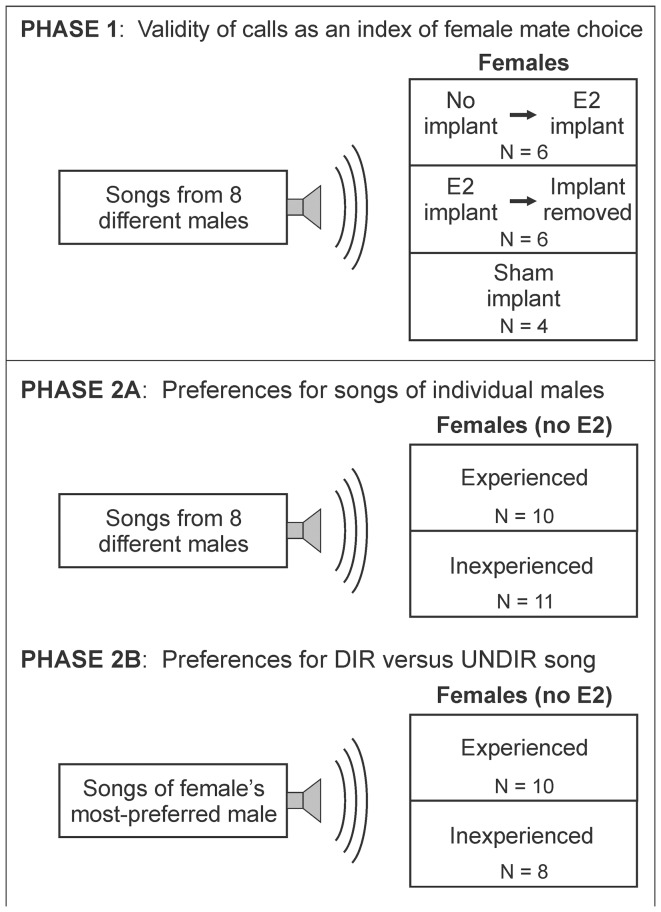
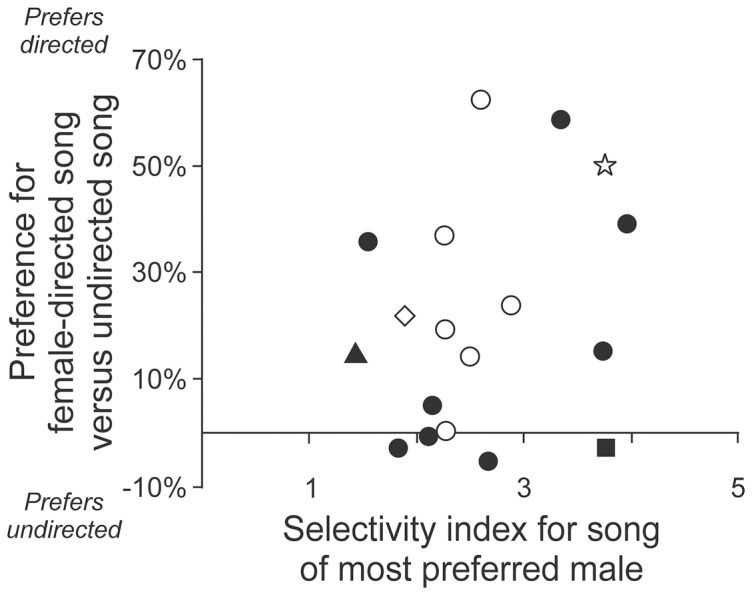
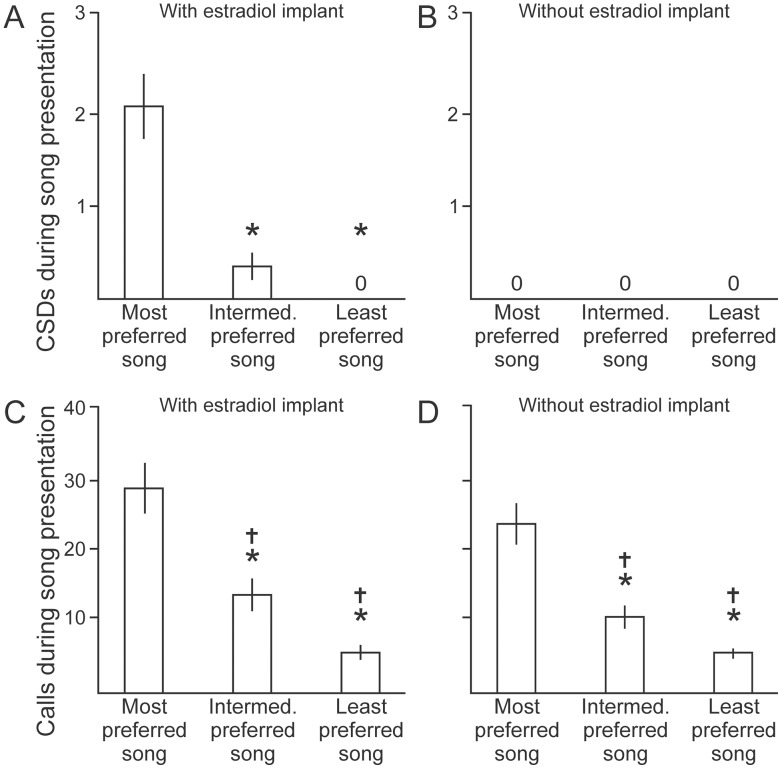
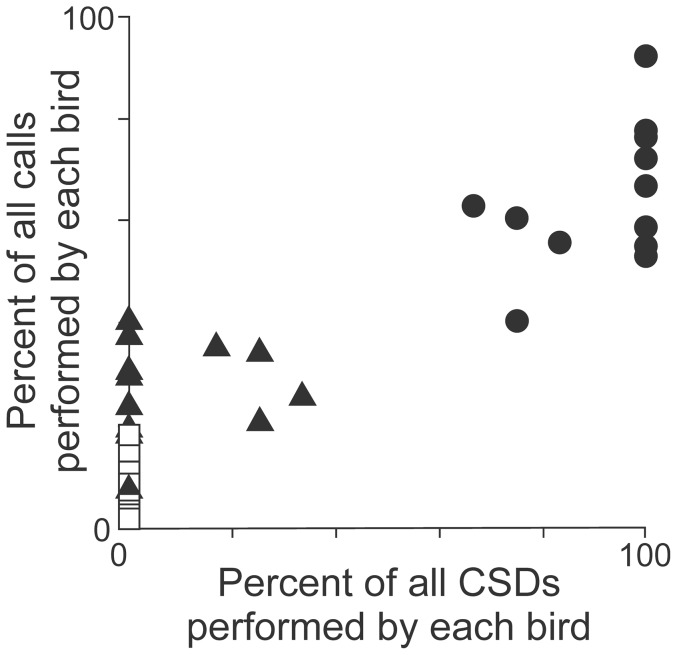
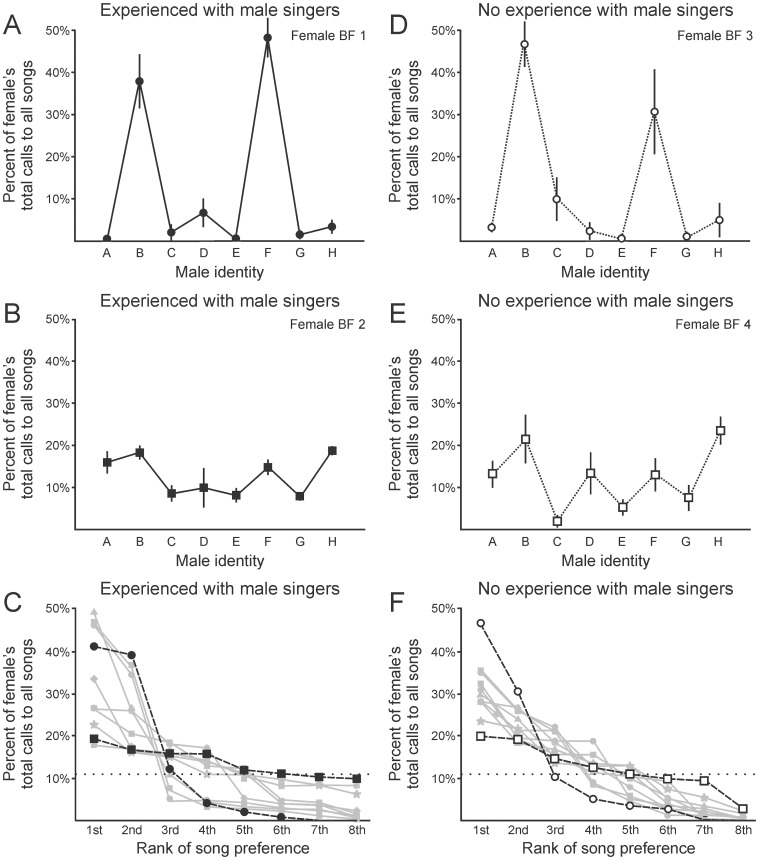
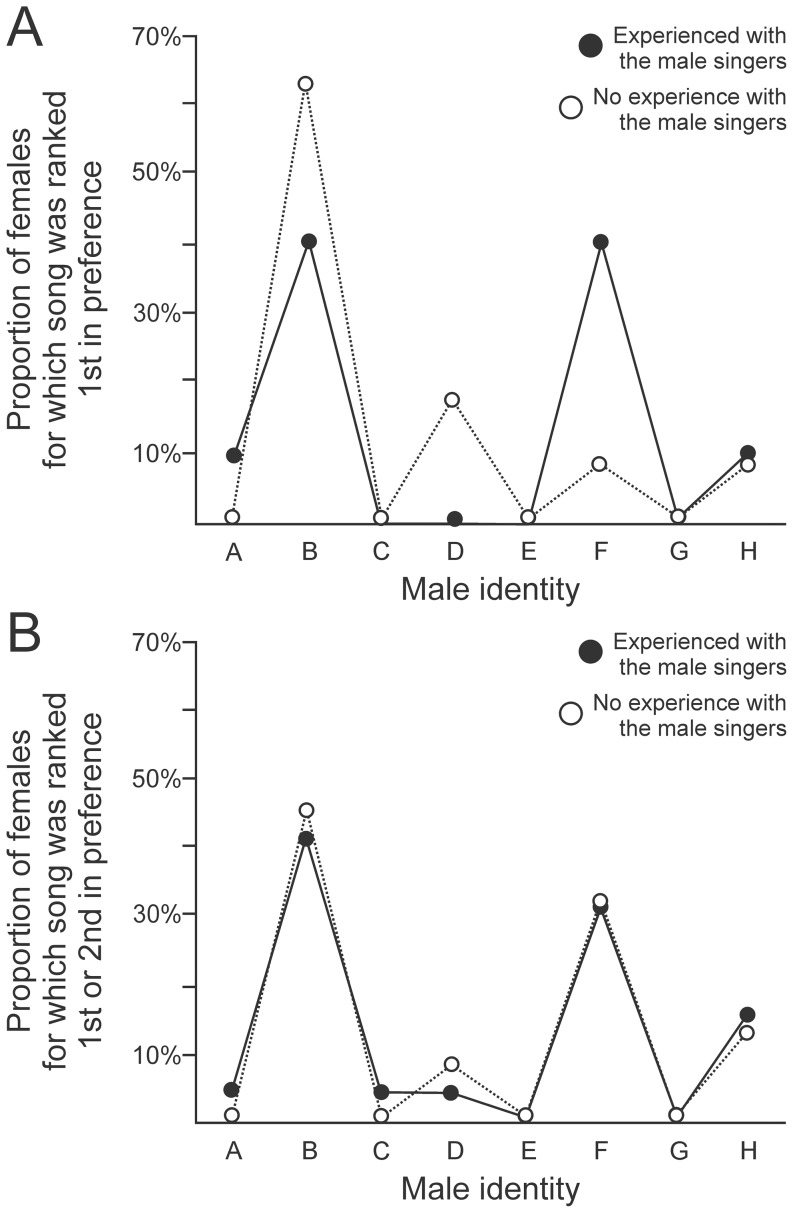
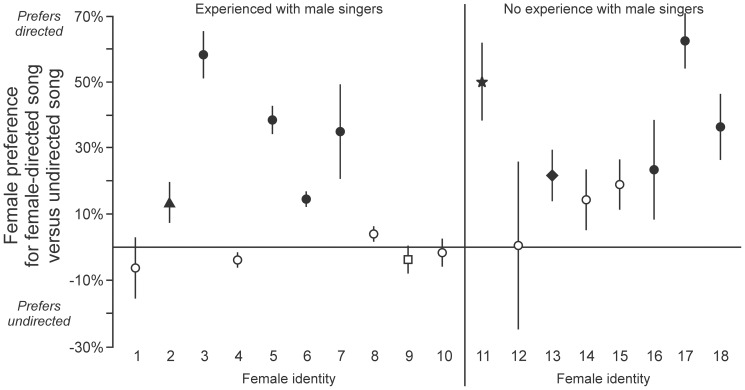
In the process of mate selection by female songbirds, male suitors advertise their quality through reproductive displays in which song plays an important role. Females evaluate the quality of each signal and the associated male, and the results of that evaluation guide expression of selective courtship displays. Some studies reveal broad agreement among females in their preferences for specific signal characteristics, indicating that those features are especially salient in female mate choice. Other studies reveal that females differ in their preference for specific characteristics, indicating that in those cases female evaluation of signal quality is influenced by factors other than simply the physical properties of the signal. Thus, both the physical properties of male signals and specific traits of female signal evaluation can impact female mate choice. Here, we characterized the mate preferences of female Bengalese finches. We found that calls and copulation solicitation displays are equally reliable indicators of female preference. In response to songs from an array of males, each female expressed an individual-specific song preference, and those preferences were consistent across tests spanning many months. Across a population of females, songs of some males were more commonly preferred than others, and females preferred female-directed songs more than undirected songs, suggesting that some song features are broadly attractive. Preferences were indistinguishable for females that did or did not have social experience with the singers, indicating that female preference is strongly directed by song features rather than experiences associated with the singer. Analysis of song properties revealed several candidate parameters that may influence female evaluation. In an initial investigation of those parameters, females could be very selective for one song feature yet not selective for another. Therefore, multiple song parameters are evaluated independently. Together these findings reveal the nature of signal evaluation and mate choice in this species.
在雌性鸣禽的择偶过程中,雄性求偶者通过生殖展示来宣传自己的品质,其中歌声起着重要作用。雌性会评估每个信号以及相关雄性的品质,而这种评估结果会指导选择性求偶展示的表达。一些研究表明,雌性在对特定信号特征的偏好上存在广泛共识,这表明这些特征在雌性择偶中尤为突出。其他研究则表明,雌性在对特定特征的偏好上存在差异,这表明在这些情况下,雌性对信号质量的评估受到的影响因素不仅仅是信号的物理属性。因此,雄性信号的物理属性和雌性信号评估的特定特征都会影响雌性的择偶选择。在这里,我们描述了雌性 Bengalese 雀的择偶偏好。我们发现叫声和求偶交配展示同样是雌性偏好的可靠指标。针对一系列雄性的歌声,每只雌性都表现出个体特异性的歌声偏好,并且这些偏好在跨越多个月的测试中保持一致。在一群雌性中,某些雄性的歌声比其他雄性的歌声更常被偏好,而且雌性更喜欢针对雌性的歌声而不是无特定指向的歌声,这表明某些歌声特征具有广泛的吸引力。对于与歌手有或没有社交经历的雌性来说,偏好没有区别,这表明雌性偏好强烈地由歌声特征而非与歌手相关的经历所引导。对歌声属性的分析揭示了几个可能影响雌性评估的候选参数。在对这些参数的初步研究中,雌性可能对一种歌声特征非常挑剔,而对另一种则不挑剔。因此,多个歌声参数是独立评估的。这些发现共同揭示了该物种信号评估和择偶选择的本质。