University of Michigan, Department of Ecology and Evolutionary Biology, Ann Arbor, Michigan 48109, USA;
Genome Res. 2014 May;24(5):797-808. doi: 10.1101/gr.163014.113. Epub 2014 Feb 24.
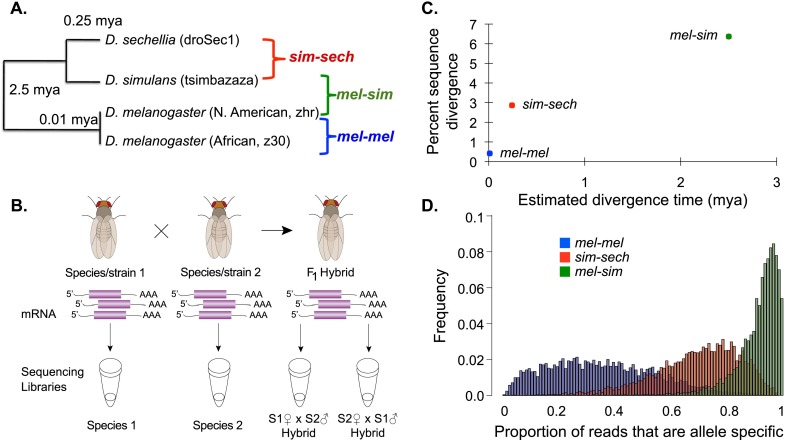
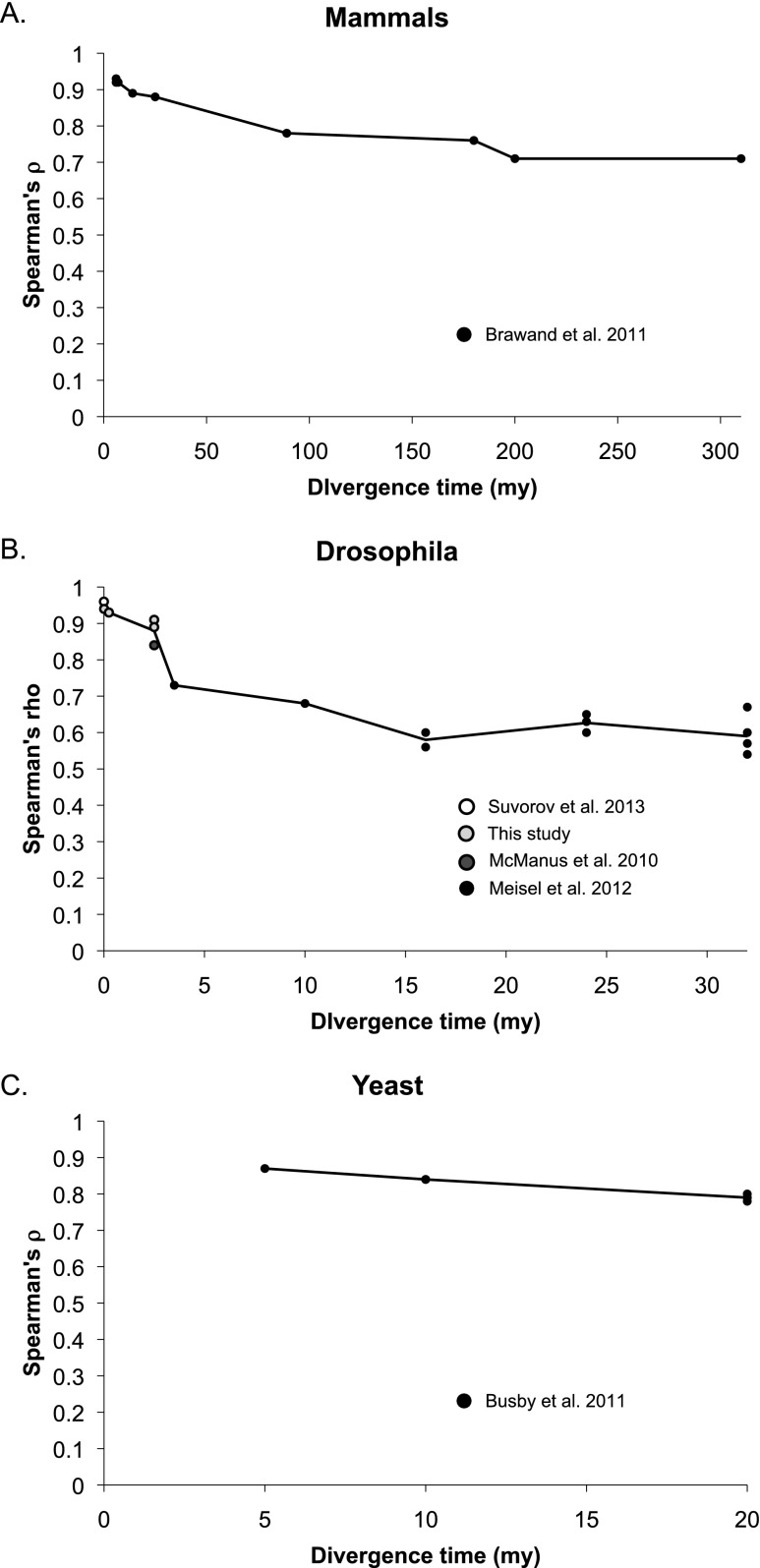
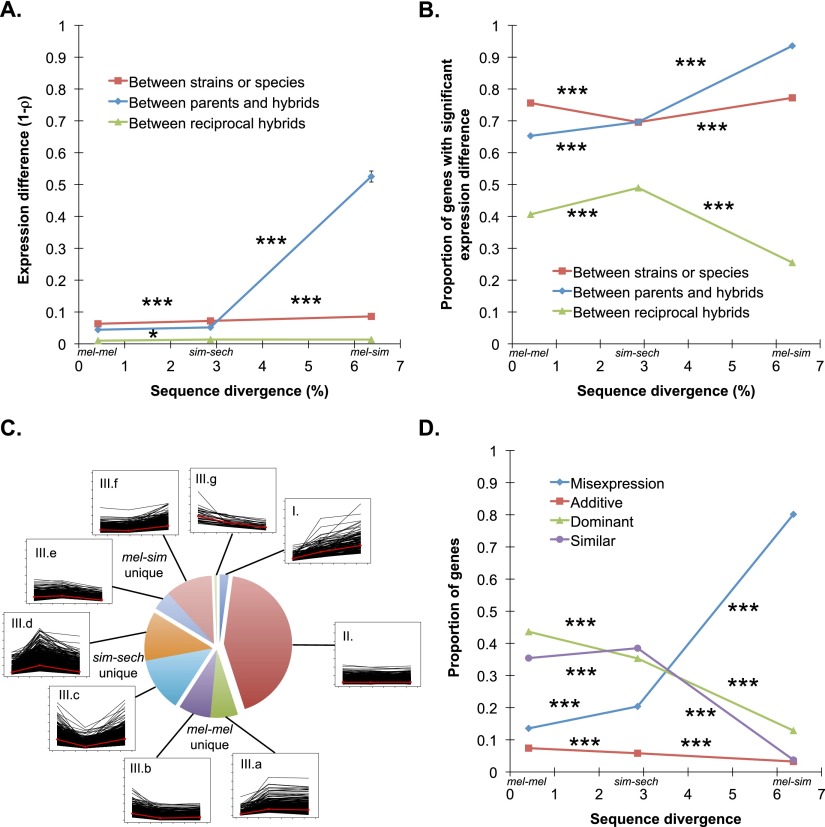
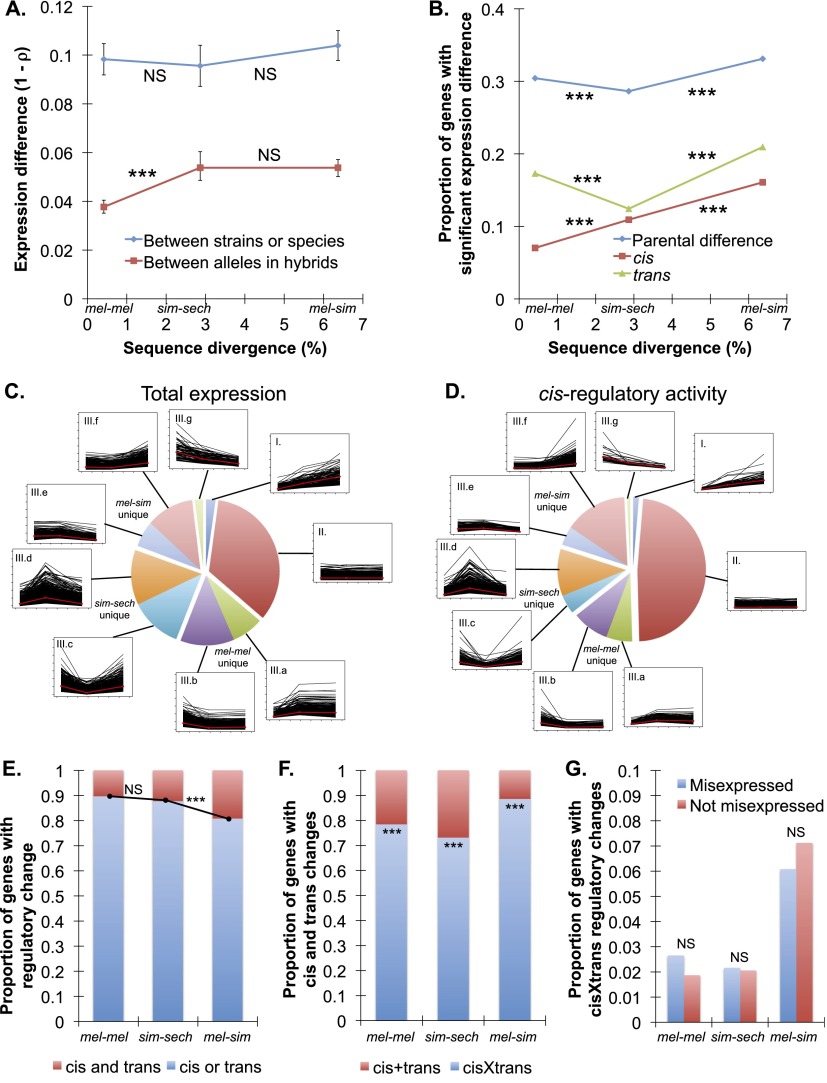
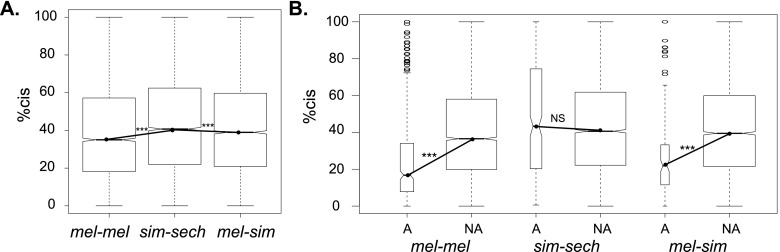
Genetic changes affecting gene expression contribute to phenotypic divergence; thus, understanding how regulatory networks controlling gene expression change over time is critical for understanding evolution. Prior studies of expression differences within and between species have identified properties of regulatory divergence, but technical and biological differences among these studies make it difficult to assess the generality of these properties or to understand how regulatory changes accumulate with divergence time. Here, we address these issues by comparing gene expression among strains and species of Drosophila with a range of divergence times and use F1 hybrids to examine inheritance patterns and disentangle cis- and trans-regulatory changes. We find that the fixation of compensatory changes has caused the regulation of gene expression to diverge more rapidly than gene expression itself. Specifically, we observed that the proportion of genes with evidence of cis-regulatory divergence has increased more rapidly with divergence time than the proportion of genes with evidence of expression differences. Surprisingly, the amount of expression divergence explained by cis-regulatory changes did not increase steadily with divergence time, as was previously proposed. Rather, one species (Drosophila sechellia) showed an excess of cis-regulatory divergence that we argue most likely resulted from positive selection in this lineage. Taken together, this work reveals not only the rate at which gene expression evolves, but also the molecular and evolutionary mechanisms responsible for this evolution.
影响基因表达的遗传变化有助于表型分化;因此,了解控制基因表达的调控网络随时间如何变化对于理解进化至关重要。先前在物种内和物种间的表达差异研究中已经确定了调控分化的特性,但这些研究之间存在技术和生物学差异,使得难以评估这些特性的普遍性,或难以理解调控变化如何随分化时间积累。在这里,我们通过比较具有不同分化时间的果蝇品系和物种之间的基因表达来解决这些问题,并使用 F1 杂种来研究遗传模式并区分顺式和反式调控变化。我们发现,补偿性变化的固定使得基因表达的调控比基因表达本身更快地发生了分化。具体来说,我们观察到具有顺式调控分化证据的基因比例随着分化时间的增加比具有表达差异证据的基因比例增加得更快。令人惊讶的是,顺式调控变化所解释的表达分化量并没有像以前提出的那样随着分化时间的增加而稳定增加。相反,一个物种(Drosophila sechellia)表现出过多的顺式调控分化,我们认为这最有可能是由于该谱系中的正选择所致。总之,这项工作不仅揭示了基因表达进化的速度,还揭示了导致这种进化的分子和进化机制。