Department of Nuclear Medicine, University Hospital Heidelberg, Im Neuenheimer Feld 400, 69120, Heidelberg, Germany.
Eur J Nucl Med Mol Imaging. 2014 Jul;41(7):1280-92. doi: 10.1007/s00259-014-2713-y. Epub 2014 Feb 28.
Since the prostate-specific membrane antigen (PSMA) is frequently over-expressed in prostate cancer (PCa) several PSMA-targeting molecules are under development to detect and treat metastatic castration resistant prostate cancer (mCRPC). We investigated the tissue kinetics of a small molecule inhibitor of PSMA ((S)-2-(3-((S)-1-carboxy-5-(3-(4-[(124)I]iodophenyl)ureido)pentyl)ureido)pentanedioicacid; MIP-1095) using PET/CT to estimate radiation dosimetry for the potential therapeutic use of (131)I-MIP-1095 in men with mCRPC. We also report preliminary safety and efficacy of the first 28 consecutive patients treated under a compassionate-use protocol with a single cycle of (131)I-MIP-1095.
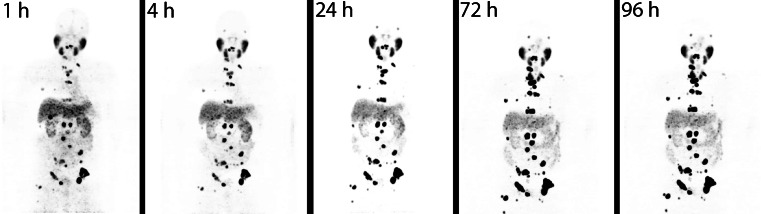
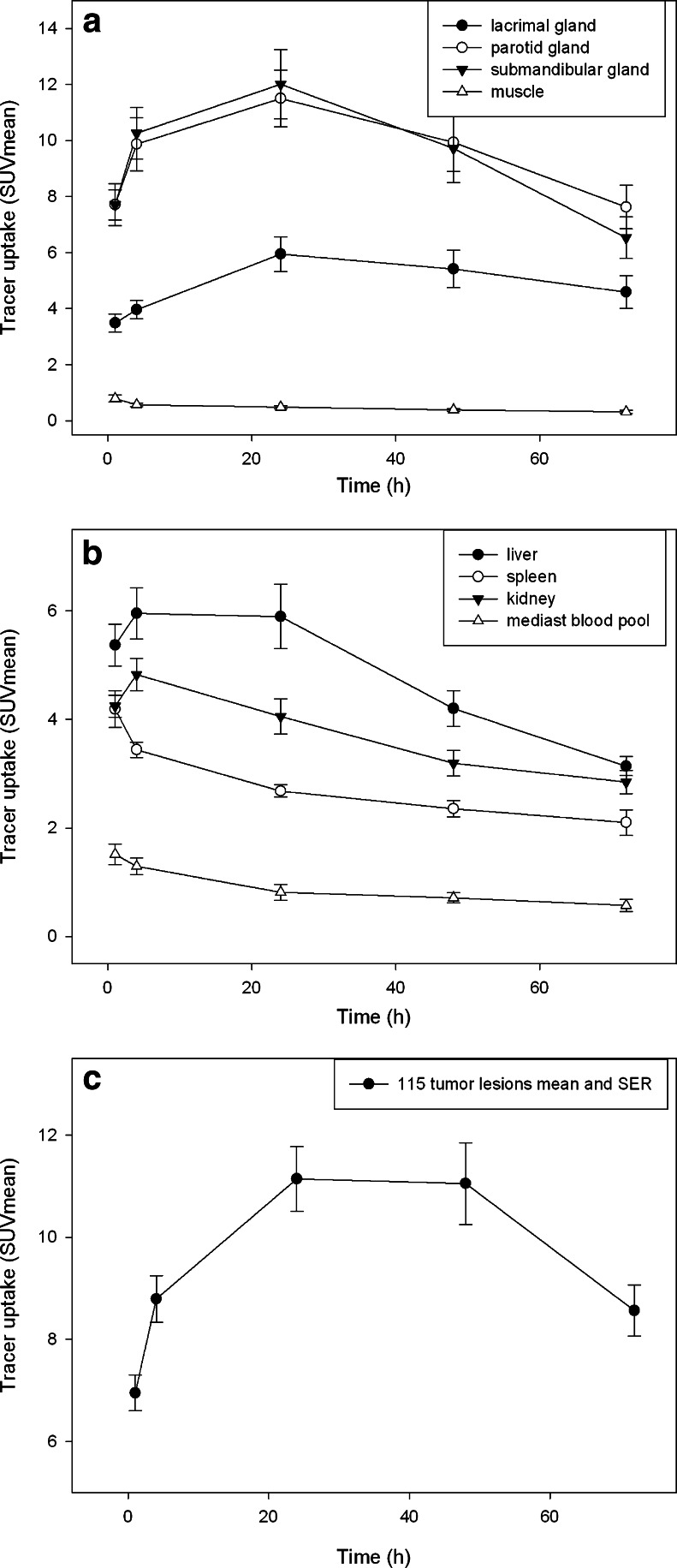
Sixteen patients with known prostate cancer underwent PET/CT imaging after i.v. administration of (124)I-MIP-1095 (mean activity: 67.4 MBq). Each patient was scanned using PET/CT up to five times at 1, 4, 24, 48 and 72 h post injection. Volumes of interest were defined for tumor lesions and normal organs at each time point followed by dose calculations using the OLINDA/EXM software. Twenty-eight men with mCRPC were treated with a single cycle of (131)I-MIP-1095 (mean activity: 4.8 GBq, range 2 to 7.2 GBq) and followed for safety and efficacy. Baseline and follow up examinations included a complete blood count, liver and kidney function tests, and measurement of serum PSA.
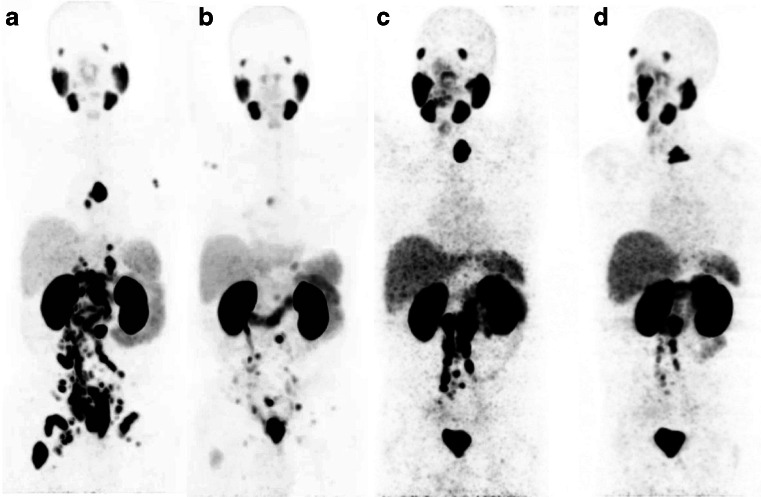
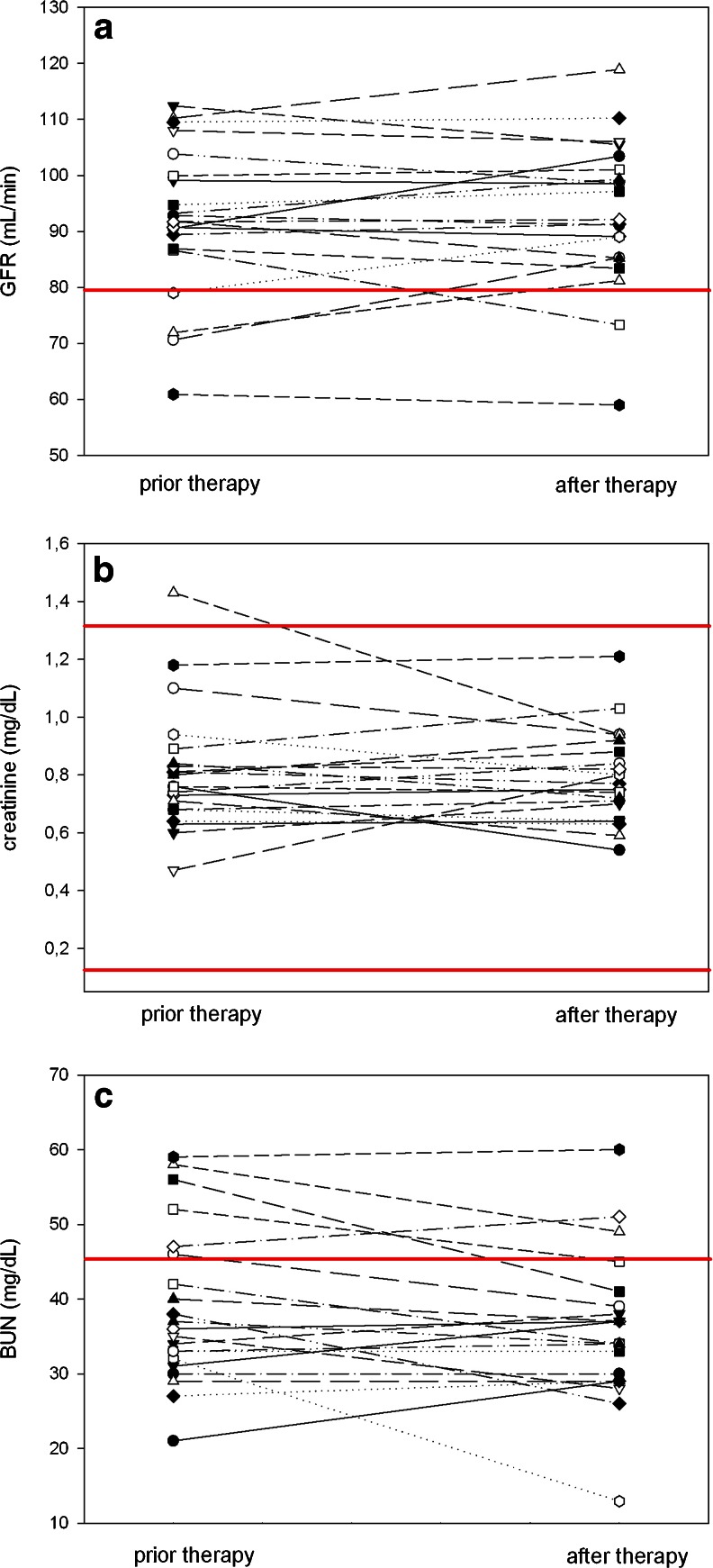
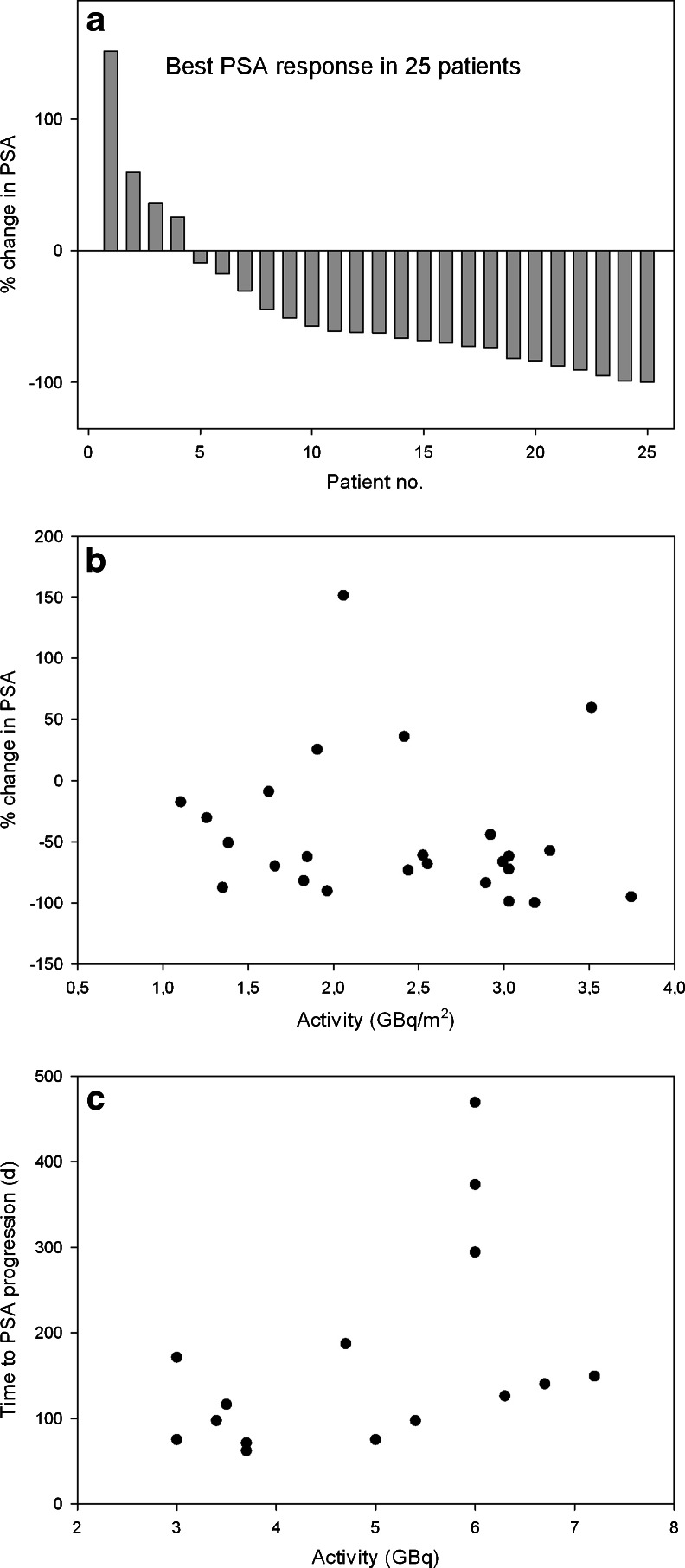
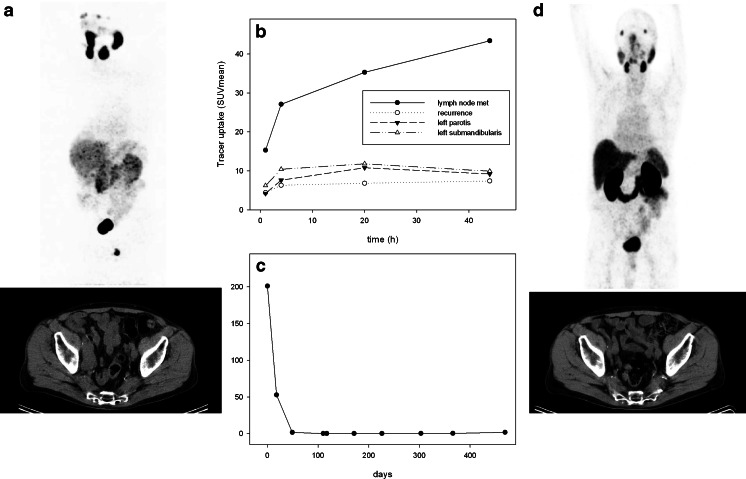
I-124-MIP-1095 PET/CT images showed excellent tumor uptake and moderate uptake in liver, proximal intestine and within a few hours post-injection also in the kidneys. High uptake values were observed only in salivary and lacrimal glands. Dosimetry estimates for I-131-MIP-1095 revealed that the highest absorbed doses were delivered to the salivary glands (3.8 mSv/MBq, liver (1.7 mSv/MBq) and kidneys (1.4 mSv/MBq). The absorbed dose calculated for the red marrow was 0.37 mSv/MBq. PSA values decreased by >50 % in 60.7 % of the men treated. Of men with bone pain, 84.6 % showed complete or moderate reduction in pain. Hematological toxicities were mild. Of men treated, 25 % had a transient slight to moderate dry mouth. No adverse effects on renal function were observed.
Based on the biodistribution and dose calculations of the PSMA-targeted small molecule (124)I-MIP-1095 therapy with the authentic analog (131)I-MIP-1095 enables a targeted tumor therapy with unprecedented doses delivered to the tumor lesions. Involved lymph node and bone metastases were exposed to estimated absorbed doses upwards of 300 Gy.
由于前列腺特异性膜抗原(PSMA)在前列腺癌(PCa)中经常过度表达,因此正在开发几种 PSMA 靶向分子来检测和治疗转移性去势抵抗性前列腺癌(mCRPC)。我们使用 PET/CT 研究了一种小分子 PSMA 抑制剂((S)-2-(3-((S)-1-羧基-5-(3-(4-[[(124)I]碘代]苯基)脲基)戊基)脲基)戊二酸; MIP-1095)的组织动力学,以估计(131)I-MIP-1095 在 mCRPC 男性中的潜在治疗用途的放射剂量。我们还报告了根据同情使用方案,连续 28 例患者接受单次(131)I-MIP-1095 治疗的初步安全性和疗效。
16 例已知患有前列腺癌的患者在静脉注射(124)I-MIP-1095 后进行了 PET/CT 成像(平均活度:67.4 MBq)。每位患者在注射后 1、4、24、48 和 72 小时,使用 PET/CT 最多扫描 5 次。在每个时间点为肿瘤病变和正常器官定义感兴趣的体积,然后使用 OLINDA/EXM 软件进行剂量计算。28 名 mCRPC 男性接受单次(131)I-MIP-1095 治疗(平均活度:4.8GBq,范围 2 至 7.2GBq),并随访安全性和疗效。基线和随访检查包括全血细胞计数、肝肾功能检查和血清 PSA 测量。
I-124-MIP-1095 PET/CT 图像显示出优异的肿瘤摄取和肝脏、近端肠道的中度摄取,并且在注射后数小时内也在肾脏中摄取。仅在唾液腺和泪腺中观察到高摄取值。I-131-MIP-1095 的剂量估算表明,唾液腺的吸收剂量最高(3.8mSv/MBq),肝脏(1.7mSv/MBq)和肾脏(1.4mSv/MBq)。骨髓的吸收剂量计算为 0.37mSv/MBq。接受治疗的男性中有 60.7%的 PSA 值下降>50%。在有骨痛的男性中,84.6%的疼痛完全或中度减轻。血液学毒性较轻。接受治疗的男性中有 25%出现短暂的轻度至中度口干。未观察到肾功能的不良反应。
基于 PSMA 靶向小分子(124)I-MIP-1095 的生物分布和剂量计算,使用真实类似物(131)I-MIP-1095 进行的 PSMA 靶向小分子治疗可实现对肿瘤病变的靶向肿瘤治疗,达到前所未有的剂量。受累的淋巴结和骨转移灶暴露于估计的吸收剂量超过 300Gy。