INSERM UMR-S 1124, Paris, France ; Université Paris Descartes, Paris, France.
CNRS UPR 3296, Gif sur Yvette, France.
PLoS Pathog. 2014 Feb 27;10(2):e1003975. doi: 10.1371/journal.ppat.1003975. eCollection 2014 Feb.
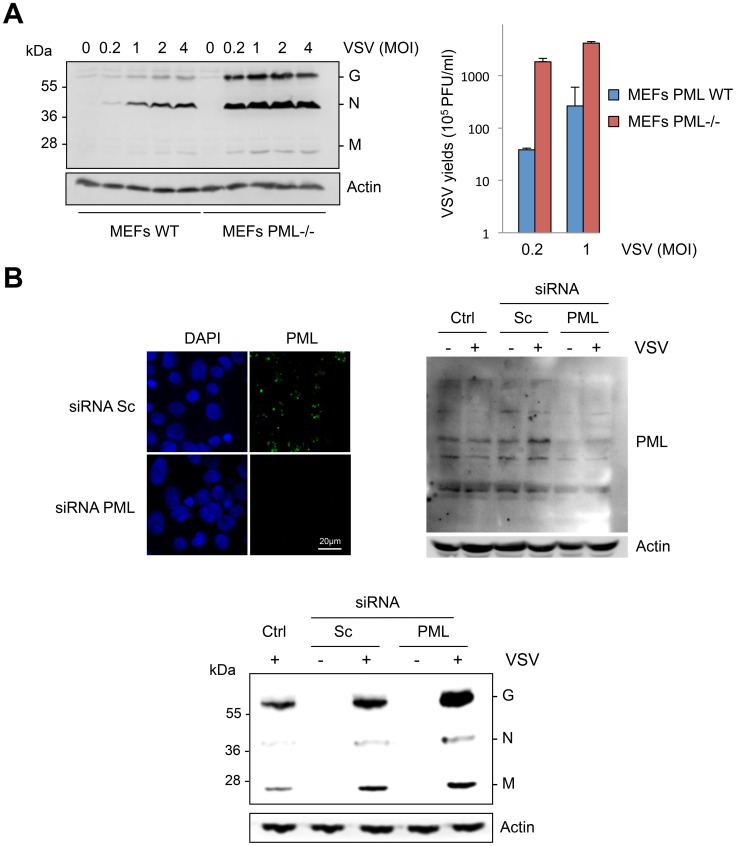
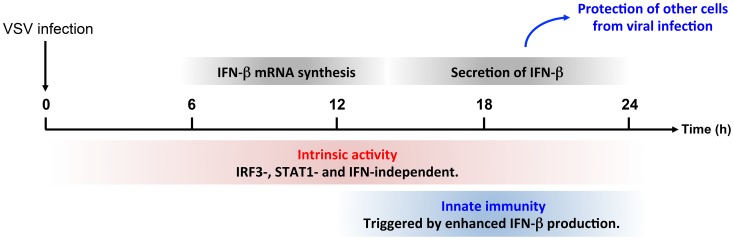
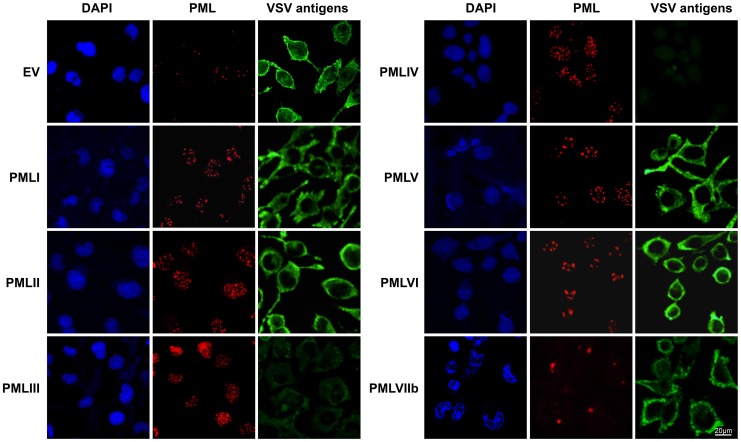
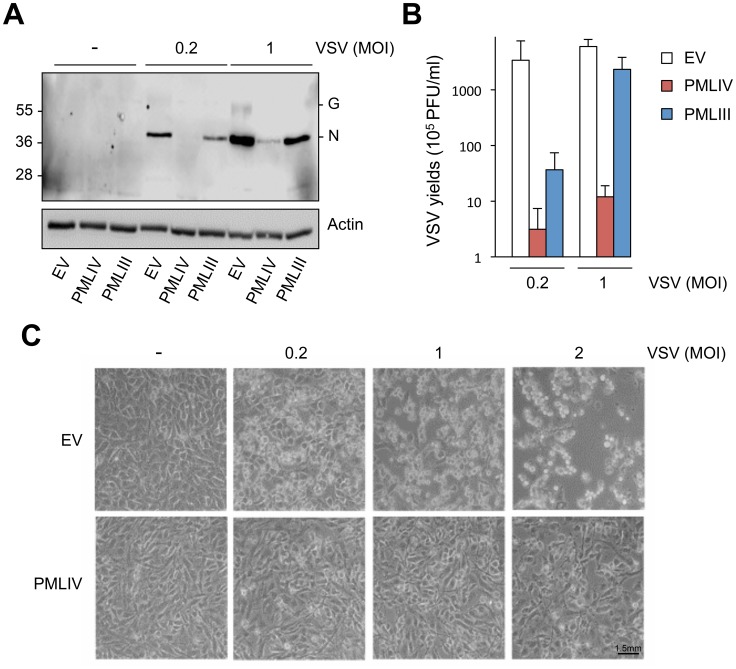
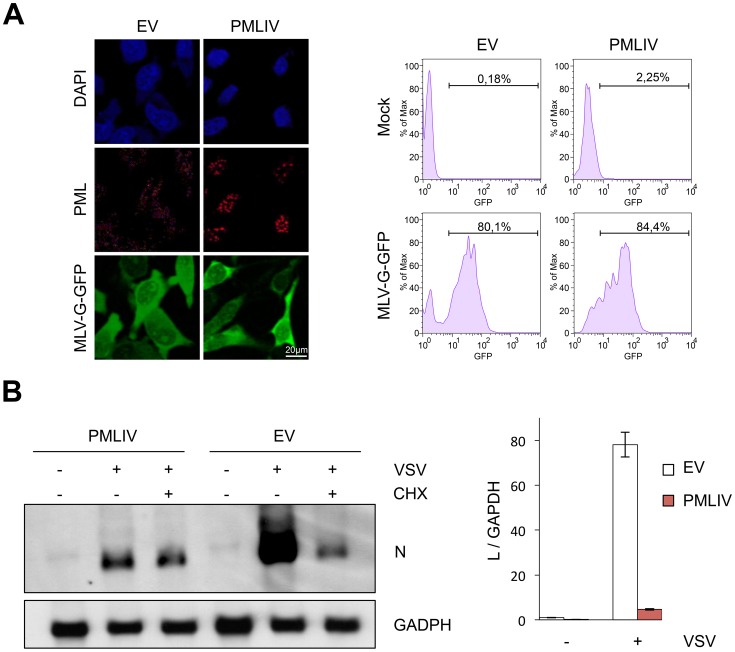
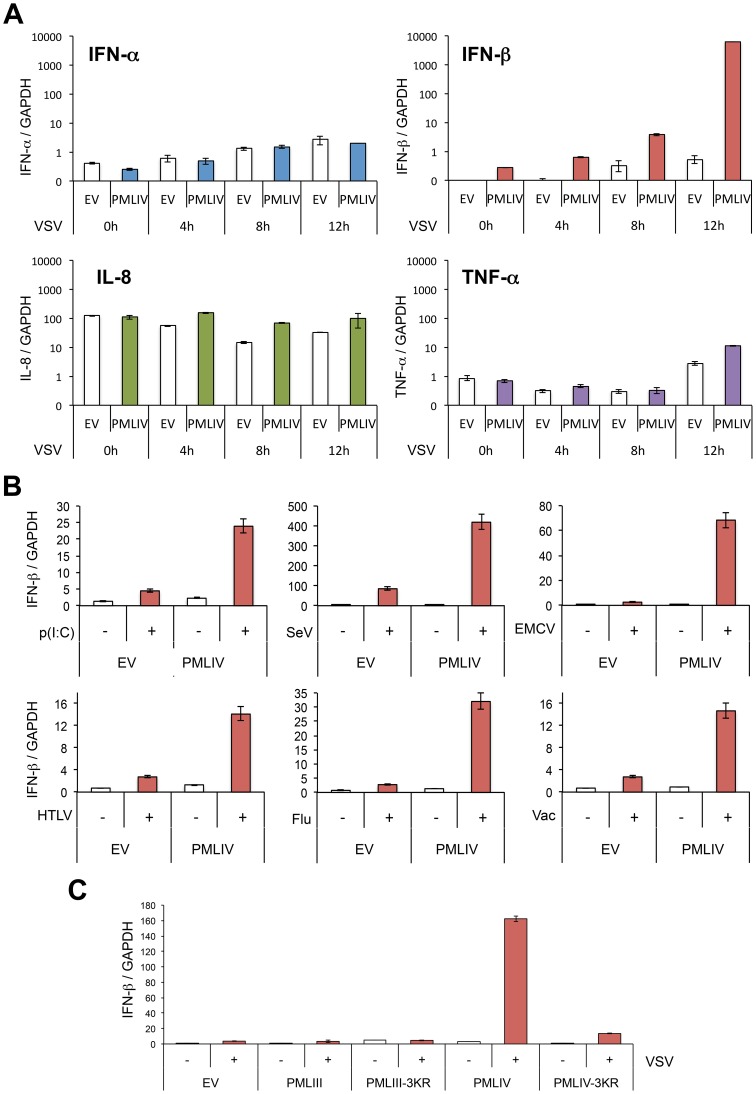
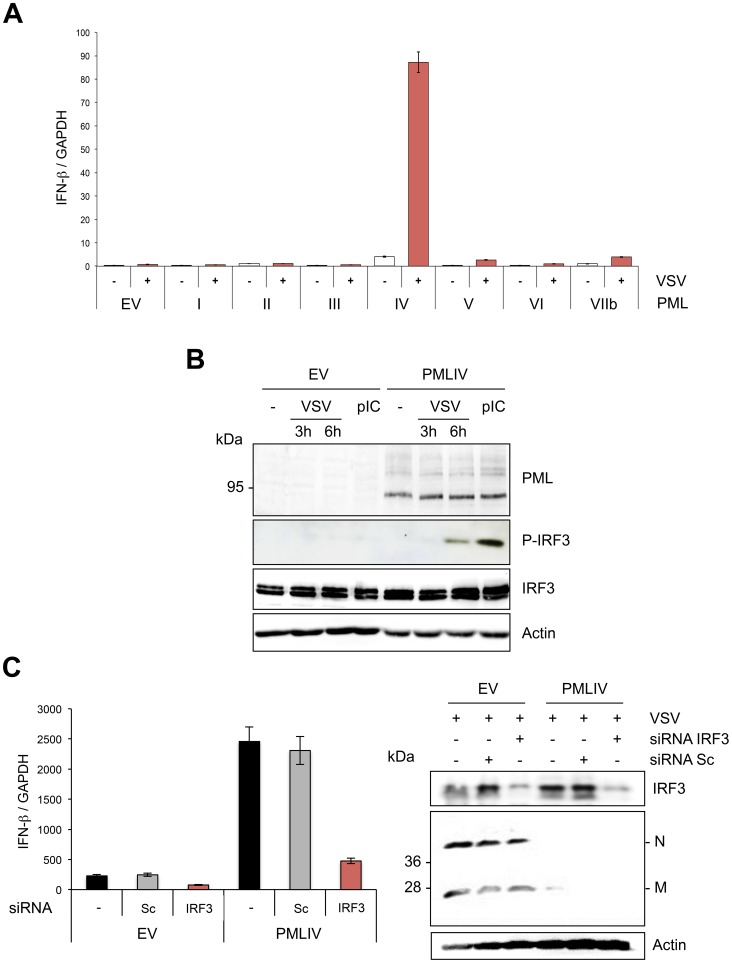
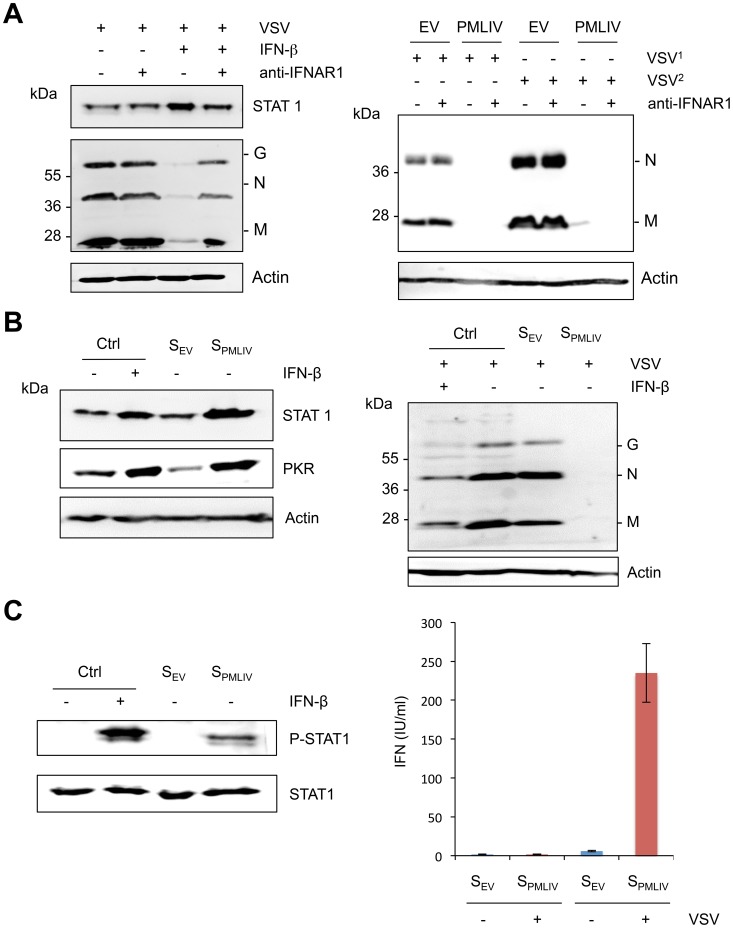
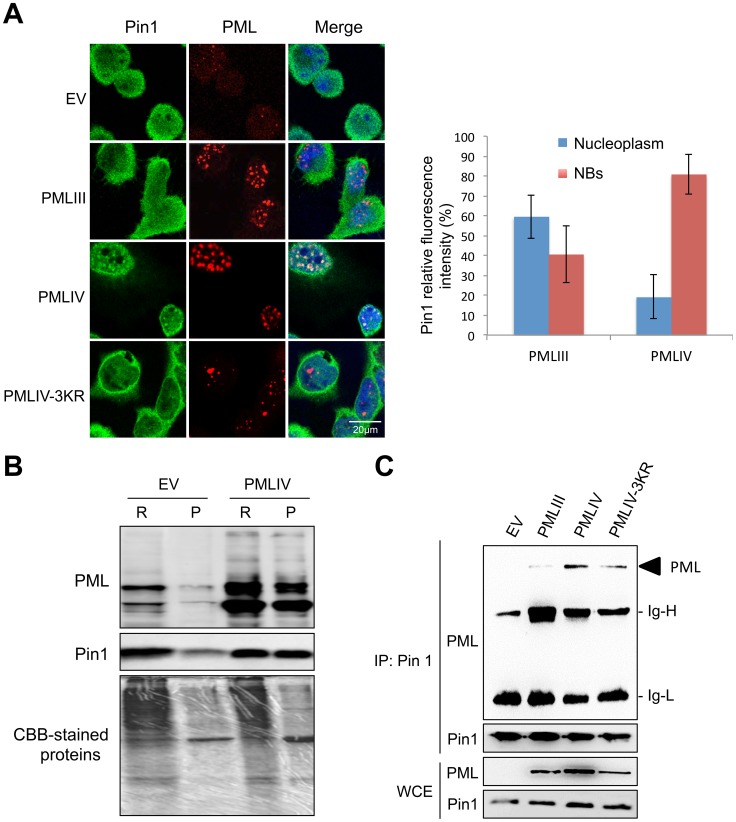
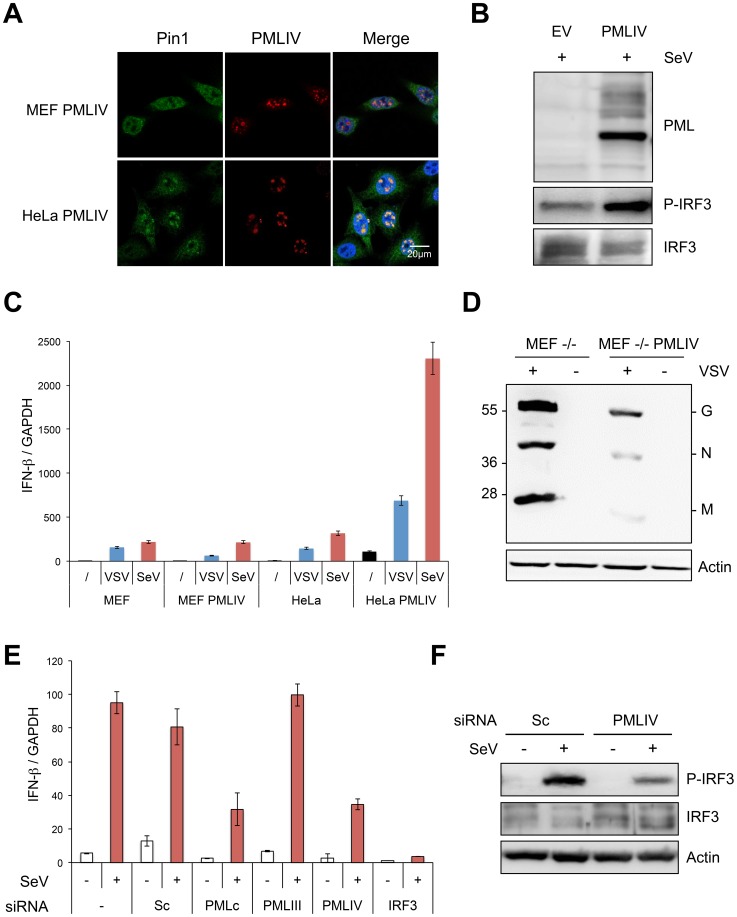
PML/TRIM19, the organizer of nuclear bodies (NBs), has been implicated in the antiviral response to diverse RNA and DNA viruses. Several PML isoforms generated from a single PML gene by alternative splicing, share the same N-terminal region containing the RBCC/tripartite motif but differ in their C-terminal sequences. Recent studies of all the PML isoforms reveal the specific functions of each. The knockout of PML renders mice more sensitive to vesicular stomatitis virus (VSV). Here we report that among PML isoforms (PMLI to PMLVIIb), only PMLIII and PMLIV confer resistance to VSV. Unlike PMLIII, whose anti-VSV activity is IFN-independent, PMLIV can act at two stages: it confers viral resistance directly in an IFN-independent manner and also specifically enhances IFN-β production via a higher activation of IRF3, thus protecting yet uninfected cells from oncoming infection. PMLIV SUMOylation is required for both activities. This demonstrates for the first time that PMLIV is implicated in innate immune response through enhanced IFN-β synthesis. Depletion of IRF3 further demonstrates the dual activity of PMLIV, since it abrogated PMLIV-induced IFN synthesis but not PMLIV-induced inhibition of viral proteins. Mechanistically, PMLIV enhances IFN-β synthesis by regulating the cellular distribution of Pin1 (peptidyl-prolyl cis/trans isomerase), inducing its recruitment to PML NBs where both proteins colocalize. The interaction of SUMOylated PMLIV with endogenous Pin1 and its recruitment within PML NBs prevents the degradation of activated IRF3, and thus potentiates IRF3-dependent production of IFN-β. Whereas the intrinsic antiviral activity of PMLIV is specific to VSV, its effect on IFN-β synthesis is much broader, since it affects a key actor of innate immune pathways. Our results show that, in addition to its intrinsic anti-VSV activity, PMLIV positively regulates IFN-β synthesis in response to different inducers, thus adding PML/TRIM19 to the growing list of TRIM proteins implicated in both intrinsic and innate immunity.
PML/TRIM19 是核小体 (NBs) 的组织者,已被牵连到对各种 RNA 和 DNA 病毒的抗病毒反应中。由单个 PML 基因通过选择性剪接产生的几种 PML 异构体,共享相同的 N 端区域,包含 RBCC/三部分基序,但在 C 端序列上有所不同。最近对所有 PML 异构体的研究揭示了每个异构体的特定功能。PML 的敲除使小鼠对水疱性口炎病毒 (VSV) 更为敏感。在这里,我们报告在 PML 异构体 (PMLI 到 PMLVIIb) 中,只有 PMLIII 和 PMLIV 赋予对 VSV 的抗性。与不依赖 IFN 的抗 VSV 活性的 PMLIII 不同,PMLIV 可以在两个阶段发挥作用:它以 IFN 不依赖的方式直接赋予病毒抗性,并且还通过更高地激活 IRF3 特异性地增强 IFN-β 的产生,从而保护尚未感染的细胞免受即将发生的感染。PMLIV 的 SUMOylation 对于这两种活性都是必需的。这首次证明 PMLIV 通过增强 IFN-β 合成参与先天免疫反应。IRF3 的耗竭进一步证明了 PMLIV 的双重活性,因为它消除了 PMLIV 诱导的 IFN 合成,但没有消除 PMLIV 诱导的病毒蛋白抑制。从机制上讲,PMLIV 通过调节 Pin1(肽基脯氨酰顺/反异构酶)的细胞分布来增强 IFN-β 的合成,诱导其募集到 PML NBs 中,这两种蛋白在 PML NBs 中都有共定位。SUMOylated PMLIV 与内源性 Pin1 的相互作用及其在 PML NBs 内的募集防止了激活的 IRF3 的降解,从而增强了依赖于 IRF3 的 IFN-β 的产生。尽管 PMLIV 的内在抗病毒活性是特异性的,但它对 IFN-β 合成的影响要广泛得多,因为它影响了先天免疫途径的关键因素。我们的结果表明,除了其内在的抗 VSV 活性外,PMLIV 还积极调节对不同诱导剂的 IFN-β 合成,从而将 PML/TRIM19 添加到越来越多的涉及固有和先天免疫的 TRIM 蛋白中。