Wang Yao, Zhao Gao-Xiang, Xu Li-Hui, Liu Kun-Peng, Pan Hao, He Jian, Cai Ji-Ye, Ouyang Dong-Yun, He Xian-Hui
Department of Immunobiology, College of Life Science and Technology, Jinan University, Guangzhou, China.
Department of Cell Biology, College of Life Science and Technology, Jinan University, Guangzhou, China.
PLoS One. 2014 Feb 25;9(2):e89751. doi: 10.1371/journal.pone.0089751. eCollection 2014.
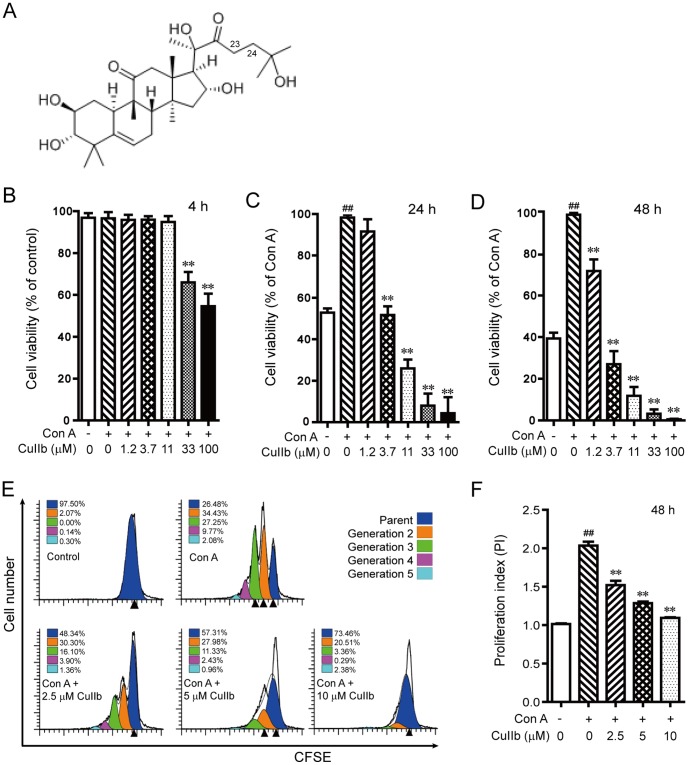
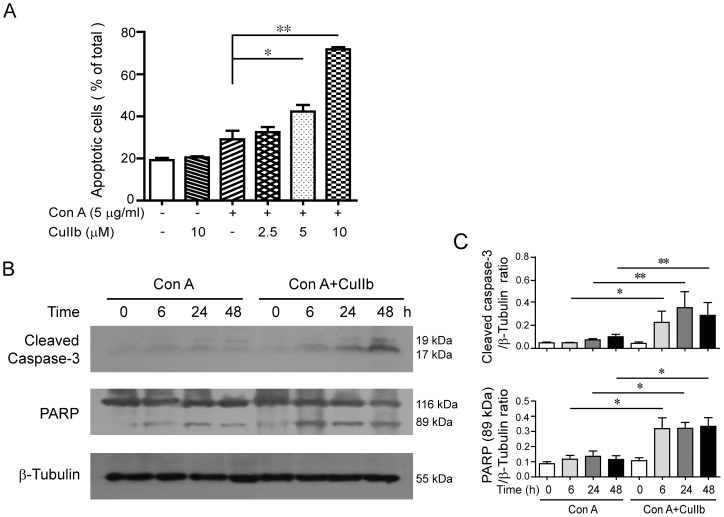
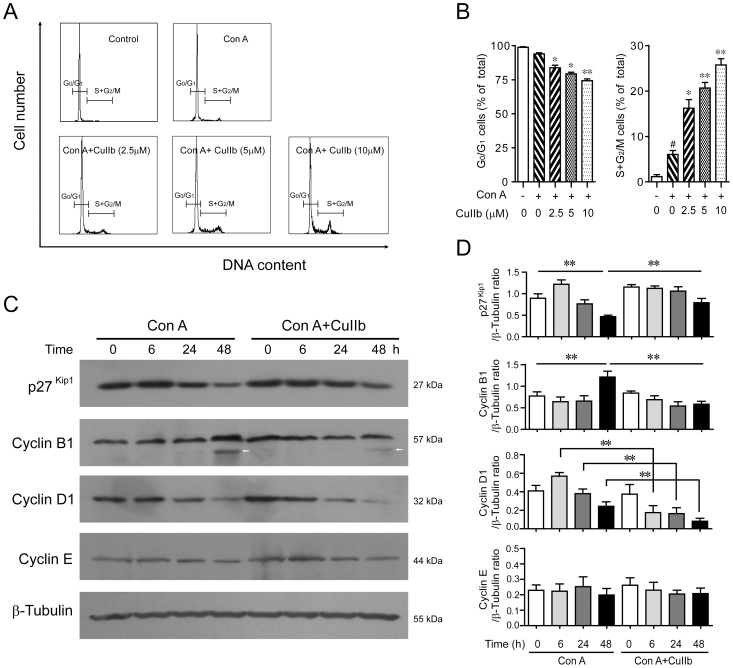
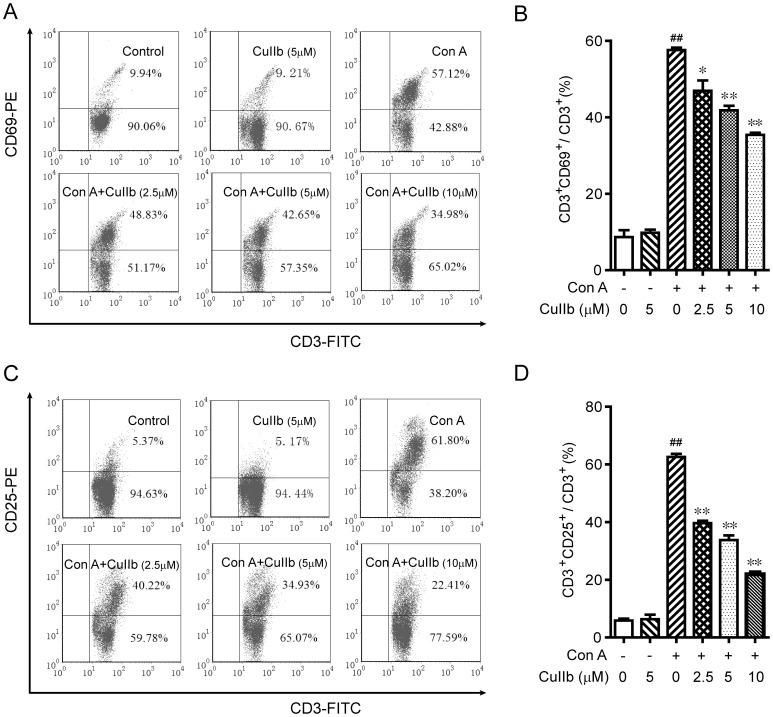
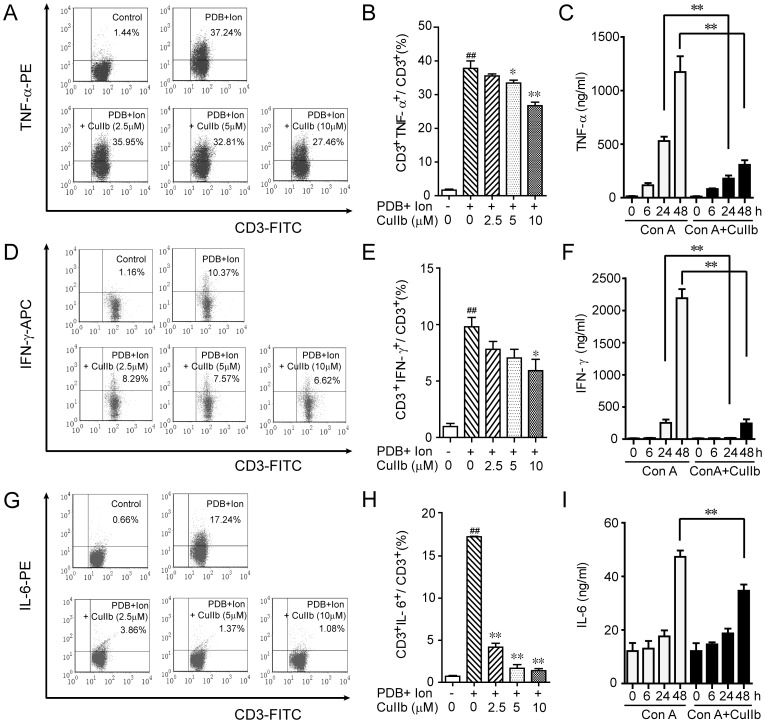
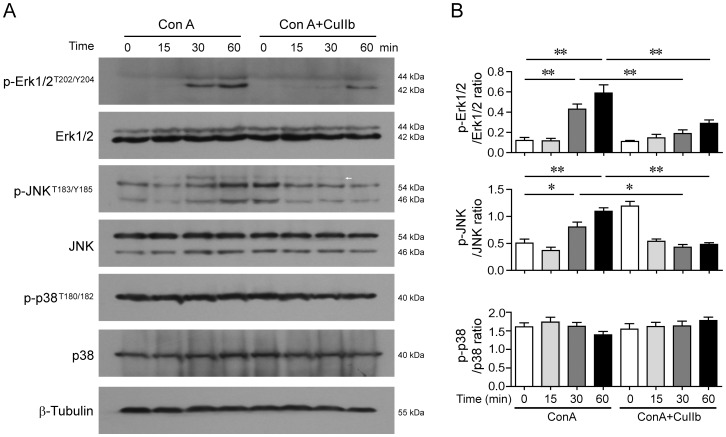
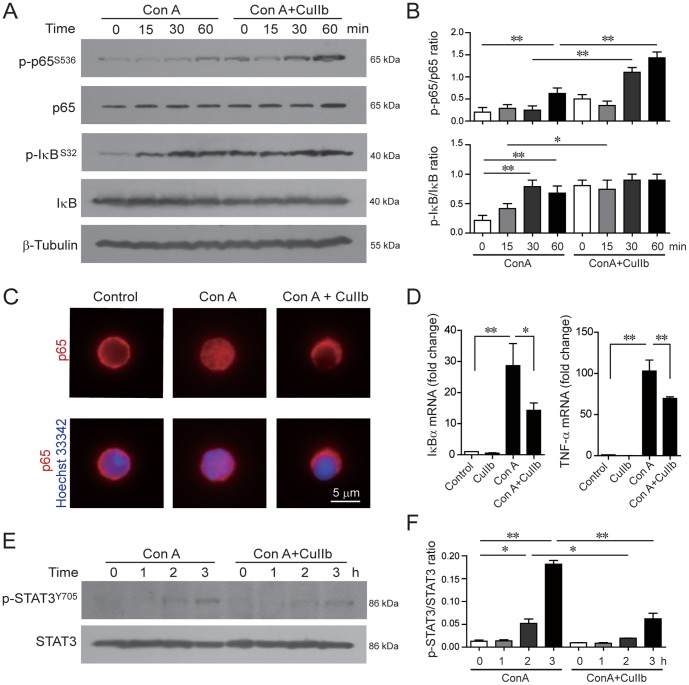
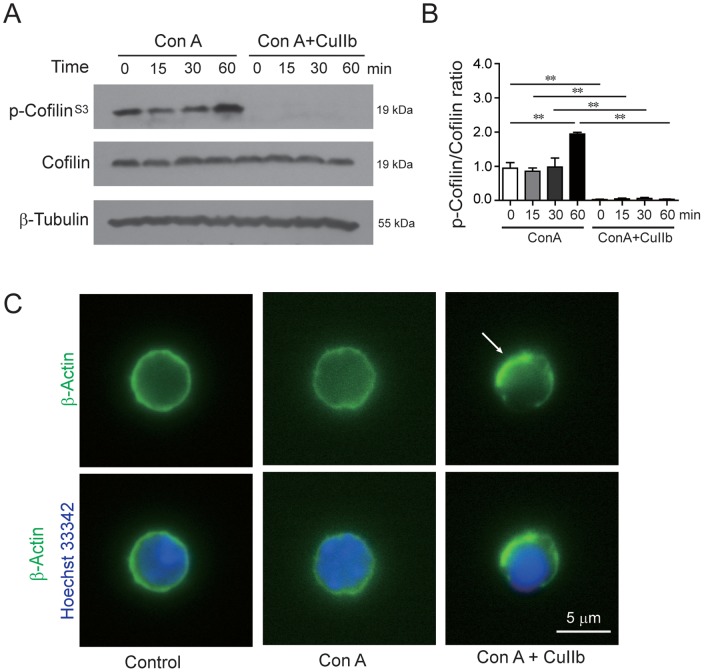
Cucurbitacin IIb (CuIIb) is one of the major active compounds in Hemsleyadine tablets which have been used for clinical treatment of bacillary dysentery, enteritis and acute tonsilitis. However, its action mechanism has not been completely understood. This study aimed to explore the anti-inflammatory activity of CuIIb and its underlying mechanism in mitogen-activated lymphocytes isolated from mouse mesenteric lymph nodes. The results showed that CuIIb inhibited the proliferation of concanavalin A (Con A)-activated lymphocytes in a time- and dose-dependent manner. CuIIb treatment arrested their cell cycle in S and G2/M phases probably due to the disruption of the actin cytoskeleton and the modulation of p27(Kip1) and cyclin levels. Moreover, the surface expression of activation markers CD69 and CD25 on Con A-activated CD3(+) T lymphocytes was suppressed by CuIIb treatment. Both Con A- and phorbol ester plus ionomycin-induced expression of TNF-α, IFN-γ and IL-6 proteins was attenuated upon exposure to CuIIb. Mechanistically, CuIIb treatment suppressed the phosphorylation of JNK and Erk1/2 but not p38 in Con A-activated lymphocytes. Although CuIIb unexpectedly enhanced the phosphorylation of IκB and NF-κB (p65), it blocked the nuclear translocation of NF-κB (p65). In support of this, CuIIb significantly decreased the mRNA levels of IκBα and TNF-α, two target genes of NF-κB, in Con A-activated lymphocytes. In addition, CuIIb downregulated Con A-induced STAT3 phosphorylation and increased cell apoptosis. Collectively, these results suggest that CuIIb exhibits its anti-inflammatory activity through modulating multiple cellular behaviors and signaling pathways, leading to the suppression of the adaptive immune response.
葫芦素IIb(CuIIb)是雪胆素片中的主要活性成分之一,雪胆素片已用于临床治疗细菌性痢疾、肠炎和急性扁桃体炎。然而,其作用机制尚未完全明确。本研究旨在探讨CuIIb对从小鼠肠系膜淋巴结分离的丝裂原活化淋巴细胞的抗炎活性及其潜在机制。结果表明,CuIIb以时间和剂量依赖性方式抑制刀豆球蛋白A(Con A)激活的淋巴细胞增殖。CuIIb处理可能通过破坏肌动蛋白细胞骨架以及调节p27(Kip1)和细胞周期蛋白水平,使细胞周期停滞在S期和G2/M期。此外,CuIIb处理可抑制Con A激活的CD3(+)T淋巴细胞表面活化标志物CD69和CD25的表达。暴露于CuIIb后,Con A和佛波酯加离子霉素诱导的TNF-α、IFN-γ和IL-6蛋白表达均减弱。机制上,CuIIb处理可抑制Con A激活的淋巴细胞中JNK和Erk1/2的磷酸化,但不影响p38的磷酸化。尽管CuIIb意外地增强了IκB和NF-κB(p65)的磷酸化,但它阻止了NF-κB(p65)的核转位。与此相符的是,CuIIb显著降低了Con A激活的淋巴细胞中NF-κB的两个靶基因IκBα和TNF-α的mRNA水平。此外,CuIIb下调Con A诱导的STAT3磷酸化并增加细胞凋亡。总体而言,这些结果表明,CuIIb通过调节多种细胞行为和信号通路发挥抗炎活性,从而抑制适应性免疫反应。