Dahlsten Elias, Isokallio Marita, Somervuo Panu, Lindström Miia, Korkeala Hannu
Department of Food Hygiene and Environmental Health, Faculty of Veterinary Medicine, University of Helsinki, Helsinki, Finland.
PLoS One. 2014 Feb 24;9(2):e89958. doi: 10.1371/journal.pone.0089958. eCollection 2014.
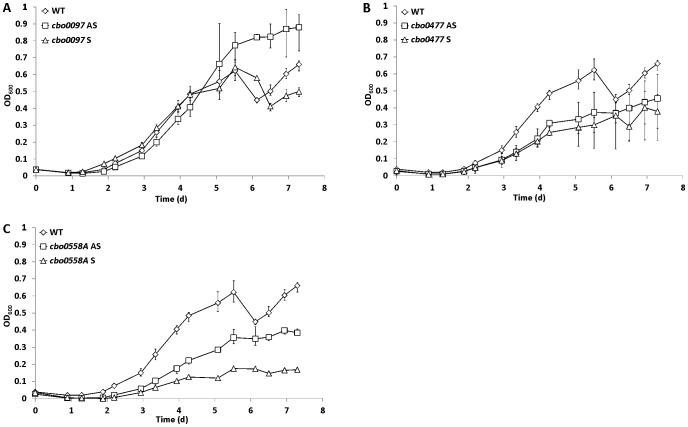
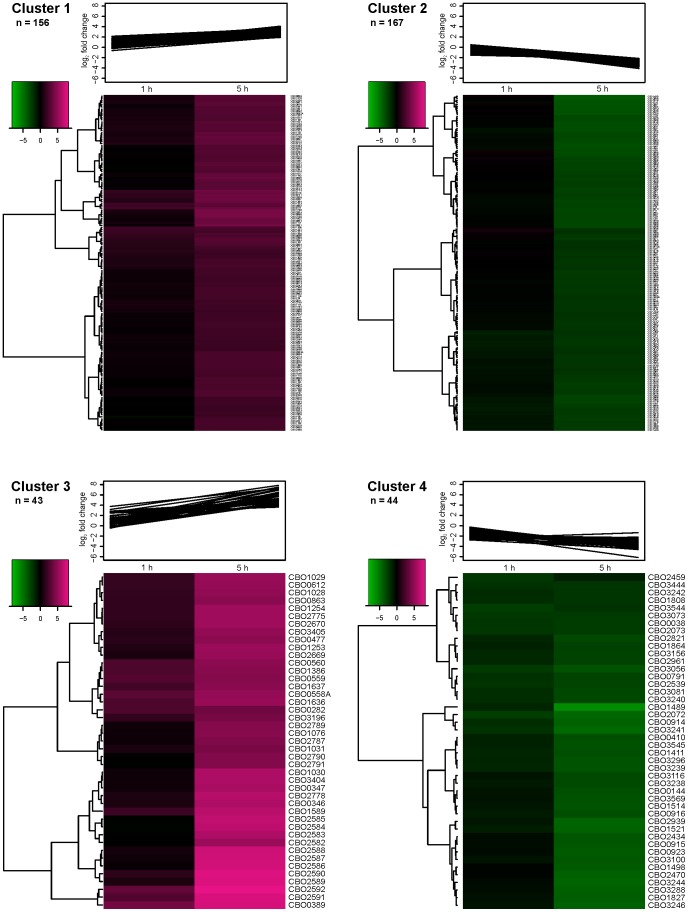
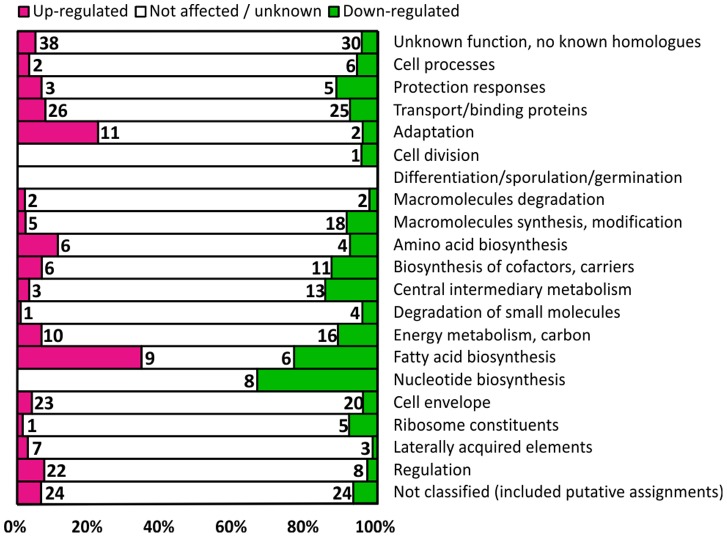
Profound understanding of the mechanisms foodborne pathogenic bacteria utilize in adaptation to the environmental stress they encounter during food processing and storage is of paramount importance in design of control measures. Chill temperature is a central control measure applied in minimally processed foods; however, data on the mechanisms the foodborne pathogen Clostridium botulinum activates upon cold stress are scarce. Transcriptomic analysis on the C. botulinum ATCC 3502 strain upon temperature downshift from 37°C to 15°C was performed to identify the cold-responsive gene set of this organism. Significant up- or down-regulation of 16 and 11 genes, respectively, was observed 1 h after the cold shock. At 5 h after the temperature downshift, 199 and 210 genes were up- or down-regulated, respectively. Thus, the relatively small gene set affected initially indicated a targeted acute response to cold shock, whereas extensive metabolic remodeling appeared to take place after prolonged exposure to cold. Genes related to fatty acid biosynthesis, oxidative stress response, and iron uptake and storage were induced, in addition to mechanisms previously characterized as cold-tolerance related in bacteria. Furthermore, several uncharacterized DNA-binding transcriptional regulator-encoding genes were induced, suggesting involvement of novel regulatory mechanisms in the cold shock response of C. botulinum. The role of such regulators, CBO0477 and CBO0558A, in cold tolerance of C. botulinum ATCC 3502 was demonstrated by deteriorated growth of related mutants at 17°C.
深入了解食源性病原体在适应食品加工和储存过程中遇到的环境压力时所利用的机制,对于设计控制措施至关重要。冷藏温度是应用于最低限度加工食品的核心控制措施;然而,关于食源性病原体肉毒梭菌在冷应激时激活的机制的数据却很少。对肉毒梭菌ATCC 3502菌株从37°C降温至15°C时进行转录组分析,以确定该生物体的冷响应基因集。冷休克1小时后,分别观察到16个基因显著上调和11个基因显著下调。温度下降5小时后,分别有199个和210个基因上调或下调。因此,最初受影响的基因集相对较小,表明对冷休克有针对性的急性反应,而长时间暴露于寒冷后似乎发生了广泛的代谢重塑。除了先前在细菌中被表征为与耐寒性相关的机制外,与脂肪酸生物合成、氧化应激反应以及铁摄取和储存相关的基因也被诱导。此外,还诱导了几个未表征的编码DNA结合转录调节因子的基因,这表明新的调节机制参与了肉毒梭菌的冷休克反应。相关突变体在17°C下生长变差,证明了这种调节因子CBO0477和CBO0558A在肉毒梭菌ATCC 3502耐寒性中的作用。