Huang Wei, Seo Jiwon, Willingham Stephen B, Czyzewski Ann M, Gonzalgo Mark L, Weissman Irving L, Barron Annelise E
Department of Bioengineering, Stanford University, Palo Alto, California, United States of America.
Division of Liberal Arts and Sciences and Department of Chemistry, Gwangju Institute of Science and Technology, Gwangju, Republic of Korea.
PLoS One. 2014 Feb 28;9(2):e90397. doi: 10.1371/journal.pone.0090397. eCollection 2014.
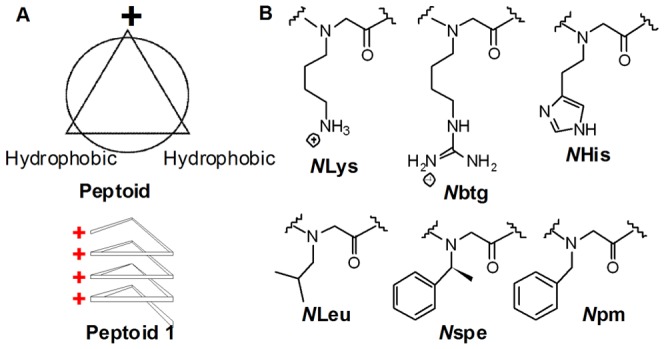
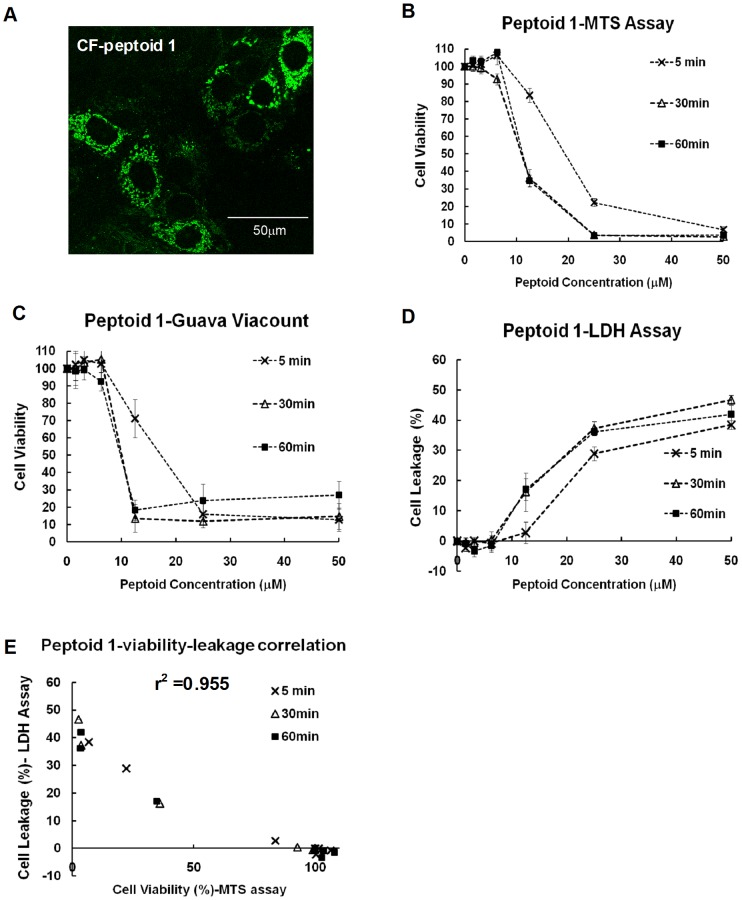
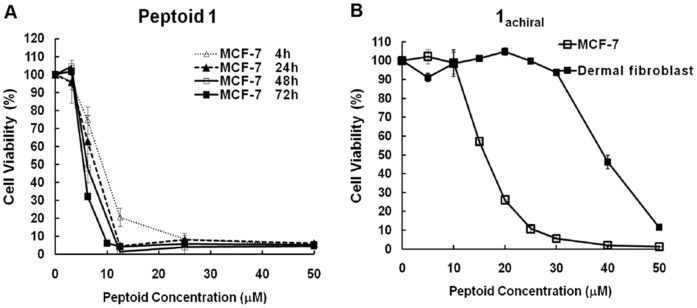
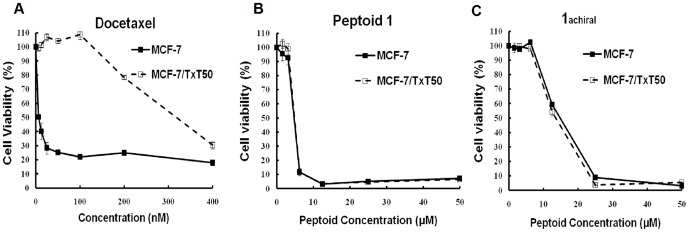
Cationic, amphipathic host defense peptides represent a promising group of agents to be developed for anticancer applications. Poly-N-substituted glycines, or peptoids, are a class of biostable, peptidomimetic scaffold that can display a great diversity of side chains in highly tunable sequences via facile solid-phase synthesis. Herein, we present a library of anti-proliferative peptoids that mimics the cationic, amphipathic structural feature of the host defense peptides and explore the relationships between the structure, anticancer activity and selectivity of these peptoids. Several peptoids are found to be potent against a broad range of cancer cell lines at low-micromolar concentrations including cancer cells with multidrug resistance (MDR), causing cytotoxicity in a concentration-dependent manner. They can penetrate into cells, but their cytotoxicity primarily involves plasma membrane perturbations. Furthermore, peptoid 1, the most potent peptoid synthesized, significantly inhibited tumor growth in a human breast cancer xenotransplantation model without any noticeable acute adverse effects in mice. Taken together, our work provided important structural information for designing host defense peptides or their mimics for anticancer applications. Several cationic, amphipathic peptoids are very attractive for further development due to their high solubility, stability against protease degradation, their broad, potent cytotoxicity against cancer cells and their ability to overcome multidrug resistance.
阳离子两亲性宿主防御肽是一类很有前景的用于抗癌应用开发的药物。聚-N-取代甘氨酸或类肽是一类生物稳定的肽模拟支架,通过简便的固相合成,它们可以在高度可调节的序列中展示出多种多样的侧链。在此,我们展示了一个模拟宿主防御肽阳离子两亲性结构特征的抗增殖类肽文库,并探索这些类肽的结构、抗癌活性和选择性之间的关系。发现几种类肽在低微摩尔浓度下对多种癌细胞系有效,包括具有多药耐药性(MDR)的癌细胞,以浓度依赖的方式引起细胞毒性。它们可以穿透细胞,但其细胞毒性主要涉及质膜扰动。此外,合成的最有效的类肽1在人乳腺癌异种移植模型中显著抑制肿瘤生长,且在小鼠中没有任何明显的急性不良反应。综上所述,我们的工作为设计用于抗癌应用的宿主防御肽或其模拟物提供了重要的结构信息。几种阳离子两亲性类肽因其高溶解性、对蛋白酶降解的稳定性、对癌细胞广泛而有效的细胞毒性以及克服多药耐药性的能力而对进一步开发极具吸引力。