Comparative Medicine Center, Peking Union Medical College (PUMC), Beijing 100021, China.
AIDS Res Ther. 2014 Mar 4;11(1):12. doi: 10.1186/1742-6405-11-12.
The precise efficacy of nucleoside analogue reverse-transcriptase inhibitors (NRTIs) in preventing and inhibiting virus replication remains unknown in RT-SHIV infected Chinese-origin rhesus macaques (Ch RM).
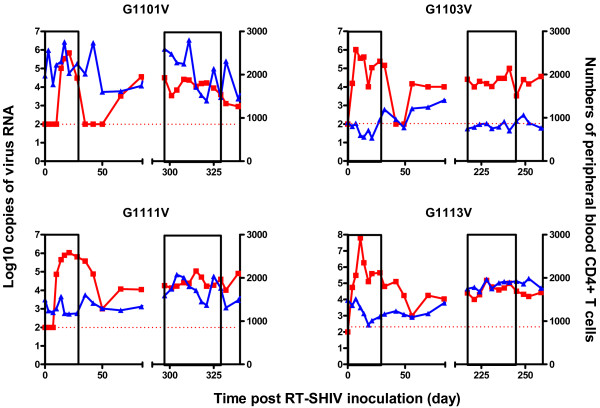
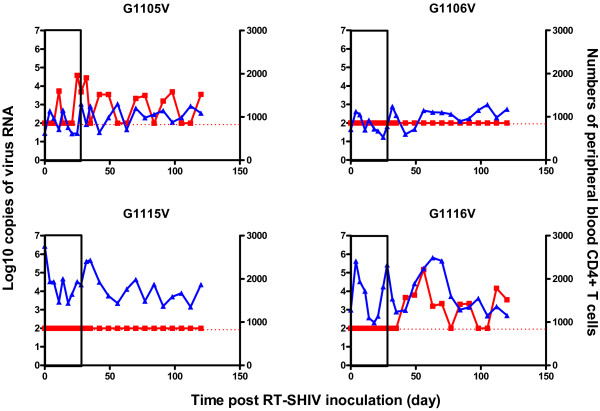
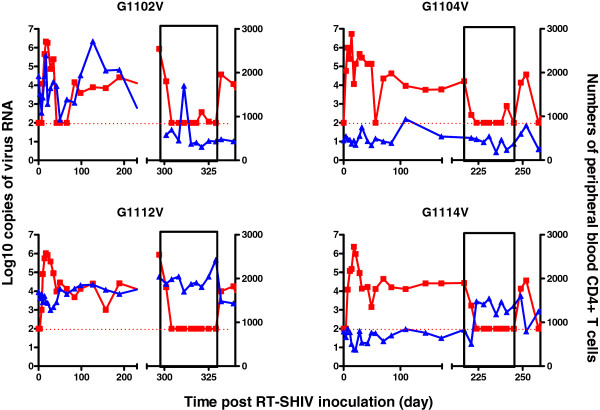
Ch RM were inoculated intravenously with 200 TCID50 RT-SHIV and treated by gavage with NRTIs (20 mg AZT and 10 mg 3TC twice per day) for four consecutive weeks beginning at one hour, on day 217 or 297 post inoculation, respectively. Treatment with AZT/3TC inhibited transiently RT-SHIV replication during chronic infection, but did not significantly affect peripheral blood CD4+ T cells in macaques. Treatment with AZT/3TC at 1 hour post infection prevented RT-SHIV infection in two out of four animals during the 120-day observation period.
Therefore, the Ch RM model with RT-SHIV infection can be used to evaluate the efficacy of new NRTIs.
核苷类逆转录酶抑制剂(NRTIs)在预防和抑制 RT-SHIV 感染的中国恒河猴(Ch RM)中的病毒复制的确切疗效仍不清楚。
Ch RM 通过静脉内接种 200TCID50 RT-SHIV,并在接种后第 217 天或第 297 天开始,每天两次通过灌胃给予 NRTIs(20mgAZT 和 10mg3TC),连续治疗四周。AZT/3TC 的治疗在慢性感染期间短暂抑制了 RT-SHIV 的复制,但并没有显著影响猕猴外周血 CD4+T 细胞。在感染后 1 小时用 AZT/3TC 治疗,在 120 天的观察期内,有两只动物的 RT-SHIV 感染得到了预防。
因此,具有 RT-SHIV 感染的 Ch RM 模型可用于评估新型 NRTIs 的疗效。