Departments of *Microbiology and Immunology †Obstetrics and Gynecology, University of Arkansas for Medical Sciences, Little Rock, AR.
J Immunother. 2014 Apr;37(3):163-9. doi: 10.1097/CJI.0000000000000030.
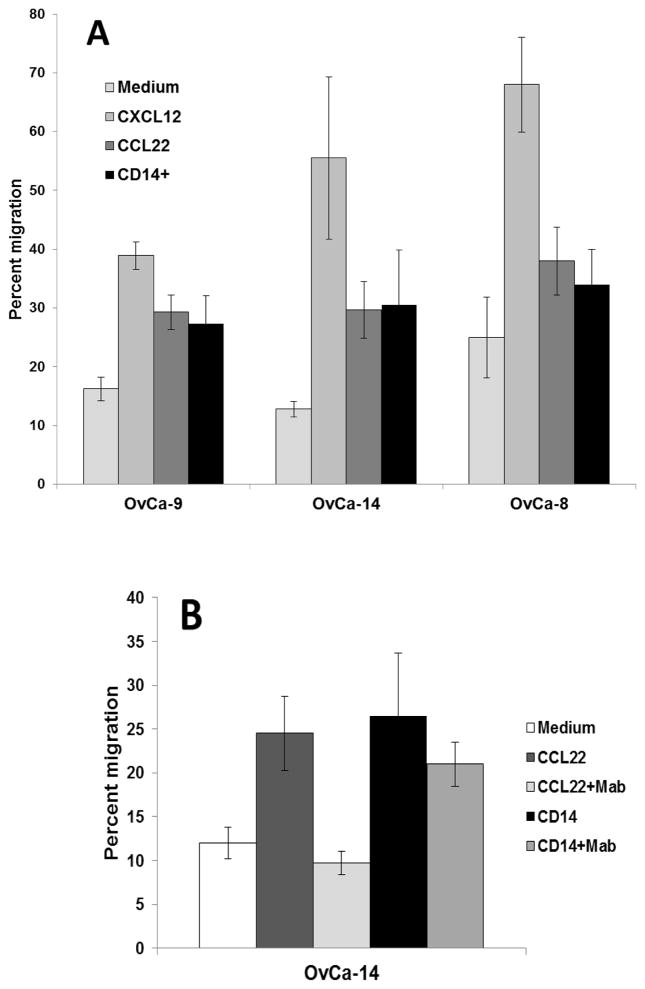
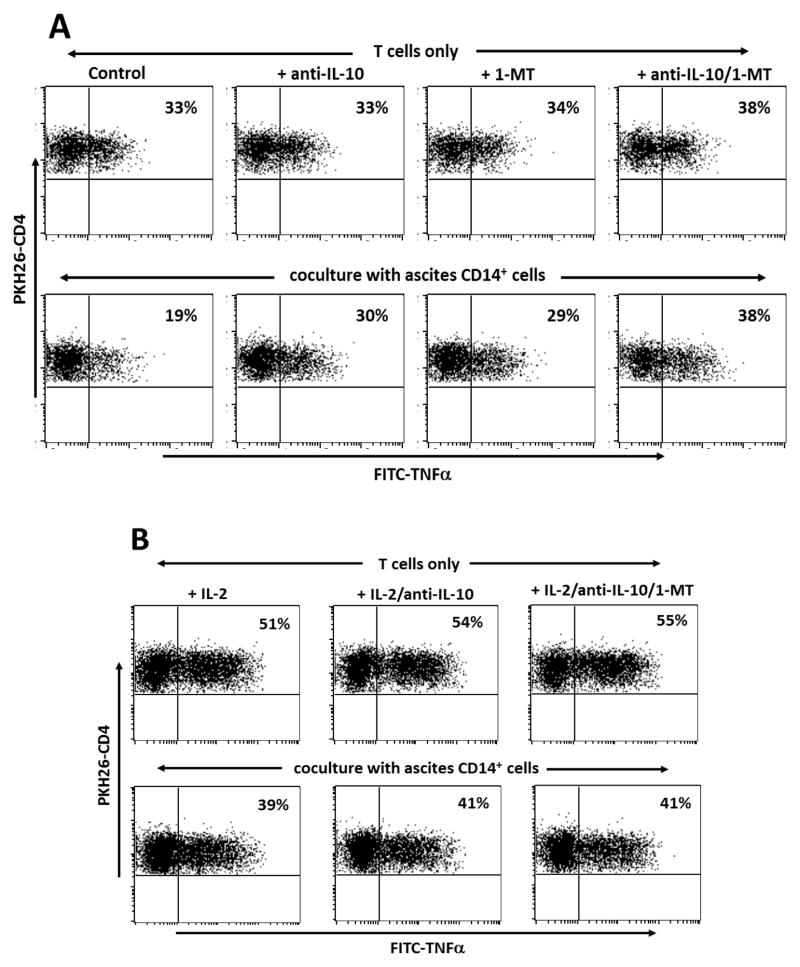
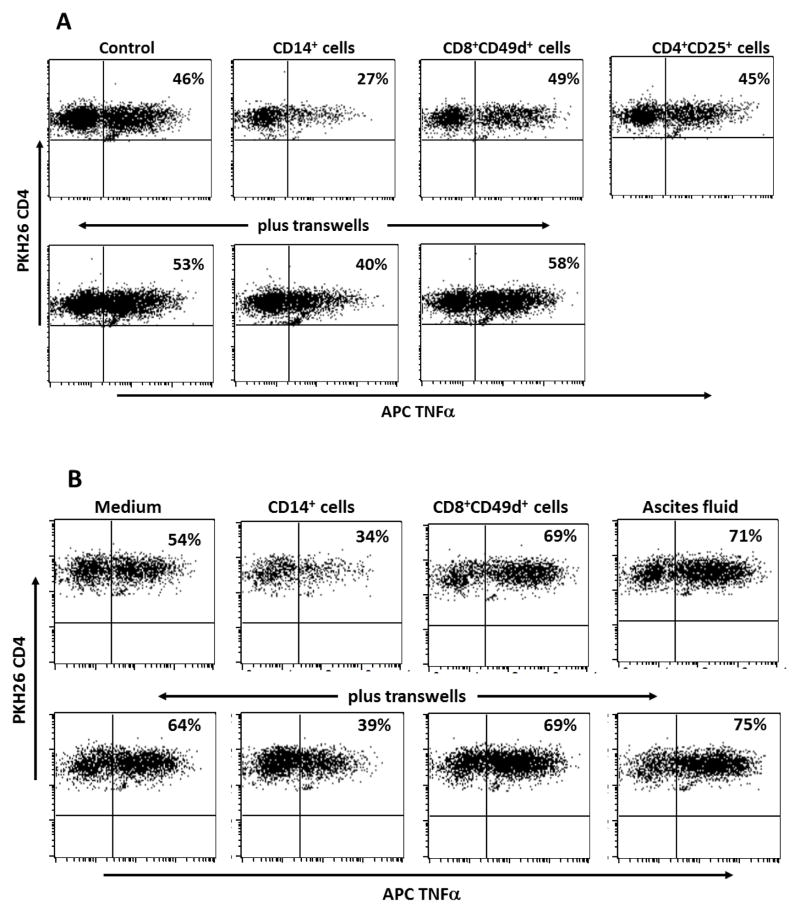
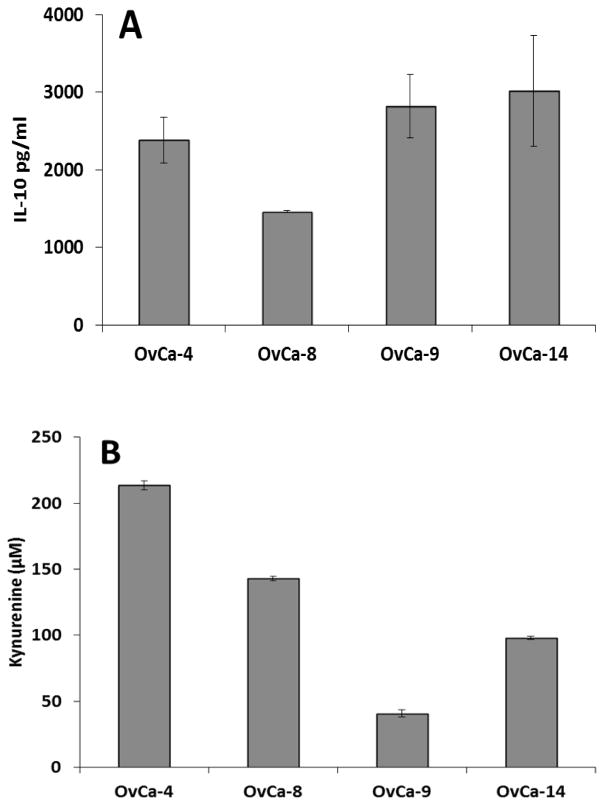
The observation that Th17 infiltration in ovarian cancer correlates with markedly improved survival has prompted the question of whether ovarian tumor antigen-specific Th17 responses could be stimulated by tumor vaccination. Dendritic cells (DCs) treated with IL-15 and an inhibitor of p38 MAPK signaling (DC(IL-15/p38inhib)) bias T-cell responses toward a Th1/Th17 phenotype, raising the prospect of therapeutic vaccination; however, significant barriers remain. Tumor vaccines, including DC vaccination, usually stimulate immune responses, but the lack of clinical responses in cancer patients has been disappointing. Possible reasons may include an inability of antitumor T cells to migrate into the tumor microenvironment, and an inability of T cells to retain effector function in the face of tumor-associated immune suppression. We found that ovarian tumor antigen-specific CD4(+) T cells induced by DC(IL-15/p38inhib) migrated in response to CXCL12 and CCL22 (both highly expressed in ovarian cancer) and to ascites CD14(+) myeloid cells. Cocultures showed that ascites CD14(+) cells markedly suppressed antigen-specific CD4(+) T responses, but suppression could be alleviated by treatment with anti-IL-10 or inhibition of indoleamine 2,3-dioxygenase. These results suggest that the efficacy of DC vaccination against ovarian cancer may be boosted by agents that inhibit tumor-associated CD14(+) myeloid cell suppression or indoleamine 2,3-dioxygenase activity.
观察到卵巢癌中的 Th17 浸润与明显改善的生存相关,这促使人们提出了一个问题,即卵巢肿瘤抗原特异性 Th17 反应是否可以通过肿瘤疫苗接种来刺激。用白细胞介素 15 (IL-15) 和 p38 MAPK 信号抑制剂 (DC(IL-15/p38inhib)) 处理的树突状细胞 (DC) 会使 T 细胞反应偏向 Th1/Th17 表型,从而提高了治疗性疫苗接种的前景;然而,仍然存在重大障碍。肿瘤疫苗,包括 DC 疫苗,通常会刺激免疫反应,但癌症患者缺乏临床反应令人失望。可能的原因包括抗肿瘤 T 细胞无法迁移到肿瘤微环境中,以及 T 细胞在面对肿瘤相关免疫抑制时无法保持效应功能。我们发现,由 DC(IL-15/p38inhib)诱导的卵巢肿瘤抗原特异性 CD4(+) T 细胞能够响应 CXCL12 和 CCL22(均在卵巢癌中高度表达)以及腹水 CD14(+)髓样细胞而迁移。共培养表明,腹水 CD14(+)细胞明显抑制了抗原特异性 CD4(+) T 反应,但通过用抗 IL-10 或抑制吲哚胺 2,3-双加氧酶治疗可以减轻抑制作用。这些结果表明,通过抑制肿瘤相关 CD14(+)髓样细胞抑制或吲哚胺 2,3-双加氧酶活性的药物,可以增强针对卵巢癌的 DC 疫苗接种的疗效。