Department of Biochemistry, Loma Linda University School of Medicine, Loma Linda, CA, USA.
BMC Cancer. 2014 Mar 12;14:176. doi: 10.1186/1471-2407-14-176.
The inhibitor of apoptosis (IAP) protein Survivin and its splice variants are differentially expressed in breast cancer tissues. Our previous work showed Survivin is released from tumor cells via small membrane-bound vesicles called exosomes. We, therefore, hypothesize that analysis of serum exosomal Survivin and its splice variants may provide a novel biomarker for early diagnosis of breast cancer.
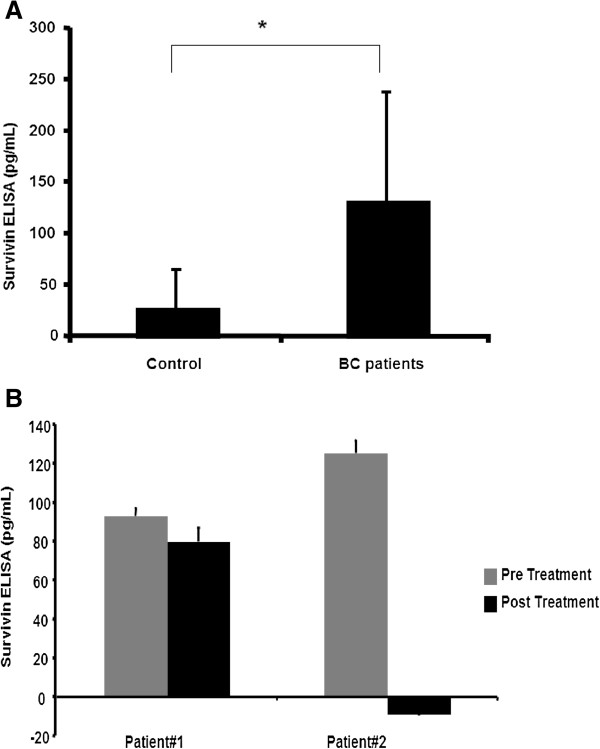
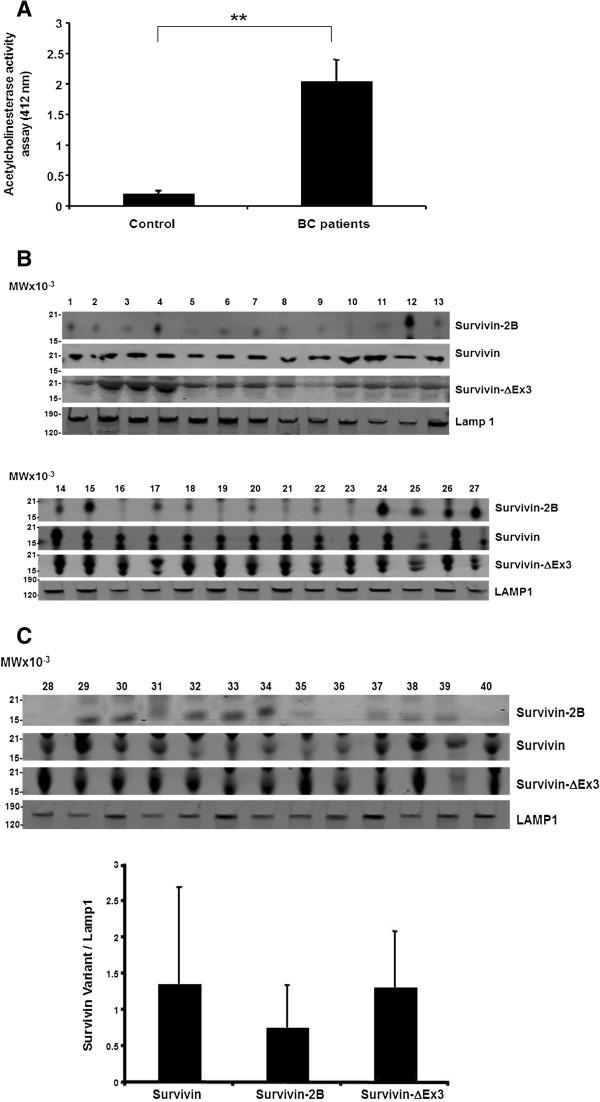
We collected sera from forty breast cancer patients and ten control patients who were disease free for 5 years after treatment. In addition, twenty-three paired breast cancer tumor tissues from those same 40 patients were analyzed for splice variants. Serum levels of Survivin were analyzed using ELISA and exosomes were isolated from this serum using the commercially available ExoQuick kit, with subsequent Western blots and immunohistochemistry performed.
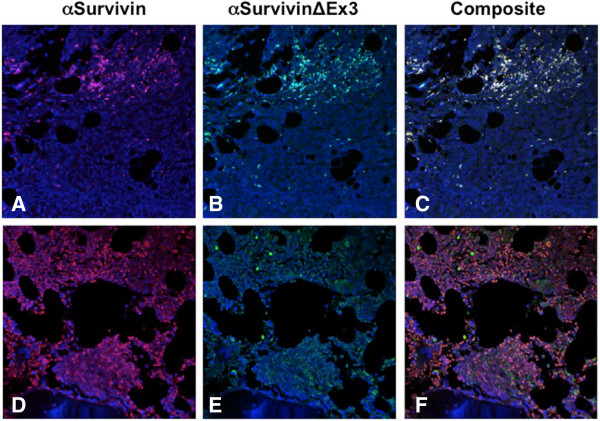
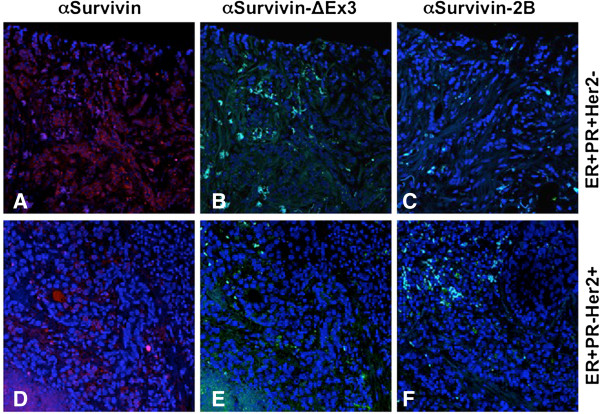
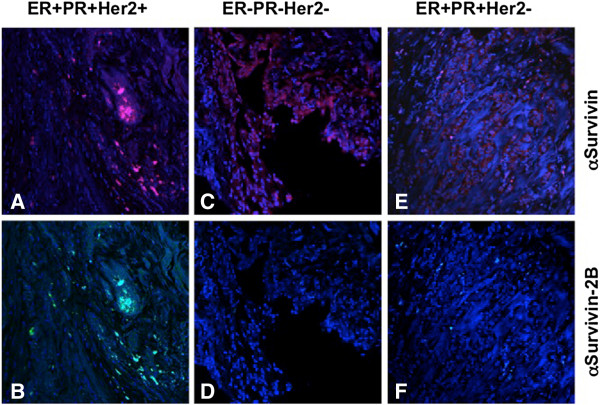
Survivin levels were significantly higher in all the breast cancer samples compared to controls (p < 0.05) with exosome amounts significantly higher in cancer patient sera compared to controls (p < 0.01). While Survivin and Survivin-∆Ex3 splice variant expression and localization was identical in serum exosomes, differential expression of Survivin-2B protein existed in the exosomes. Similarly, Survivin and Survivin-∆Ex3 proteins were the predominant forms detected in all of the breast cancer tissues evaluated in this study, whereas a more variable expression of Survivin-2B level was found at different cancer stages.
In this study we show for the first time that like Survivin, the Survivin splice variants are also exosomally packaged in the breast cancer patients' sera, mimicking the survivin splice variant pattern that we also report in breast cancer tissues. Differential expression of exosomal-Survivin, particularly Survivin-2B, may serve as a diagnostic and/or prognostic marker, a "liquid biopsy" if you will, in early breast cancer patients. Furthermore, a more thorough understanding of the role of this prominent antiapoptotic pathway could lead to the development of potential therapeutics for breast cancer patients.
凋亡抑制蛋白(IAP)Survivin 及其剪接变异体在乳腺癌组织中呈现差异性表达。我们之前的研究表明 Survivin 通过被称为外泌体的小型膜结合囊泡从肿瘤细胞中释放出来。因此,我们假设分析血清外泌体 Survivin 及其剪接变异体可能为乳腺癌的早期诊断提供一种新的生物标志物。
我们收集了 40 名乳腺癌患者和 10 名经过 5 年治疗后无病的对照患者的血清。此外,还分析了来自这 40 名患者的 23 对乳腺癌肿瘤组织的剪接变异体。使用 ELISA 分析 Survivin 水平,使用市售的 ExoQuick 试剂盒从血清中分离外泌体,随后进行 Western blot 和免疫组织化学检测。
所有乳腺癌样本中的 Survivin 水平均显著高于对照组(p < 0.05),而癌症患者血清中外泌体的含量明显高于对照组(p < 0.01)。血清外泌体中 Survivin 和 Survivin-∆Ex3 剪接变异体的表达和定位相同,但 Survivin-2B 蛋白存在差异表达。同样,在本研究评估的所有乳腺癌组织中,主要检测到 Survivin 和 Survivin-∆Ex3 蛋白,而 Survivin-2B 水平的表达则更为多变,存在于不同的癌症阶段。
在这项研究中,我们首次表明,与 Survivin 一样,Survivin 剪接变异体也以外泌体的形式包装在乳腺癌患者的血清中,模拟了我们在乳腺癌组织中报告的 Survivin 剪接变异体模式。外泌体 Survivin,特别是 Survivin-2B 的差异性表达可能作为早期乳腺癌患者的诊断和/或预后标志物,即“液体活检”。此外,更深入地了解这一重要抗凋亡途径的作用可能会导致为乳腺癌患者开发潜在的治疗方法。