Hertz Rivka, Ben Lulu Shani, Shahi Preeti, Trebicz-Geffen Meirav, Benhar Moran, Ankri Serge
Department of Molecular Microbiology, The Bruce Rappaport Faculty of Medicine, Technion, Haifa, Israel.
Department of Biochemistry, The Bruce Rappaport Faculty of Medicine, Technion, Haifa, Israel.
PLoS One. 2014 Mar 13;9(3):e91518. doi: 10.1371/journal.pone.0091518. eCollection 2014.
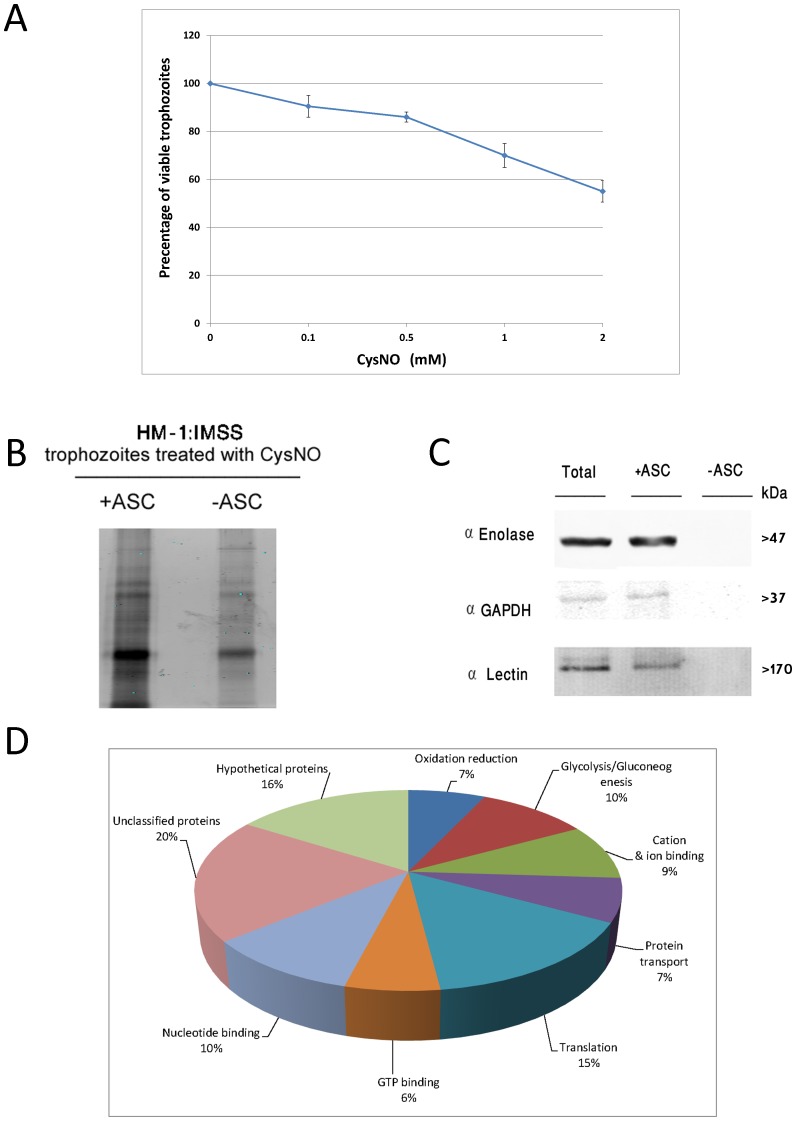
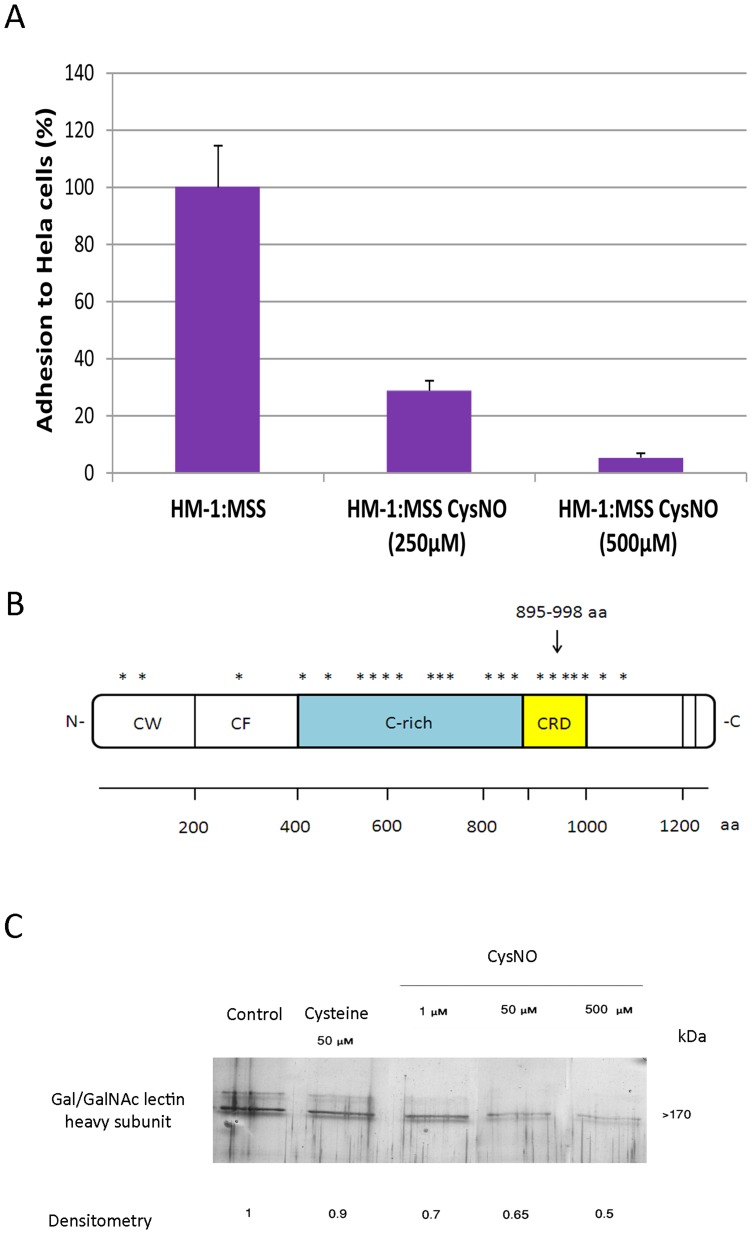
Entamoeba histolytica is a gastrointestinal protozoan parasite that causes amebiasis, a disease which has a worldwide distribution with substantial morbidity and mortality. Nitrosative stress, which is generated by innate immune cells, is one of the various environmental challenges that E. histolytica encounters during its life cycle. Although the effects of nitric oxide (NO) on the regulation of gene expression in this parasite have been previously investigated, our knowledge on S-nitrosylated proteins in E.histolytica is lacking. In order to fill this knowledge gap, we performed a large-scale detection of S-nitrosylated (SNO) proteins in E.histolytica trophozoites that were treated with the NO donor, S-nitrosocysteine by resin-assisted capture (RAC). We found that proteins involved in glycolysis, gluconeogenesis, translation, protein transport, and adherence to target cells such as the heavy subunit of Gal/GalNac lectin are among the S-nitrosylated proteins that were enriched by SNO-RAC. We also found that the S-nitrosylated cysteine residues in the carbohydrate recognition domain (CRD) of Gal/GalNAc lectin impairs its function and contributes to the inhibition of E.histolytica adherence to host cells. Collectively, these results advance our understanding of the mechanism of reduced E.histolytica adherence to mammalian cells by NO and emphasize the importance of NO as a regulator of key physiological functions in E.histolytica.
溶组织内阿米巴是一种引起阿米巴病的胃肠道原生动物寄生虫,该病在全球范围内分布,具有相当高的发病率和死亡率。由先天免疫细胞产生的亚硝化应激是溶组织内阿米巴在其生命周期中遇到的各种环境挑战之一。尽管此前已经研究了一氧化氮(NO)对该寄生虫基因表达调控的影响,但我们对溶组织内阿米巴中的S-亚硝基化蛋白仍缺乏了解。为了填补这一知识空白,我们通过树脂辅助捕获(RAC)对用NO供体S-亚硝基半胱氨酸处理的溶组织内阿米巴滋养体中的S-亚硝基化(SNO)蛋白进行了大规模检测。我们发现,参与糖酵解、糖异生、翻译、蛋白质转运以及与靶细胞黏附的蛋白质,如Gal/GalNac凝集素的重亚基,都在通过SNO-RAC富集的S-亚硝基化蛋白之中。我们还发现,Gal/GalNAc凝集素的碳水化合物识别结构域(CRD)中的S-亚硝基化半胱氨酸残基会损害其功能,并导致溶组织内阿米巴对宿主细胞黏附的抑制。总的来说,这些结果推进了我们对NO降低溶组织内阿米巴对哺乳动物细胞黏附机制的理解,并强调了NO作为溶组织内阿米巴关键生理功能调节因子的重要性。