Bu Yang, Jia Qing-An, Ren Zheng-Gang, Zhang Ju-Bo, Jiang Xue-Mei, Liang Lei, Xue Tong-Chun, Zhang Quan-Bao, Wang Yan-Hong, Zhang Lan, Xie Xiao-Ying, Tang Zhao-You
Institutes of Biomedical Sciences, Fudan University, Shanghai, China; Liver Cancer Institute, Zhongshan Hospital, Fudan University, Key Laboratory of Carcinogenesis and Cancer Invasion, Ministry of Education, Shanghai, China.
Liver Cancer Institute, Zhongshan Hospital, Fudan University, Key Laboratory of Carcinogenesis and Cancer Invasion, Ministry of Education, Shanghai, China; Hepatobiliary Surgery, Shanxi Provincial People's Hospital, Xi'an, China.
PLoS One. 2014 Mar 14;9(3):e89686. doi: 10.1371/journal.pone.0089686. eCollection 2014.
Evidence suggests that many types of cancers are composed of different cell types, including cancer stem cells (CSCs). We have previously shown that the chemotherapeutic agent oxaliplatin induced epithelial-mesenchymal transition, which is thought to be an important mechanism for generating CSCs. In the present study, we investigate whether oxaliplatin-treated cancer tissues possess characteristics of CSCs, and explore oxaliplatin resistance in these tissues.
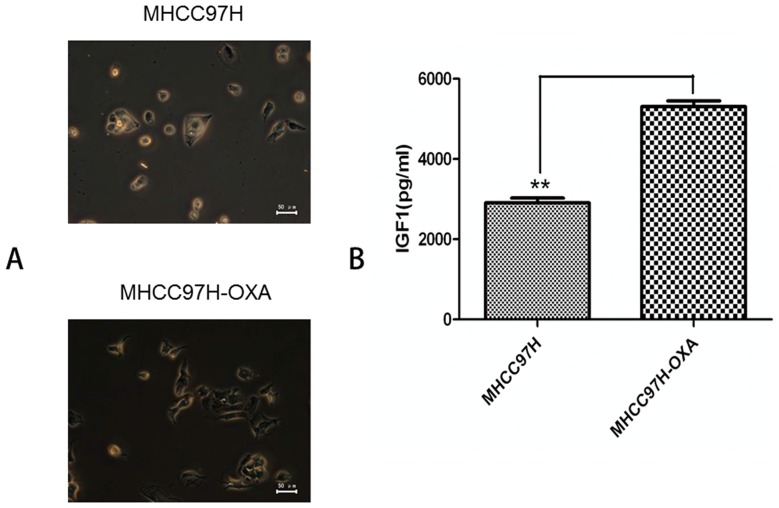
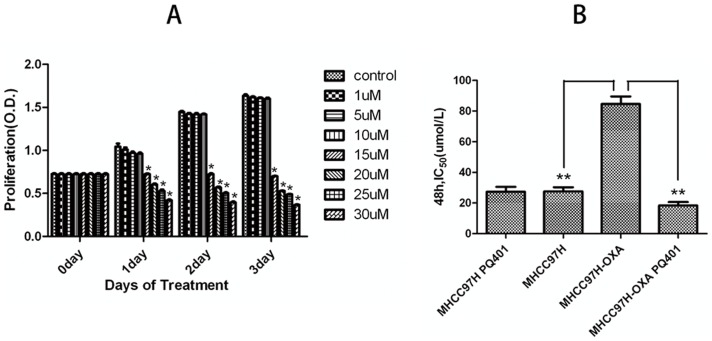
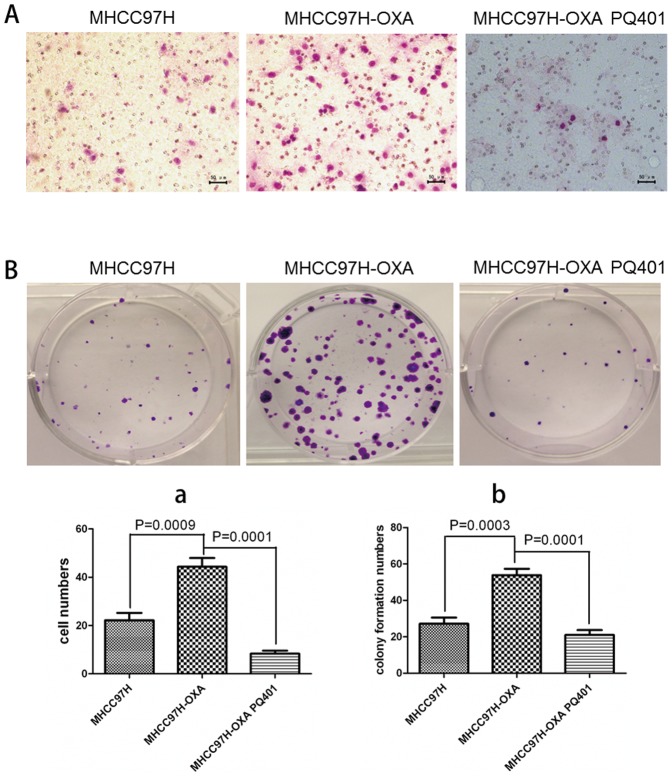
Hepatocellular carcinoma cells (MHCC97H cells) were subcutaneously injected into mice to form tumors, and the mice were intravenously treated with either oxaliplatin or glucose. Five weeks later, the tumors were orthotopically xenografted into livers of other mice, and these mice were treated with either oxaliplatin or glucose. Metastatic potential, sensitivity to oxaliplatin, and expression of CSC-related markers in the xenografted tumor tissues were evaluated. DNA microarrays were used to measure changes in gene expression as a result of oxaliplatin treatment. Additionally, an oxaliplatin-resistant cell line (MHCC97H-OXA) was established to assess insulin-like growth factor 1 secretion, cell invasion, cell colony formation, oxaliplatin sensitivity, and expression of CSC-related markers. The effects of an insulin-like growth factor 1 receptor inhibitor were also assessed.
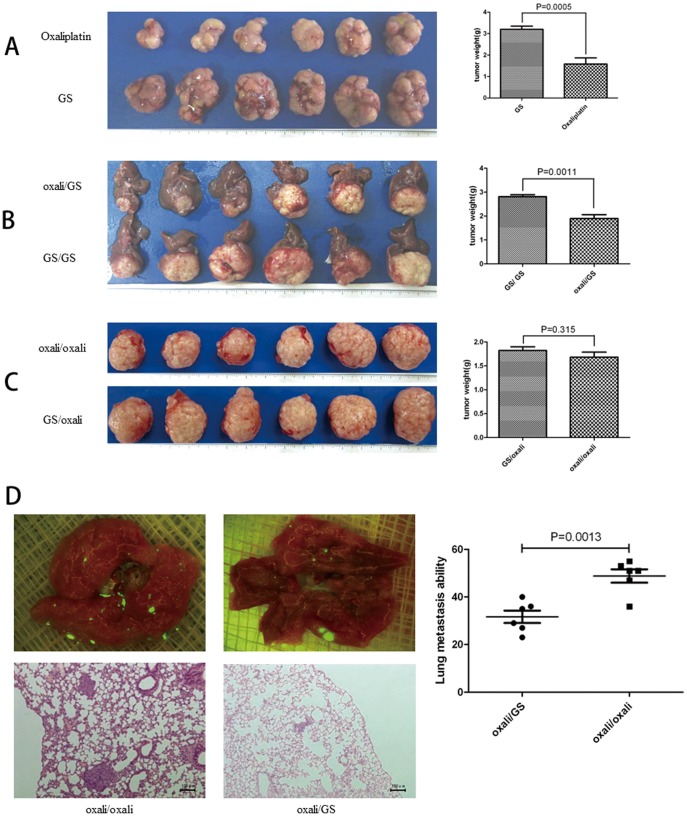
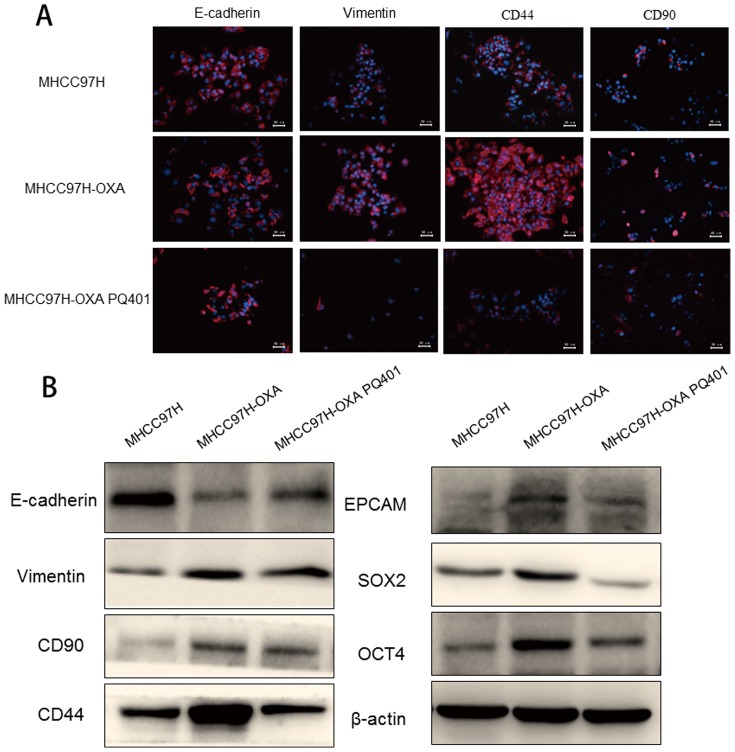
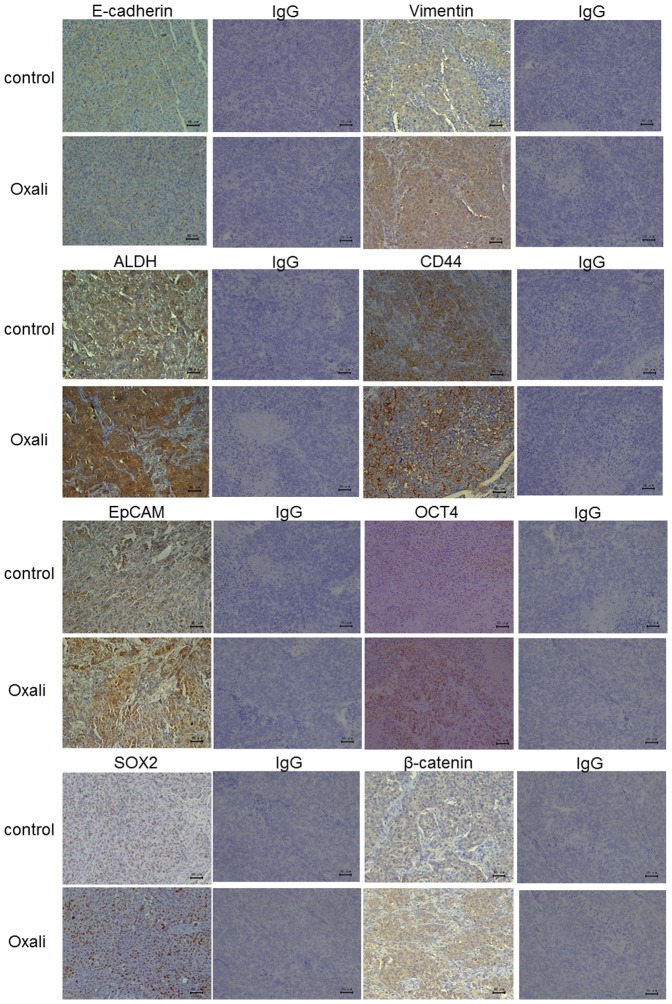
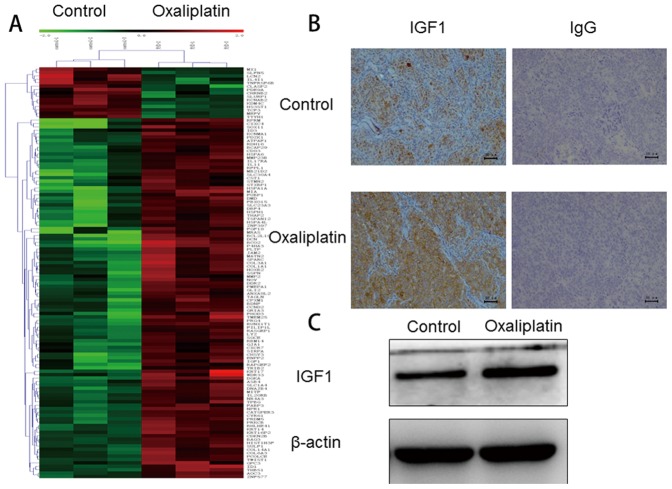
Oxaliplatin treatment inhibited subcutaneous tumor growth. Tumors from oxaliplatin-treated mice that were subsequently xenografted into livers of other mice exhibited that decreasing sensitivity to oxaliplatin and increasing pulmonary metastatic potential. Among the expression of CSC-related proteins, the gene for insulin-like growth factor 1, was up-regulated expecially in these tumor tissues. Additionally, MHCC97H-OXA cells demonstrated that increasing cell invasion, colony formation, and expression of insulin-like growth factor 1 and CSC-related markers, whereas treatment with an inhibitor of the insulin-like growth factor 1 receptor suppressed these effects.
Maintenance of stemness in oxaliplatin-resistant hepatocellular carcinoma cells is associated with increased autocrine of IGF1.
有证据表明,许多类型的癌症由不同的细胞类型组成,包括癌症干细胞(CSCs)。我们之前已经表明,化疗药物奥沙利铂可诱导上皮-间质转化,这被认为是产生癌症干细胞的重要机制。在本研究中,我们调查经奥沙利铂处理的癌组织是否具有癌症干细胞的特征,并探究这些组织中的奥沙利铂耐药性。
将肝癌细胞(MHCC97H细胞)皮下注射到小鼠体内以形成肿瘤,然后给小鼠静脉注射奥沙利铂或葡萄糖。五周后,将肿瘤原位异种移植到其他小鼠的肝脏中,并用奥沙利铂或葡萄糖对这些小鼠进行治疗。评估异种移植肿瘤组织中的转移潜能、对奥沙利铂的敏感性以及癌症干细胞相关标志物的表达。使用DNA微阵列来测量奥沙利铂处理导致的基因表达变化。此外,建立了奥沙利铂耐药细胞系(MHCC97H-OXA)以评估胰岛素样生长因子1的分泌、细胞侵袭、细胞集落形成、奥沙利铂敏感性以及癌症干细胞相关标志物的表达。还评估了胰岛素样生长因子1受体抑制剂的作用。
奥沙利铂治疗抑制了皮下肿瘤生长。随后将经奥沙利铂处理的小鼠的肿瘤异种移植到其他小鼠肝脏中,这些肿瘤对奥沙利铂的敏感性降低且肺转移潜能增加。在癌症干细胞相关蛋白的表达中,尤其是胰岛素样生长因子1的基因在这些肿瘤组织中上调。此外,MHCC97H-OXA细胞表现出细胞侵袭、集落形成增加以及胰岛素样生长因子1和癌症干细胞相关标志物的表达增加,而用胰岛素样生长因子1受体抑制剂处理可抑制这些作用。
奥沙利铂耐药的肝癌细胞中干性的维持与IGF1自分泌增加有关。