Sondel Paul M, Gillies Stephen D
The Departments of Pediatrics, Human Oncology, and Genetics and The UW Carbone Cancer Center, University of Wisconsin, Madison WI.
Antibodies (Basel). 2012 Jul 4;1(2):149-171. doi: 10.3390/antib1020149.
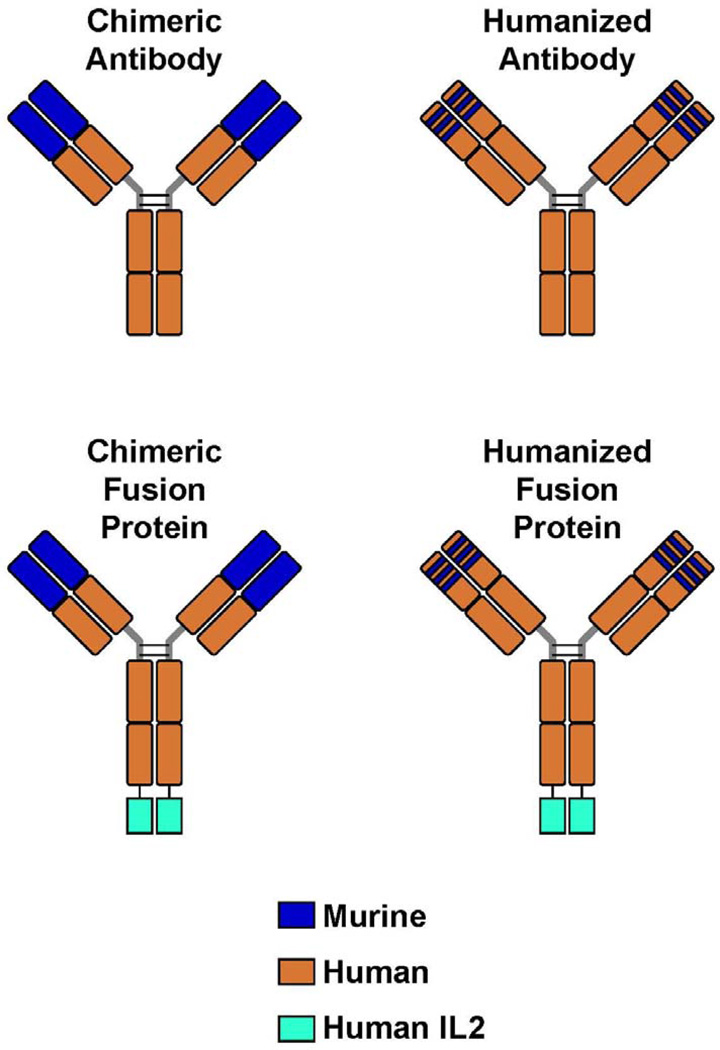
Immunocytokines (ICs) are a class of molecules created by linking tumor-reactive monoclonal antibodies to cytokines that are able to activate immune cells. Tumor selective localization is provided by the ability of the mAb component to bind to molecules found on the tumor cell surface or molecules found selectively in the tumor microenvronment. In this way the cytokine component of the immunocytokine is selectively localized to sites of tumor and can activate immune cells with appropriate receptors for the cytokine. Immunocytokines have been made and tested by us, and others, using a variety of tumor-reactive mAbs linked to distinct cytokines. To date, the majority of clinical progress has been made with ICs that have linked human interleukin-2 (IL2) to a select number of tumor reactive mAbs that had already been in prior clinical testing as non-modified mAbs (Figure 1). Here we briefly review the background for the creation of ICs, summarize current clinical progress, emphasize mechanisms of action for ICs that are distinct from those of their constituent components, and present some directions for future development and testing.
免疫细胞因子(ICs)是一类通过将肿瘤反应性单克隆抗体与能够激活免疫细胞的细胞因子连接而产生的分子。单克隆抗体(mAb)成分与肿瘤细胞表面发现的分子或肿瘤微环境中选择性发现的分子结合的能力,赋予了肿瘤选择性定位。通过这种方式,免疫细胞因子的细胞因子成分被选择性地定位到肿瘤部位,并能够激活具有该细胞因子适当受体的免疫细胞。我们和其他研究人员已经制备并测试了多种免疫细胞因子,这些免疫细胞因子是通过将各种肿瘤反应性单克隆抗体与不同的细胞因子连接而成。迄今为止,大多数临床进展是通过将人类白细胞介素-2(IL2)与一些已作为未修饰单克隆抗体进行过先前临床试验的肿瘤反应性单克隆抗体连接而成的免疫细胞因子取得的(图1)。在此,我们简要回顾免疫细胞因子的产生背景,总结当前的临床进展,强调免疫细胞因子与它们的组成成分不同的作用机制,并提出一些未来发展和测试的方向。