Büyükçelik Mithat, Keskin Mehmet, Keskin Özlem, Bay Ali, Kılıç Beltinge Demircioğlu, Kor Yılmaz, Kılınç M Arda, Balat Ayşe
Gaziantep University Faculty of Medicine, Department of Pediatric Endocrinology and Metabolism, Gaziantep, Turkey. E-mail:
J Clin Res Pediatr Endocrinol. 2014;6(1):47-50. doi: 10.4274/Jcrpe.1128.
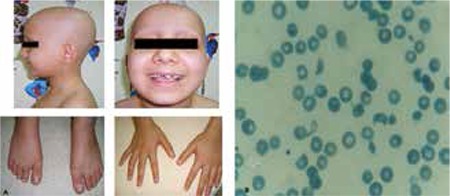
Autoimmune polyglandular syndrome (APS) is a disorder which is associated with multiple endocrine gland insufficiency and also with non-endocrine manifestations. The pathophysiology of APS is poorly understood, but the hallmark evidence of APS is development of autoantibodies against multiple endocrine and non-endocrine organs. These autoantibodies are responsible for the dysfunction of the affected organs and sometimes may also cause non-endocrine organ dysfunction. The hemolytic-uremic syndrome (HUS) is a serious and life-threatening disease which develops due to many etiological factors including autoimmune disorders. Here, we present an unusual case of APS. Ectodermal dysplasia with immune deficiency and HUS occurred concomitantly in the same patient with APS type 3c. Once the autoantibody generation was initiated in the human body, development of multiple disorders due to organ dysfunction and also autoantibody-related diseases may have occurred.
自身免疫性多腺体综合征(APS)是一种与多种内分泌腺功能不全以及非内分泌表现相关的疾病。APS的病理生理学尚不清楚,但APS的标志性证据是针对多种内分泌和非内分泌器官产生自身抗体。这些自身抗体导致受影响器官功能障碍,有时还可能引起非内分泌器官功能障碍。溶血尿毒综合征(HUS)是一种严重的、危及生命的疾病,由包括自身免疫性疾病在内的多种病因引起。在此,我们报告一例不寻常的APS病例。一名3c型APS患者同时出现外胚层发育不良伴免疫缺陷和HUS。一旦人体开始产生自身抗体,可能就会由于器官功能障碍以及自身抗体相关疾病而出现多种病症。