Department of Computer Science and Engineering, Faculty of Applied Sciences, University of West Bohemia Plzeň, Czech Republic ; New Technologies for the Information Society, Faculty of Applied Sciences, University of West Bohemia Plzeň, Czech Republic.
Department of Computer Science and Engineering, Faculty of Applied Sciences, University of West Bohemia Plzeň, Czech Republic.
Front Neuroinform. 2014 Mar 7;8:20. doi: 10.3389/fninf.2014.00020. eCollection 2014.
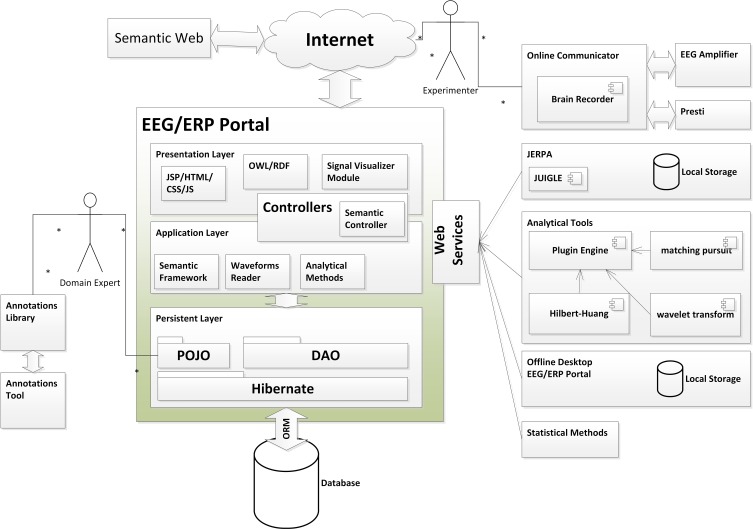
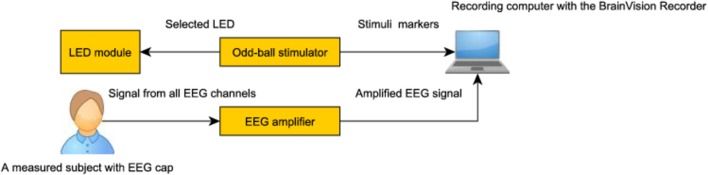
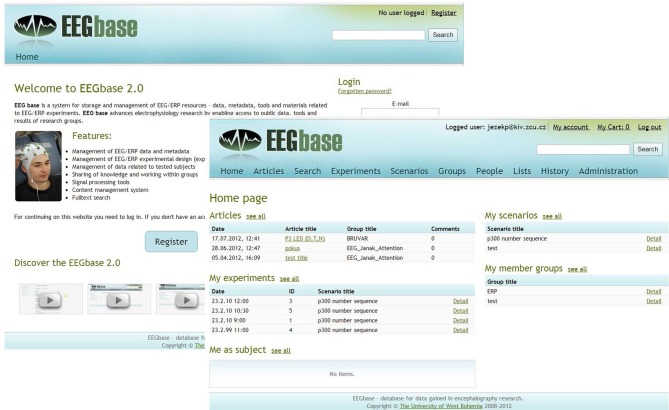
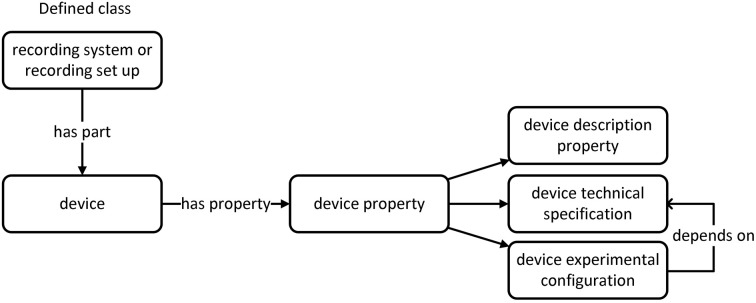
As in other areas of experimental science, operation of electrophysiological laboratory, design and performance of electrophysiological experiments, collection, storage and sharing of experimental data and metadata, analysis and interpretation of these data, and publication of results are time consuming activities. If these activities are well organized and supported by a suitable infrastructure, work efficiency of researchers increases significantly. This article deals with the main concepts, design, and development of software and hardware infrastructure for research in electrophysiology. The described infrastructure has been primarily developed for the needs of neuroinformatics laboratory at the University of West Bohemia, the Czech Republic. However, from the beginning it has been also designed and developed to be open and applicable in laboratories that do similar research. After introducing the laboratory and the whole architectural concept the individual parts of the infrastructure are described. The central element of the software infrastructure is a web-based portal that enables community researchers to store, share, download and search data and metadata from electrophysiological experiments. The data model, domain ontology and usage of semantic web languages and technologies are described. Current data publication policy used in the portal is briefly introduced. The registration of the portal within Neuroscience Information Framework is described. Then the methods used for processing of electrophysiological signals are presented. The specific modifications of these methods introduced by laboratory researches are summarized; the methods are organized into a laboratory workflow. Other parts of the software infrastructure include mobile and offline solutions for data/metadata storing and a hardware stimulator communicating with an EEG amplifier and recording software.
与实验科学的其他领域一样,电生理实验室的操作、电生理实验的设计和执行、实验数据和元数据的收集、存储和共享、这些数据的分析和解释以及结果的发表都是耗时的活动。如果这些活动得到很好的组织,并得到合适的基础设施的支持,研究人员的工作效率将显著提高。本文介绍了用于电生理学研究的软件和硬件基础设施的主要概念、设计和开发。所描述的基础设施主要是为捷克共和国西波西米亚大学的神经信息学实验室的需求而开发的。然而,从一开始,它就被设计和开发为开放的,并适用于从事类似研究的实验室。在介绍实验室和整个架构概念之后,描述了基础设施的各个部分。软件基础设施的核心元素是一个基于网络的门户,使社区研究人员能够存储、共享、下载和搜索来自电生理实验的数据和元数据。描述了数据模型、领域本体以及语义网络语言和技术的使用。简要介绍了门户中当前使用的数据发布策略。描述了门户在神经科学信息框架中的注册。然后介绍了用于处理电生理信号的方法。总结了实验室研究引入的这些方法的具体修改;这些方法被组织成实验室工作流程。软件基础设施的其他部分包括用于数据/元数据存储的移动和离线解决方案,以及与 EEG 放大器和记录软件通信的硬件刺激器。