School of Physical & Occupational Therapy, McGill University, Montreal, QC, Canada.
J Neuroeng Rehabil. 2014 Mar 19;11:38. doi: 10.1186/1743-0003-11-38.
For safe ambulation in the community, detection and avoidance of static and moving obstacles is necessary. Such abilities may be compromised by the presence of visuospatial neglect (VSN), especially when the obstacles are present in the neglected, i.e. contralesional field.
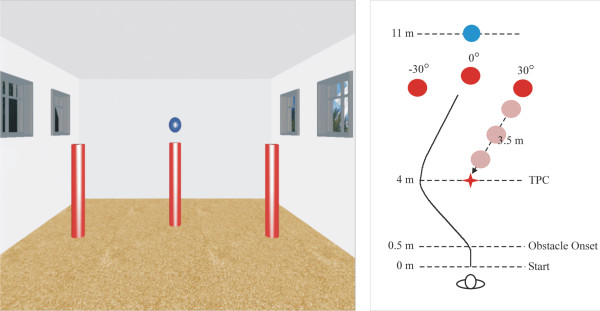
Twelve participants with VSN were tested in a virtual environment (VE) for their ability to a) detect moving obstacles (perceptuo-motor task) using a joystick with their non-paretic hand, and b) avoid collision (locomotor task) with moving obstacles while walking in the VE. The responses of the participants to obstacles approaching on the contralesional side and from head-on were compared to those during ipsilesional approaches.
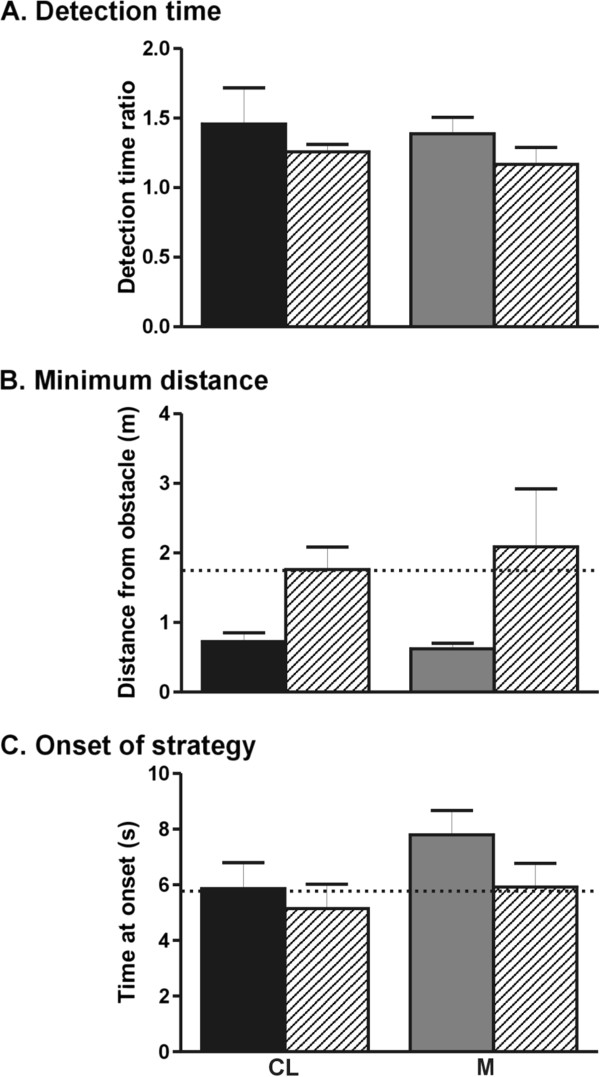
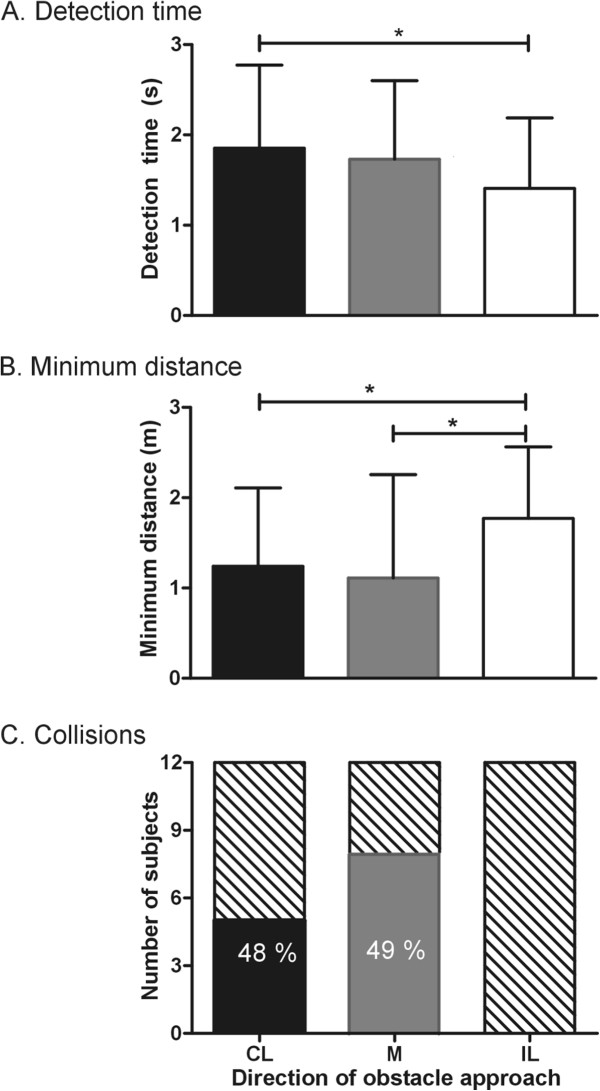
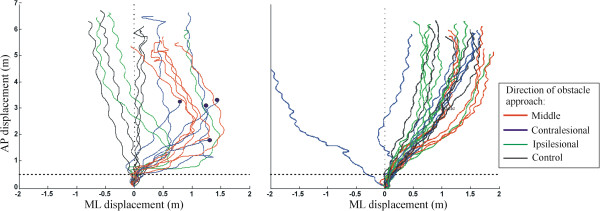
Up to 67 percent of participants (8 out of 12) collided with either contralesional or head-on obstacles or both. Delay in detection (perceptuo-motor task) and execution of avoidance strategies, and smaller distances from obstacles (locomotor task) were observed for colliders compared to non-colliders. Participants' performance on the locomotor task was not explained by clinical measures of VSN but slower walkers displayed fewer collisions.
Persons with VSN are at the risk of colliding with dynamic obstacles approaching from the contralesional side and from head-on. Locomotor-specific assessments of navigational abilities are needed to appreciate the recovery achieved or challenges faced by persons with VSN.
为了在社区中安全行走,需要能够检测和避免静态和动态障碍物。这种能力可能会因存在视空间忽略(VSN)而受到影响,尤其是当障碍物出现在被忽略的对侧,即偏侧忽略场中时。
12 名患有 VSN 的参与者在虚拟环境(VE)中接受测试,以测试他们使用非麻痹手的操纵杆检测移动障碍物(感知运动任务)的能力,以及在 VE 中行走时避免与移动障碍物碰撞(运动任务)的能力。参与者对来自对侧和正面接近的障碍物的反应与来自同侧接近的障碍物的反应进行了比较。
多达 67%的参与者(12 名中的 8 名)与对侧或正面障碍物或两者都发生了碰撞。与非碰撞者相比,碰撞者在检测(感知运动任务)和执行回避策略方面存在延迟,并且与障碍物的距离较小(运动任务)。参与者在运动任务中的表现不能用 VSN 的临床测量来解释,但较慢的步行者碰撞较少。
患有 VSN 的人有与从对侧和正面接近的动态障碍物碰撞的风险。需要对导航能力进行特定于运动的评估,以了解 VSN 患者所取得的恢复或面临的挑战。