Glaeser Stefanie P, Berghoff Bork A, Stratmann Verena, Grossart Hans-Peter, Glaeser Jens
Institute for Microbiology and Molecular Biology, Justus-Liebig-University, Giessen, Germany; Institute for Applied Microbiology, Justus-Liebig-University, Giessen, Germany.
Institute for Microbiology and Molecular Biology, Justus-Liebig-University, Giessen, Germany; Department of Cell & Molecular Biology, Uppsala University, Uppsala, Sweden.
PLoS One. 2014 Mar 25;9(3):e92518. doi: 10.1371/journal.pone.0092518. eCollection 2014.
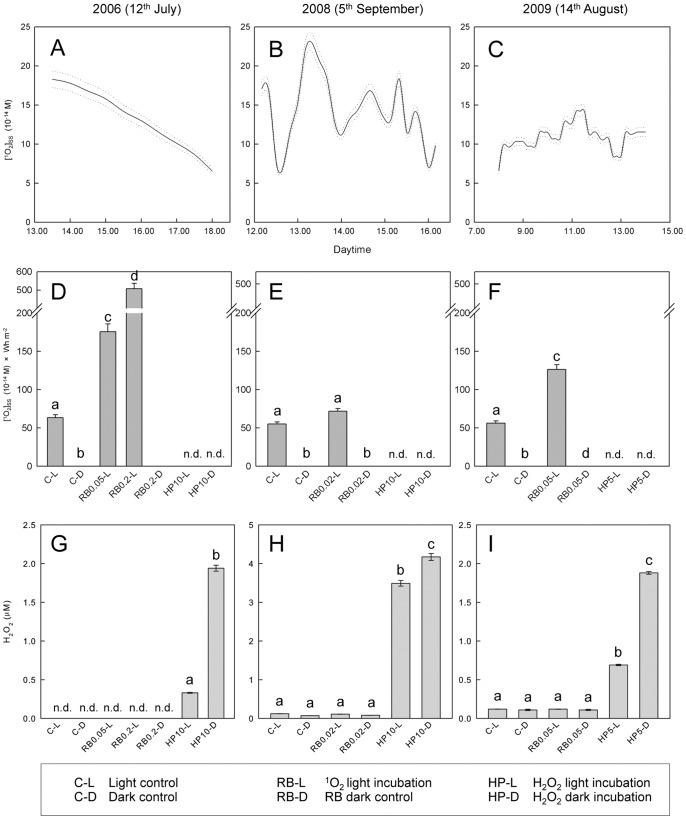
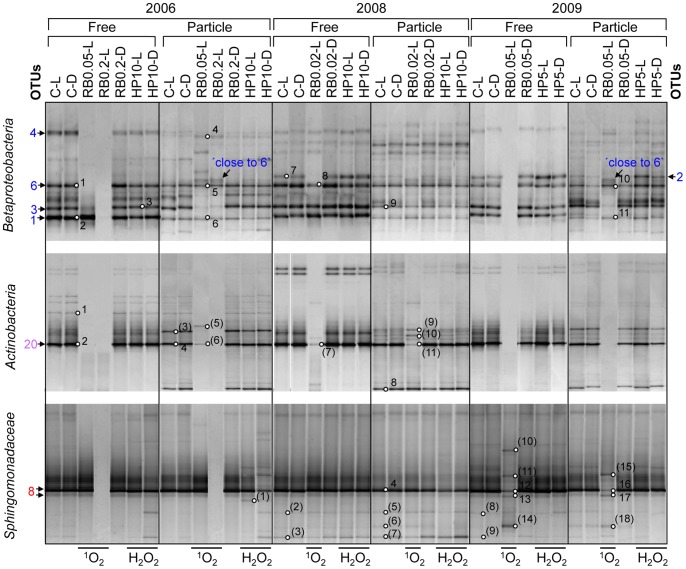
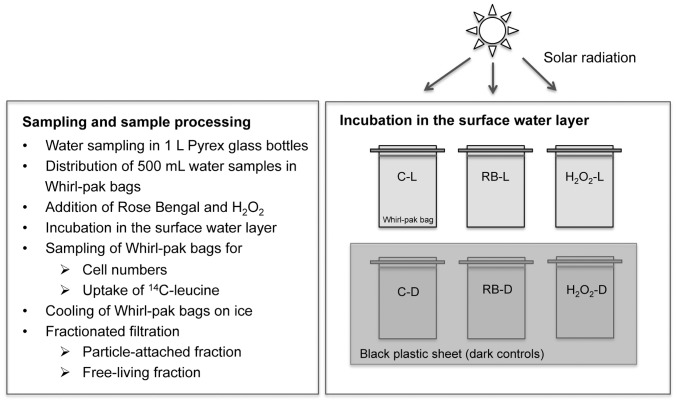
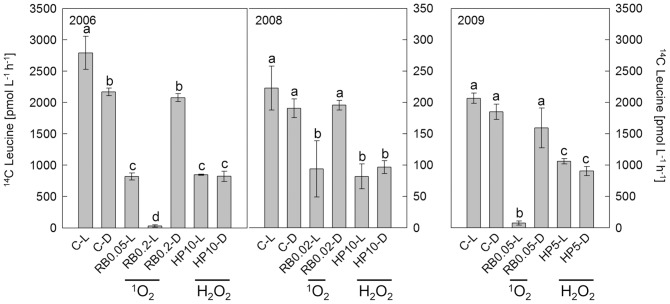
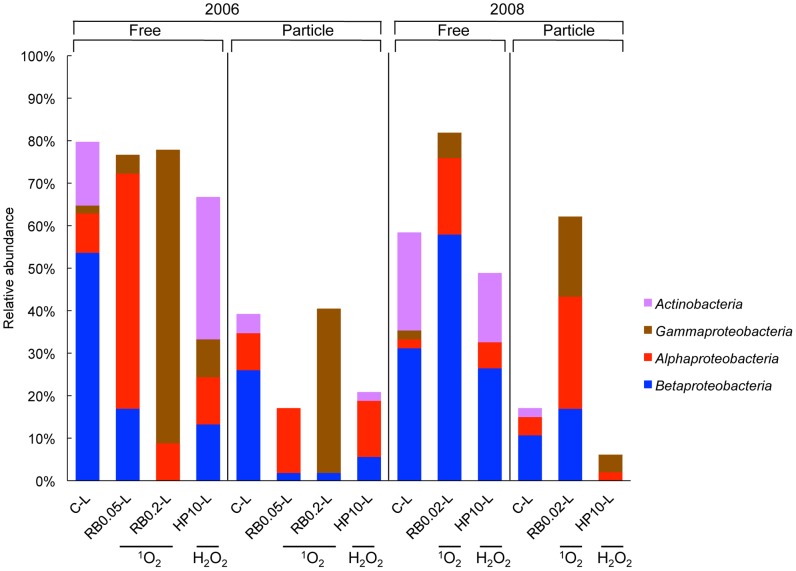
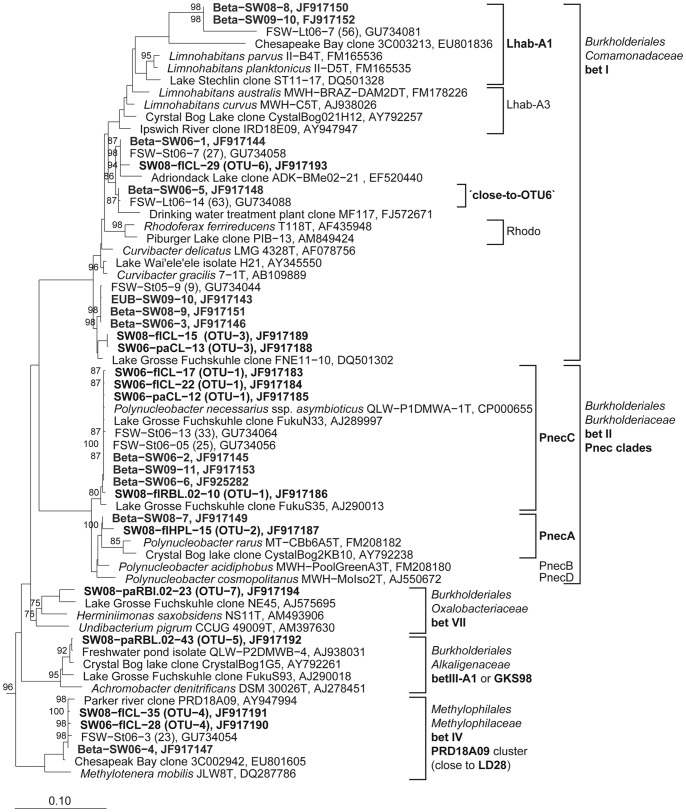
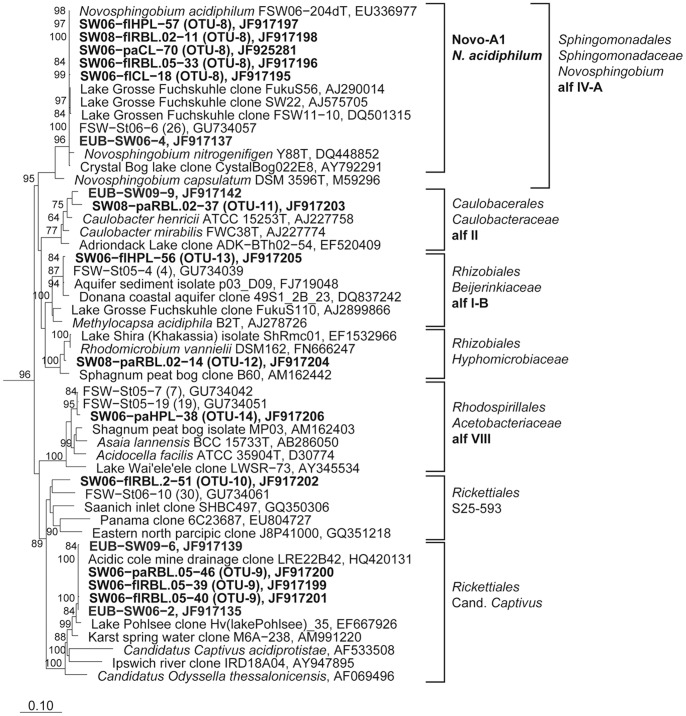
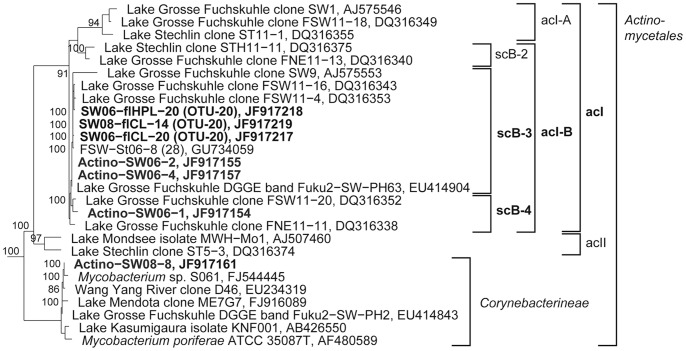
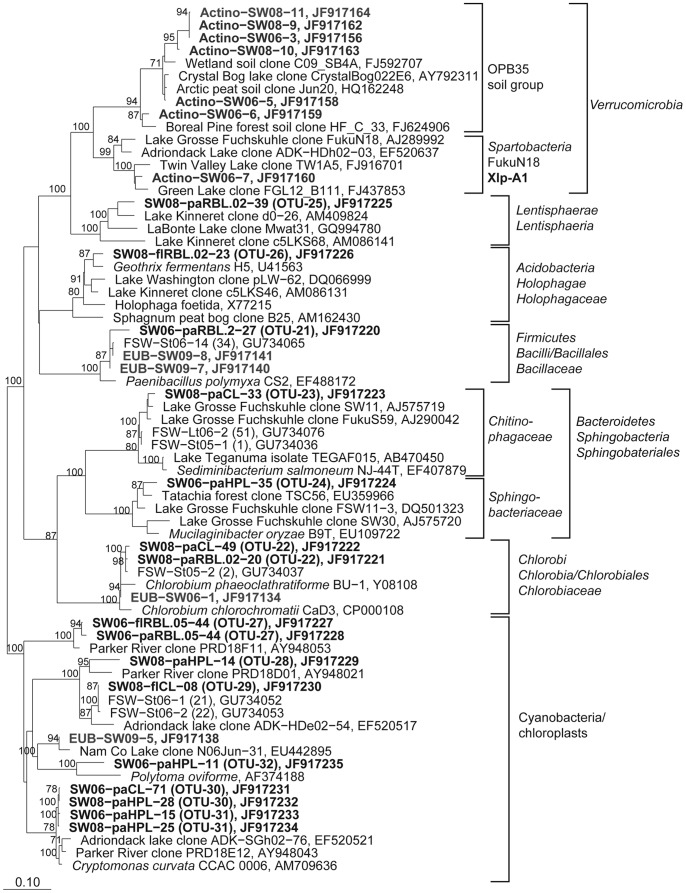
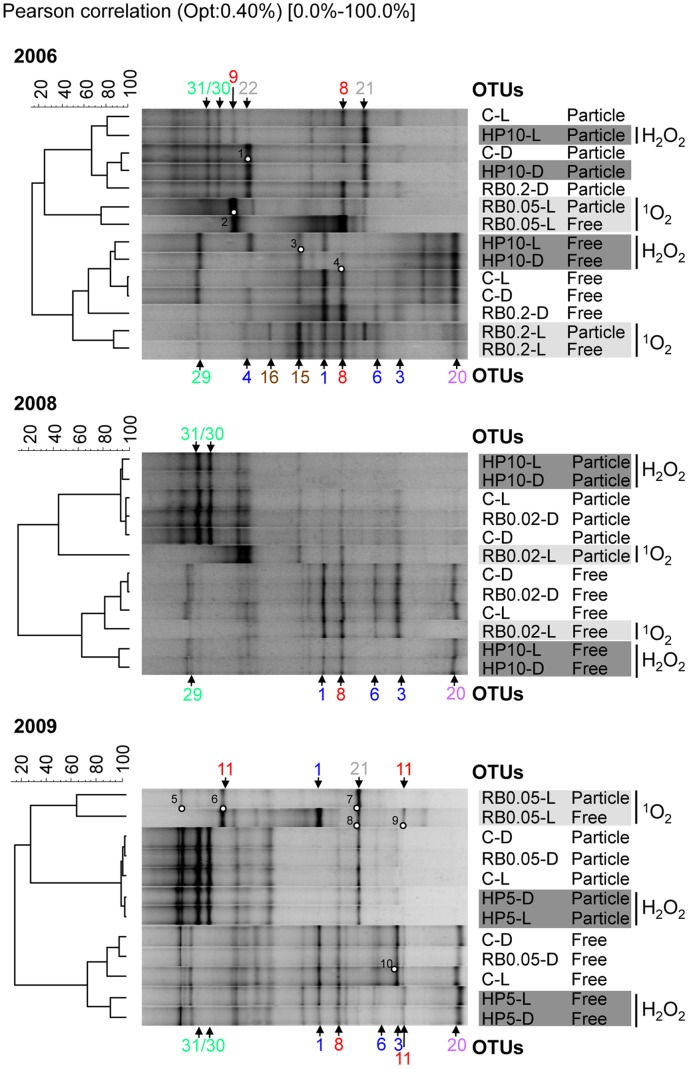
Light excitation of humic matter generates reactive oxygen species (ROS) in surface waters of aquatic ecosystems. Abundant ROS generated in humic matter rich lakes include singlet oxygen ((1)O2) and hydrogen peroxide (H2O2). Because these ROS differ in half-life time and toxicity, we compared their effects on microbial activity ((14)C-Leucine incorporation) and bacterial community composition (BCC) in surface waters of humic Lake Grosse Fuchskuhle (North-eastern Germany). For this purpose, experiments with water samples collected from the lake were conducted in July 2006, September 2008 and August 2009. Artificially increased (1)O2 and H2O2 concentrations inhibited microbial activity in water samples to a similar extent, but the effect of the respective ROS on BCC varied strongly. BCC analysis by 16S rRNA gene clone libraries and RT-PCR DGGE revealed ROS specific changes in relative abundance and activity of major bacterial groups and composition of dominating phylotypes. These changes were consistent in the three experiments performed in different years. The relative abundance of Polynucleobacter necessarius, Limnohabitans-related phylotypes (Betaproteobacteria), and Novosphingobium acidiphilum (Alphaproteobacteria) increased or was not affected by photo-sensitized (1)O2 exposure, but decreased after H2O2 exposure. The opposite pattern was found for Actinobacteria of the freshwater AcI-B cluster which were highly sensitive to (1)O2 but not to H2O2 exposure. Furthermore, group-specific RT-PCR DGGE analysis revealed that particle-attached P. necessarius and Limnohabitans-related phylotypes exhibit higher resistance to (1)O2 exposure compared to free-living populations. These results imply that (1)O2 acts as a factor in niche separation of closely affiliated Polynucleobacter and Limnohabitans-related phylotypes. Consequently, oxidative stress caused by photochemical ROS generation should be regarded as an environmental variable determining abundance, activity, and phylotype composition of environmentally relevant bacterial groups, in particular in illuminated and humic matter rich waters.
腐殖质的光激发作用会在水生生态系统的地表水中产生活性氧(ROS)。在富含腐殖质的湖泊中产生的大量ROS包括单线态氧((1)O2)和过氧化氢(H2O2)。由于这些ROS在半衰期和毒性方面存在差异,我们比较了它们对德国东北部腐殖质丰富的大富克斯库勒湖地表水中微生物活性((14)C-亮氨酸掺入)和细菌群落组成(BCC)的影响。为此,于2006年7月、2008年9月和2009年8月对从该湖采集的水样进行了实验。人为增加(1)O2和H2O2浓度对水样中微生物活性的抑制程度相似,但各自的ROS对BCC的影响差异很大。通过16S rRNA基因克隆文库和RT-PCR DGGE进行的BCC分析揭示了主要细菌类群的相对丰度和活性以及优势系统发育型组成中ROS特异性的变化。这些变化在不同年份进行的三个实验中是一致的。多聚核杆菌、与Limnohabitans相关的系统发育型(β-变形菌纲)和嗜酸新鞘氨醇菌(α-变形菌纲)的相对丰度在光致敏(1)O2暴露后增加或不受影响,但在H2O2暴露后降低。对于淡水AcI-B簇的放线菌,发现了相反的模式,它们对(1)O2高度敏感,但对H2O2暴露不敏感。此外,组特异性RT-PCR DGGE分析表明,与自由生活种群相比,附着在颗粒上的多聚核杆菌和与Limnohabitans相关的系统发育型对(1)O2暴露表现出更高的抗性。这些结果表明,(1)O2是密切相关的多聚核杆菌和与Limnohabitans相关的系统发育型生态位分离的一个因素。因此,由光化学ROS生成引起的氧化应激应被视为一个环境变量,它决定了与环境相关细菌类群的丰度、活性和系统发育型组成,特别是在光照充足且富含腐殖质的水体中。