Vandenabeele Sylvie P, Grundy Edward, Friswell Michael I, Grogan Adam, Votier Stephen C, Wilson Rory P
Biosciences department, College of Science, Swansea University, Singleton Park, Swansea, United Kingdom.
College of Engineering, Swansea University, Singleton Park, Swansea, United Kingdom.
PLoS One. 2014 Mar 26;9(3):e92657. doi: 10.1371/journal.pone.0092657. eCollection 2014.
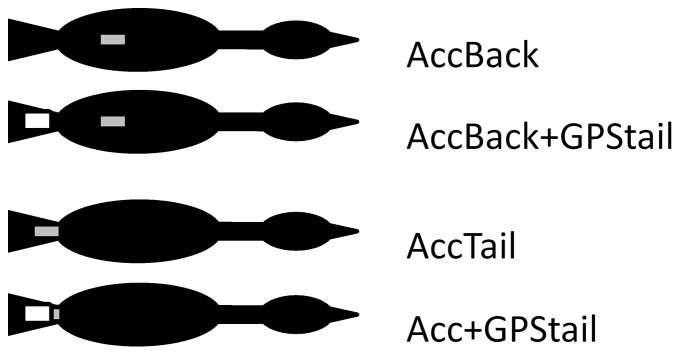
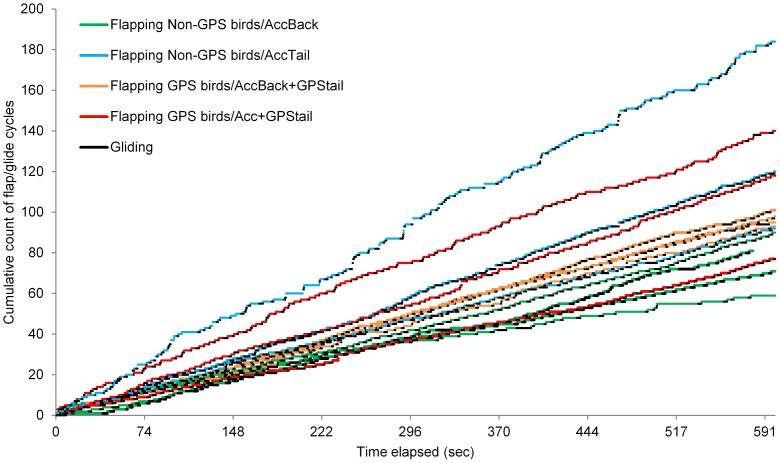
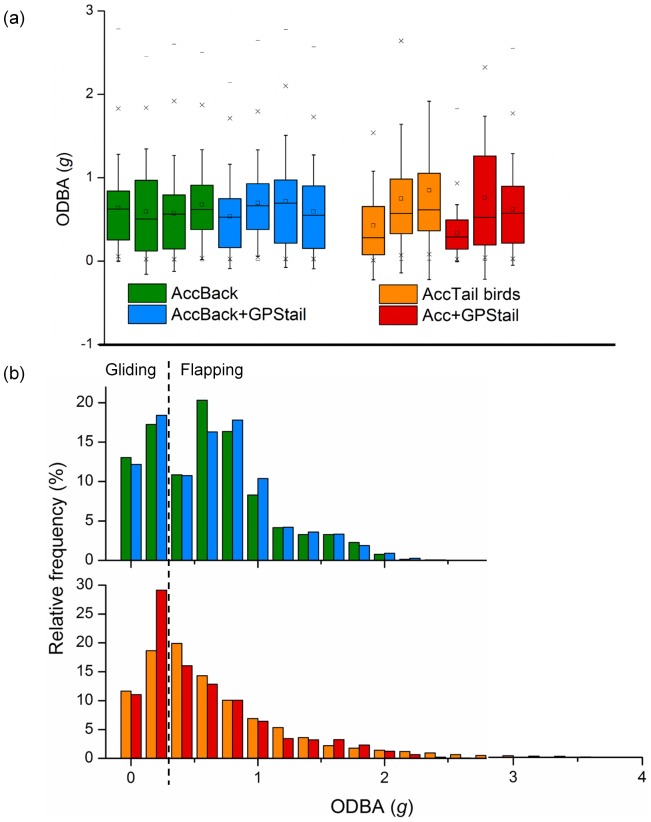
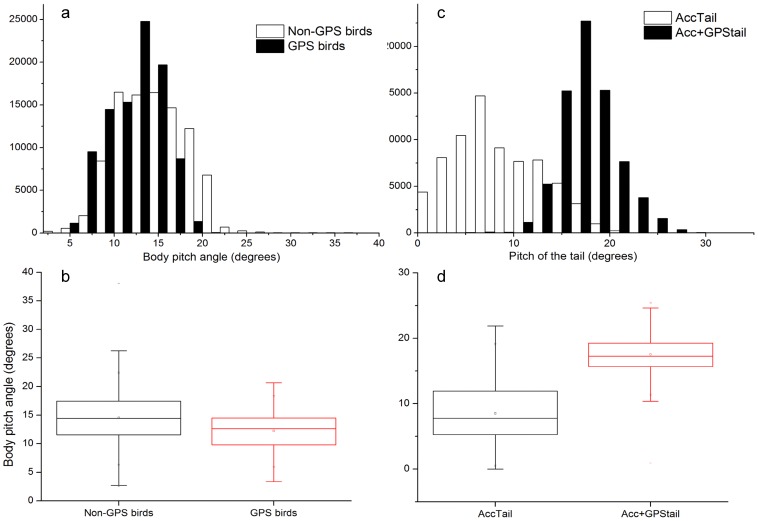
Devices attached to flying birds can hugely enhance our understanding of their behavioural ecology for periods when they cannot be observed directly. For this, scientists routinely attach units to either birds' backs or their tails. However, inappropriate payload distribution is critical in aircraft and, since birds and planes are subject to the same laws of physics during flight, we considered aircraft aerodynamic constraints to explain flight patterns displayed by northern gannets Sula bassana equipped with (small ca. 14 g) tail- and back-mounted accelerometers and (larger ca. 30 g) tail-mounted GPS units. Tail-mounted GPS-fitted birds showed significantly higher cumulative numbers of flap-glide cycles and a higher pitch angle of the tail than accelerometer-equipped birds, indicating problems with balancing inappropriately placed weights with knock-on consequences relating to energy expenditure. These problems can be addressed by carefully choosing where to place tags on birds according to the mass of the tags and the lifestyle of the subject species.
附着在飞鸟身上的设备能够极大地增进我们对其行为生态学的理解,尤其是在无法直接观察它们的时期。为此,科学家们通常会将设备安装在鸟类的背部或尾部。然而,不恰当的载荷分布在飞机上至关重要,而且由于鸟类和飞机在飞行过程中遵循相同的物理规律,我们考虑利用飞机空气动力学限制来解释配备了(约14克的小型)尾部和背部加速度计以及(约30克的较大型)尾部全球定位系统(GPS)装置的北海鲣鸟(Sula bassana)所展示的飞行模式。安装了尾部GPS的鸟类比配备加速度计的鸟类显示出明显更多的扑翼-滑翔周期累积数量以及更高的尾翼俯仰角,这表明在平衡放置不当的重量方面存在问题,并对能量消耗产生连锁影响。根据标签的质量和目标物种的生活方式,仔细选择在鸟类身上放置标签的位置,这些问题是可以解决的。