Ling Guiying, Gao Jiuxiang, Zhang Shumin, Xie Zeping, Wei Lin, Yu Haining, Wang Yipeng
Department of Biology, Guizhou Normal University, Guiyang, Guizhou, China.
Department of Bioscience and Biotechnology, Dalian University of Technology, Dalian, China.
PLoS One. 2014 Mar 27;9(3):e93216. doi: 10.1371/journal.pone.0093216. eCollection 2014.
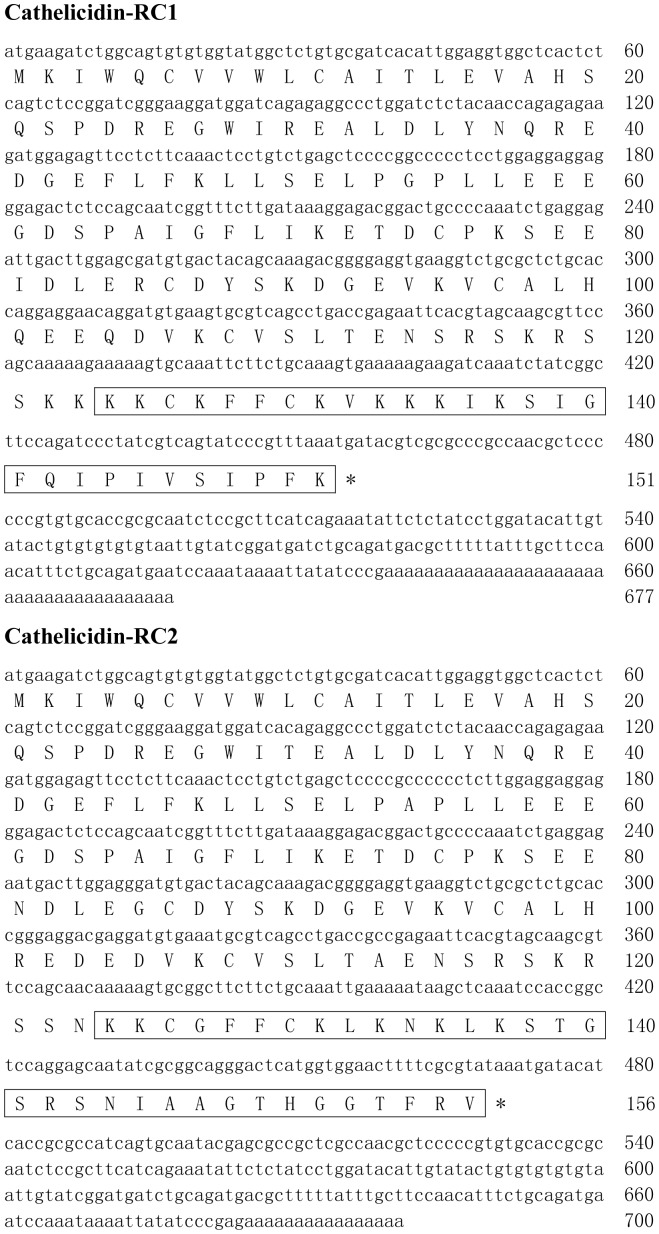
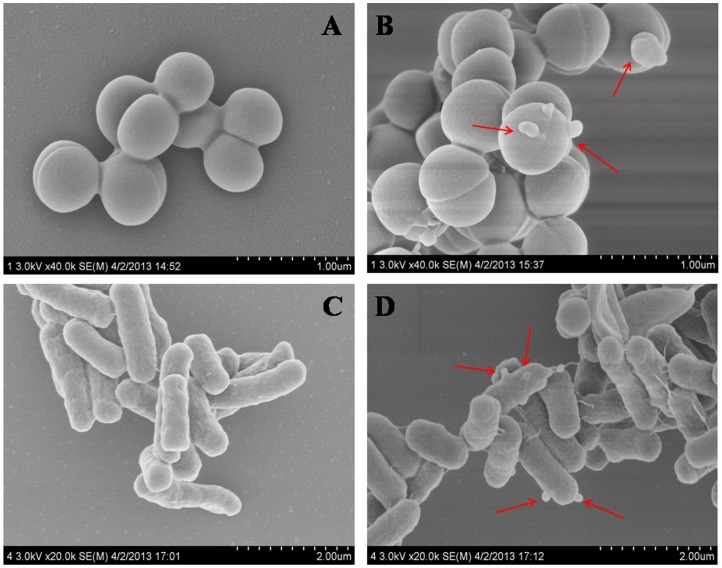
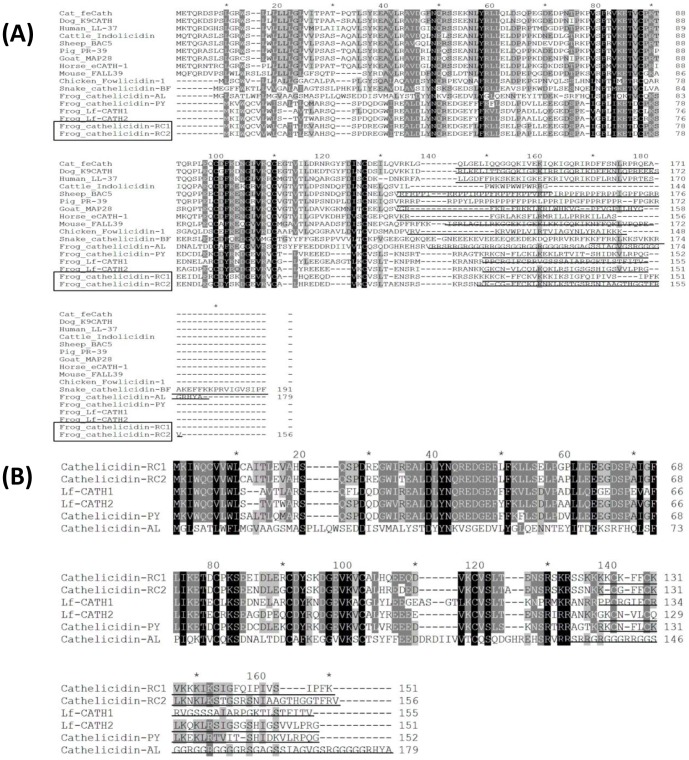
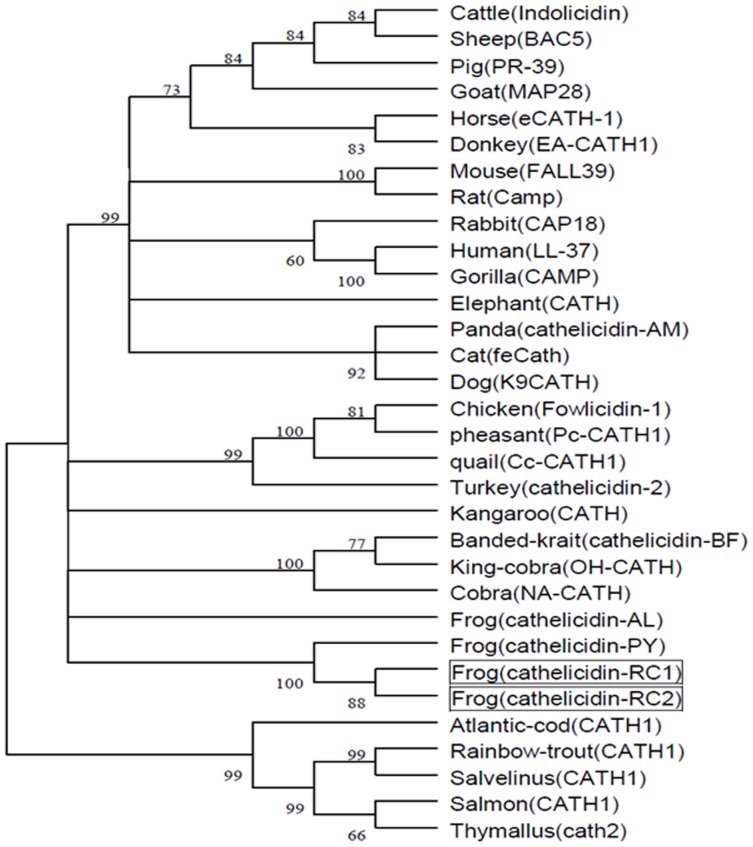
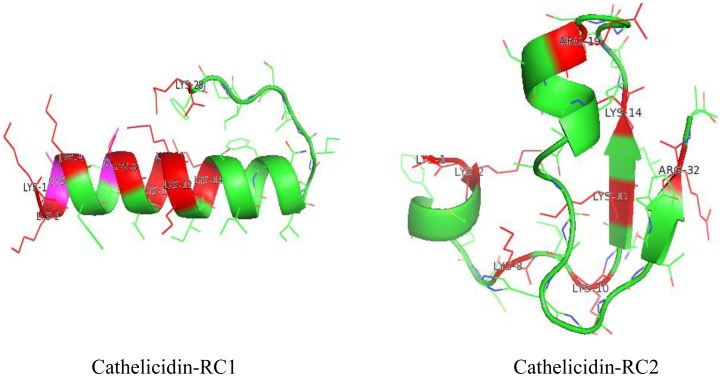
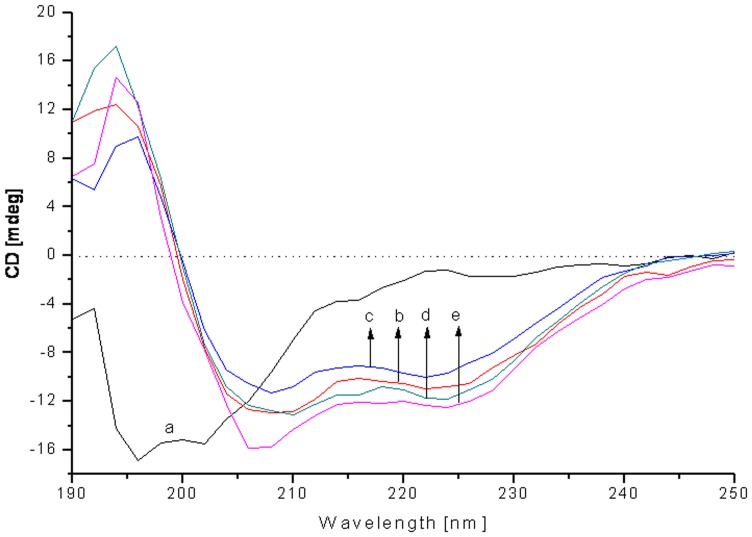
Cathelicidins, a class of gene-encoded effector molecules of vertebrate innate immunity, provide a first line of defense against microbial invasions. Although cathelicidins from mammals, birds, reptiles and fishes have been extensively studied, little is known about cathelicidins from amphibians. Here we report the identification and characterization of two cathelicidins (cathelicidin-RC1 and cathelicidin-RC2) from the bullfrog Rana catesbeiana. The cDNA sequences (677 and 700 bp, respectively) encoding the two peptides were successfully cloned from the constructed lung cDNA library of R. catesbeiana. And the deduced mature peptides are composed of 28 and 33 residues, respectively. Structural analysis indicated that cathelicidin-RC1 mainly assumes an amphipathic alpha-helical conformation, while cathelicidin-RC2 could not form stable amphipathic structure. Antimicrobial and bacterial killing kinetic analysis indicated that the synthetic cathelicidin-RC1 possesses potent, broad-spectrum and rapid antimicrobial potency, while cathelicidin-RC2 exhibited very weak antimicrobial activity. Besides, the antimicrobial activity of cathelicidin-RC1 is salt-independent and highly stable. Scanning electron microscopy (SEM) analysis indicated that cathelicidin-RC1 kills microorganisms through the disruption of microbial membrane. Moreover, cathelicidin-RC1 exhibited low cytotoxic activity against mammalian normal or tumor cell lines, and low hemolytic activity against human erythrocytes. The potent, broad-spectrum and rapid antimicrobial activity combined with the salt-independence, high stability, low cytotoxic and hemolytic activities make cathelicidin-RC1 an ideal template for the development of novel peptide antibiotics.
cathelicidin抗菌肽是脊椎动物先天免疫的一类基因编码效应分子,为抵御微生物入侵提供了第一道防线。尽管来自哺乳动物、鸟类、爬行动物和鱼类的cathelicidin抗菌肽已得到广泛研究,但对两栖动物的cathelicidin抗菌肽却知之甚少。在此,我们报告了从牛蛙(Rana catesbeiana)中鉴定和表征的两种cathelicidin抗菌肽(cathelicidin-RC1和cathelicidin-RC2)。从构建的牛蛙肺cDNA文库中成功克隆出编码这两种肽的cDNA序列(分别为677和700 bp)。推导的成熟肽分别由28和33个残基组成。结构分析表明,cathelicidin-RC1主要呈两亲性α-螺旋构象,而cathelicidin-RC2无法形成稳定的两亲性结构。抗菌和细菌杀伤动力学分析表明,合成的cathelicidin-RC1具有强大、广谱和快速的抗菌效力,而cathelicidin-RC2表现出非常弱的抗菌活性。此外,cathelicidin-RC1的抗菌活性不依赖盐且高度稳定。扫描电子显微镜(SEM)分析表明,cathelicidin-RC1通过破坏微生物膜来杀死微生物。此外,cathelicidin-RC1对哺乳动物正常或肿瘤细胞系表现出低细胞毒性活性,对人红细胞表现出低溶血活性。强大、广谱和快速的抗菌活性与不依赖盐、高稳定性、低细胞毒性和溶血活性相结合,使cathelicidin-RC1成为开发新型肽类抗生素的理想模板。