Ciccioli Paolo, Centritto Mauro, Loreto Francesco
Istituto di Metodologie Chimiche, Consiglio Nazionale delle Ricerche, Monterotondo Scalo, RM, 00015, Italy.
Plant Cell Environ. 2014 Aug;37(8):1810-25. doi: 10.1111/pce.12336. Epub 2014 May 13.
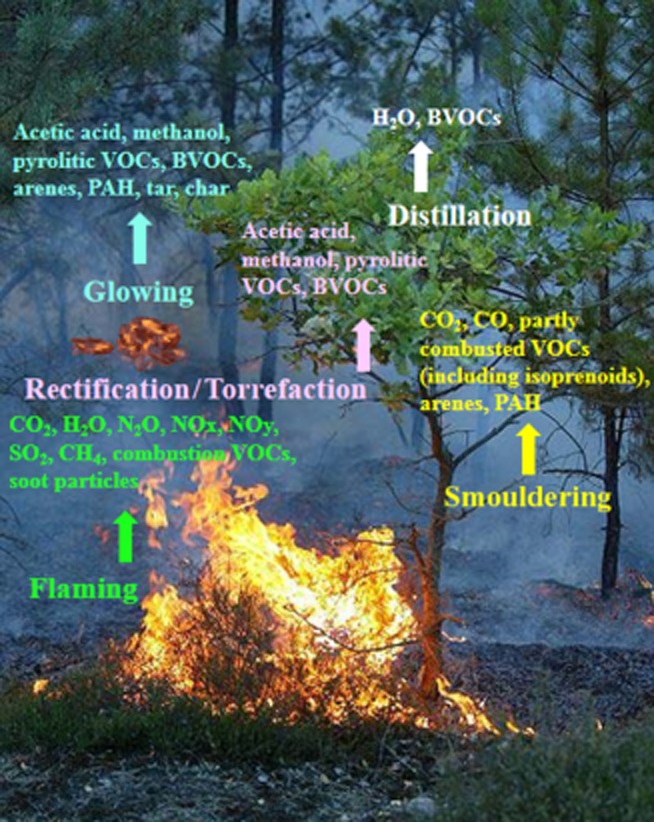
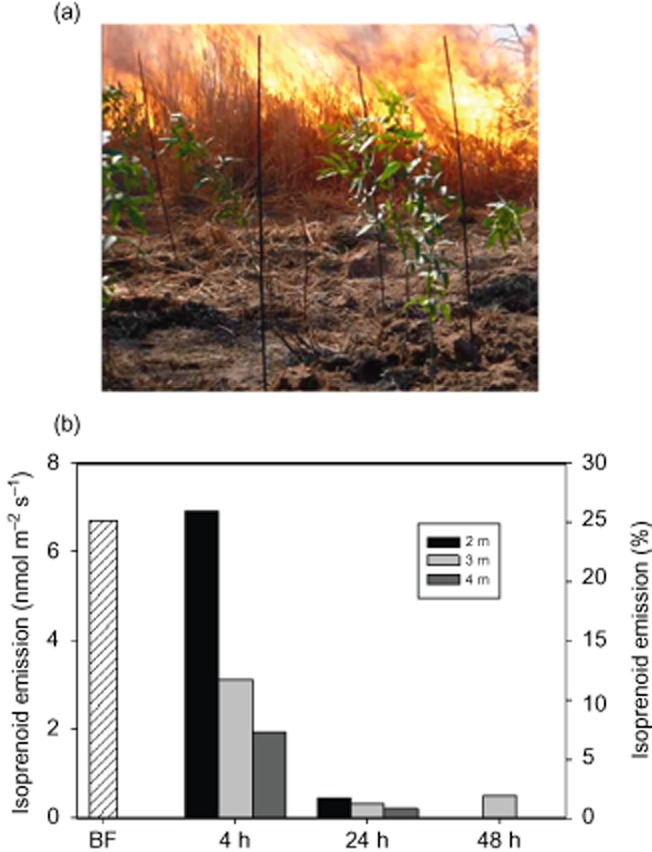
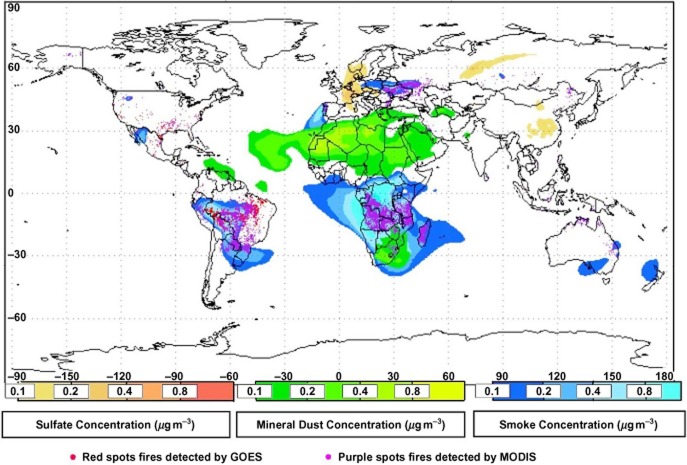
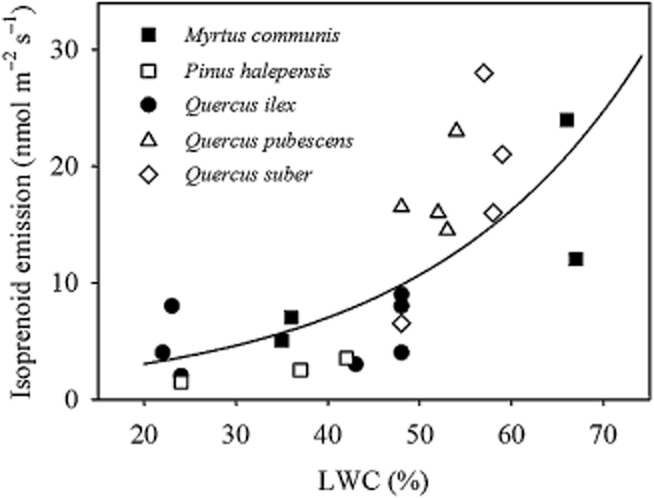
The aim of this paper was to provide an overview of the current state of the art on research into the emission of biogenic volatile organic compounds (BVOCs) from vegetation fires. Significant amounts of VOCs are emitted from vegetation fires, including several reactive compounds, the majority belonging to the isoprenoid family, which rapidly disappear in the plume to yield pollutants such as secondary organic aerosol and ozone. This makes determination of fire-induced BVOC emission difficult, particularly in areas where the ratio between VOCs and anthropogenic NOx is favourable to the production of ozone, such as Mediterranean areas and highly anthropic temperate (and fire-prone) regions of the Earth. Fire emissions affecting relatively pristine areas, such as the Amazon and the African savannah, are representative of emissions of undisturbed plant communities. We also examined expected BVOC emissions at different stages of fire development and combustion, from drying to flaming, and from heatwaves coming into contact with unburned vegetation at the edge of fires. We conclude that forest fires may dramatically change emission factors and the profile of emitted BVOCs, thereby influencing the chemistry and physics of the atmosphere, the physiology of plants and the evolution of plant communities within the ecosystem.
本文旨在概述植被火灾中生物源挥发性有机化合物(BVOCs)排放研究的当前技术水平。植被火灾会释放大量挥发性有机化合物,包括几种活性化合物,其中大部分属于类异戊二烯家族,这些化合物在烟羽中迅速消失,生成二次有机气溶胶和臭氧等污染物。这使得确定火灾引发的BVOC排放变得困难,尤其是在地中海地区以及地球上人类活动频繁的温带(且易发生火灾)地区等挥发性有机化合物与人为源氮氧化物的比例有利于臭氧生成的区域。影响相对原始地区(如亚马逊地区和非洲大草原)的火灾排放代表了未受干扰的植物群落的排放情况。我们还研究了火灾发展和燃烧不同阶段(从干燥到燃烧,以及热浪与火灾边缘未燃烧植被接触时)预期的BVOC排放。我们得出结论,森林火灾可能会显著改变排放因子和所排放BVOC的特征,从而影响大气的化学和物理性质、植物的生理机能以及生态系统内植物群落的演变。