Ivyna Bong Pau Ni, Ng Ching Ching, Lam Kah Yuen, Megat Baharuddin Puteri Jamilatul Noor, Chang Kian Meng, Zakaria Zubaidah
Hematology Unit, Cancer Research Centre, Institute for Medical Research, Kuala Lumpur, Malaysia.
Mol Cytogenet. 2014 Apr 1;7(1):24. doi: 10.1186/1755-8166-7-24.
Multiple myeloma is an incurable disease. Little is known about the genetic and molecular mechanisms governing the pathogenesis of multiple myeloma. The risk of multiple myeloma predispositions varies among different ethnicities. More than 50% of myeloma cases showed normal karyotypes with conventional cytogenetic analysis due to the low mitotic activity and content of plasma cells in the bone marrow. In the present study, high resolution array comparative genomic hybridization technique was used to identify copy number aberrations in 63 multiple myeloma patients of Malaysia.
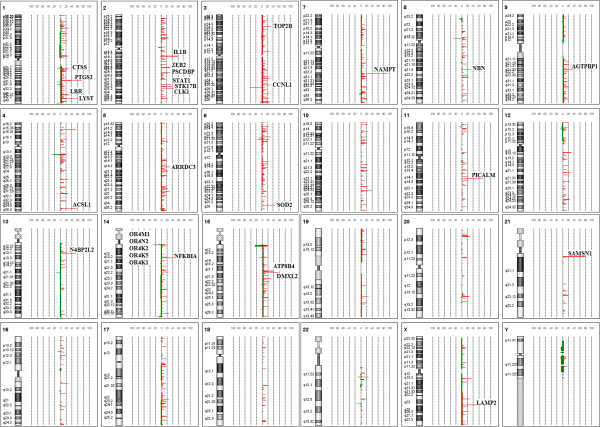
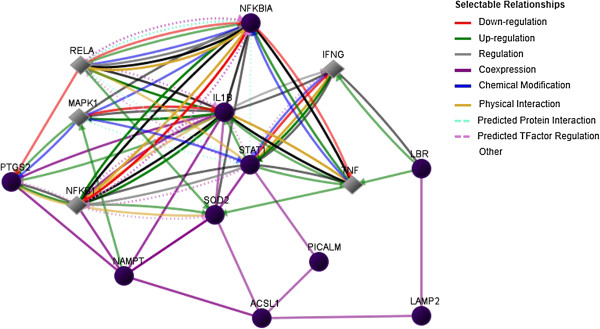
Copy number aberrations were identified in 100% of patients analyzed (n = 63). Common chromosomal gains were detected at regions 1q, 2q, 3p, 3q, 4q, 5q, 6q, 8q, 9q, 10q, 11q, 13q, 14q, 15q, 21q and Xq while common chromosomal losses were identified at regions 3q and 14q. There were a total of 25 and 5 genes localized within the regions of copy number gains and losses, respectively (>30% penetrance). The LYST, CLK1, ACSL1 and NFKBIA are genes localized within the copy number aberration regions and they represent novel information that has never been previously described in multiple myeloma patients.
In general, due to the differences in genetic background, dietary and lifestyle practices of Malaysian compared to the Caucasian population, these chromosomal alterations might be unique for Asian MM patients. Genes identified in this study could be potential molecular therapeutic targets for the treatment and management of patients with multiple myeloma.
多发性骨髓瘤是一种无法治愈的疾病。关于多发性骨髓瘤发病机制的遗传和分子机制知之甚少。多发性骨髓瘤易感性的风险在不同种族之间有所不同。由于骨髓中浆细胞的有丝分裂活性低和含量少,超过50%的骨髓瘤病例通过传统细胞遗传学分析显示核型正常。在本研究中,使用高分辨率阵列比较基因组杂交技术来鉴定63名马来西亚多发性骨髓瘤患者的拷贝数畸变。
在所有分析的患者(n = 63)中均鉴定出拷贝数畸变。常见的染色体增加区域位于1q、2q、3p、3q、4q、5q、6q、8q、9q、10q、11q、13q、14q、15q、21q和Xq,而常见的染色体丢失区域位于3q和14q。分别有25个和5个基因定位于拷贝数增加和减少的区域(外显率>30%)。LYST、CLK1、ACSL1和NFKBIA是定位于拷贝数畸变区域的基因,它们代表了以前在多发性骨髓瘤患者中从未描述过的新信息。
一般来说,由于马来西亚人与白种人群在遗传背景、饮食和生活方式上的差异,这些染色体改变可能是亚洲骨髓瘤患者所特有的。本研究中鉴定出的基因可能是多发性骨髓瘤患者治疗和管理的潜在分子治疗靶点。