Ryoo In-Geun, Ha Hunjoo, Kwak Mi-Kyoung
College of Pharmacy, The Catholic University of Korea, Bucheon, Gyeonggi-do, Republic of Korea.
College of Pharmacy, Ewha Womans University, Seodaemun-gu, Seoul, Republic of Korea.
PLoS One. 2014 Apr 1;9(4):e93265. doi: 10.1371/journal.pone.0093265. eCollection 2014.
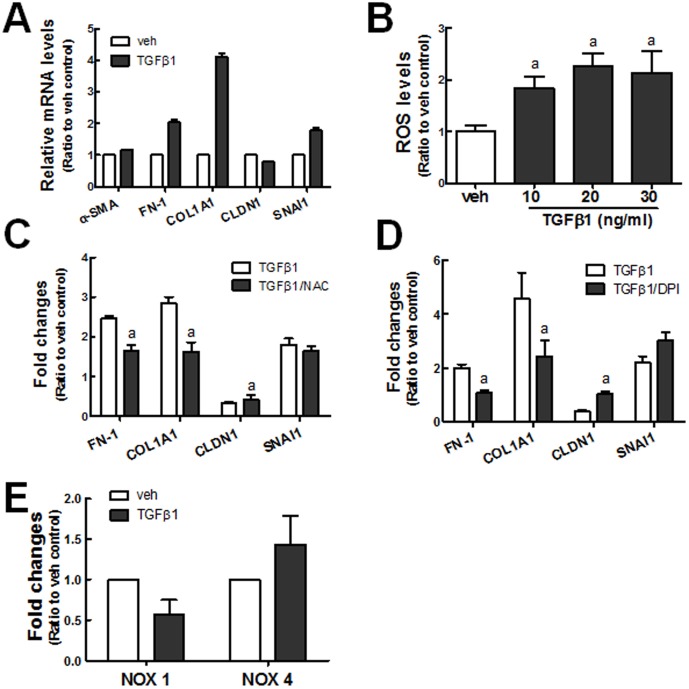
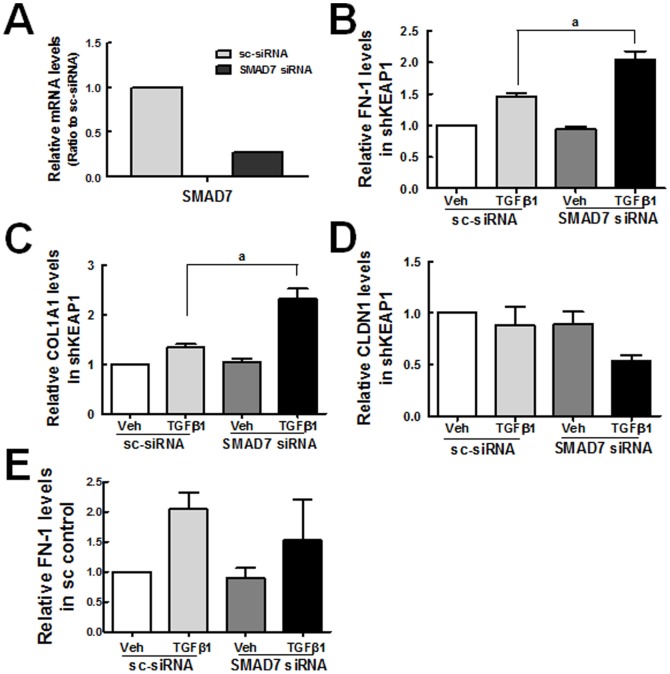
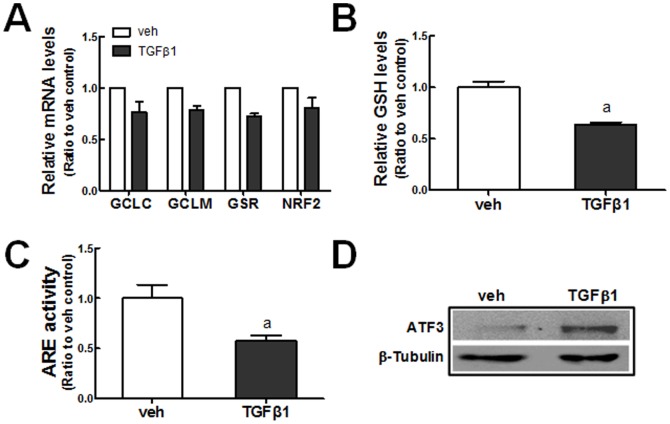
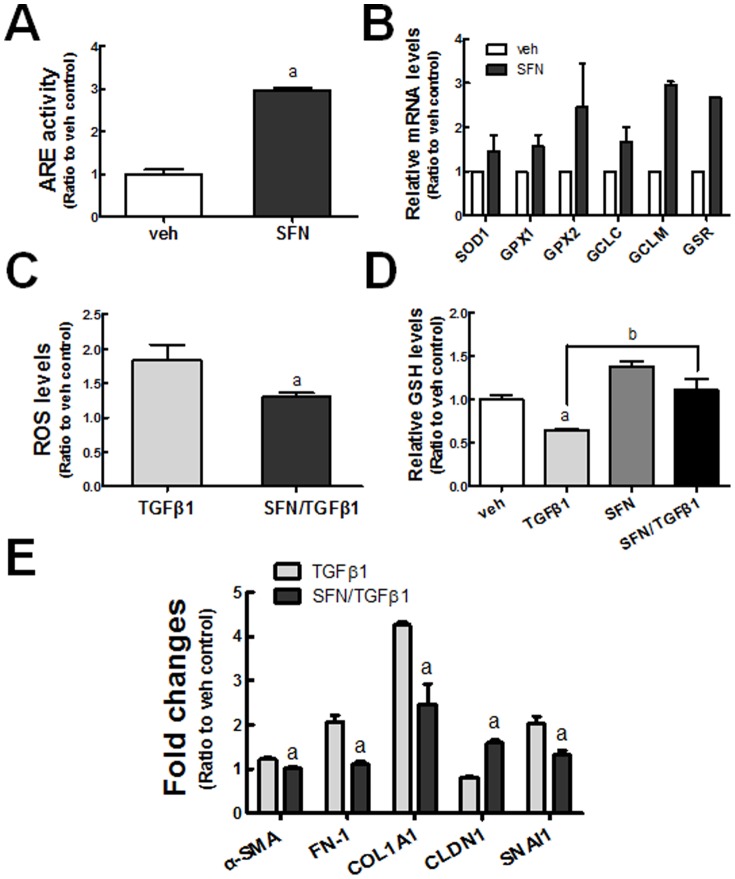
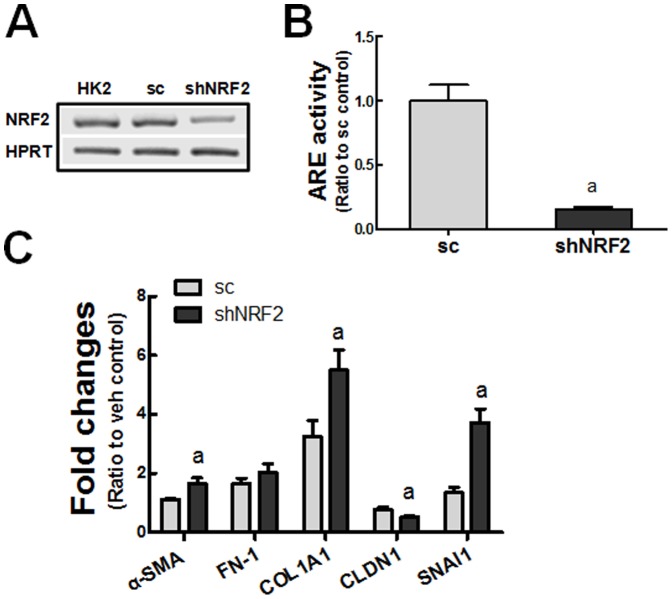
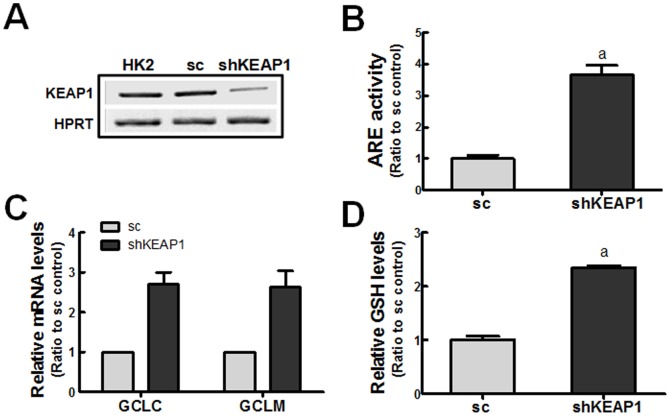
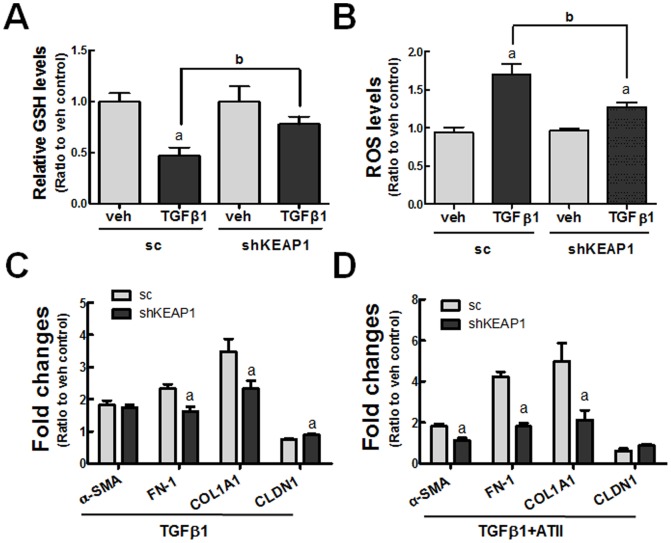
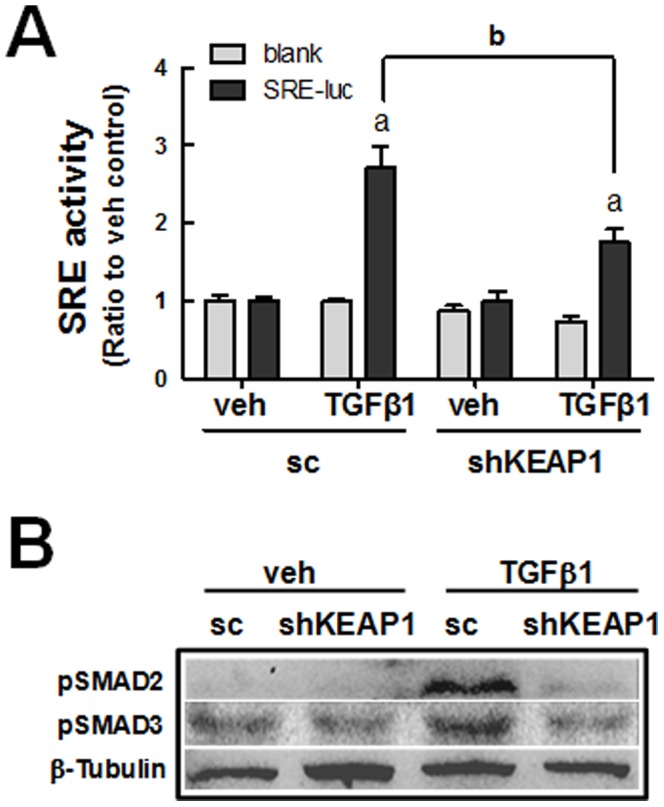
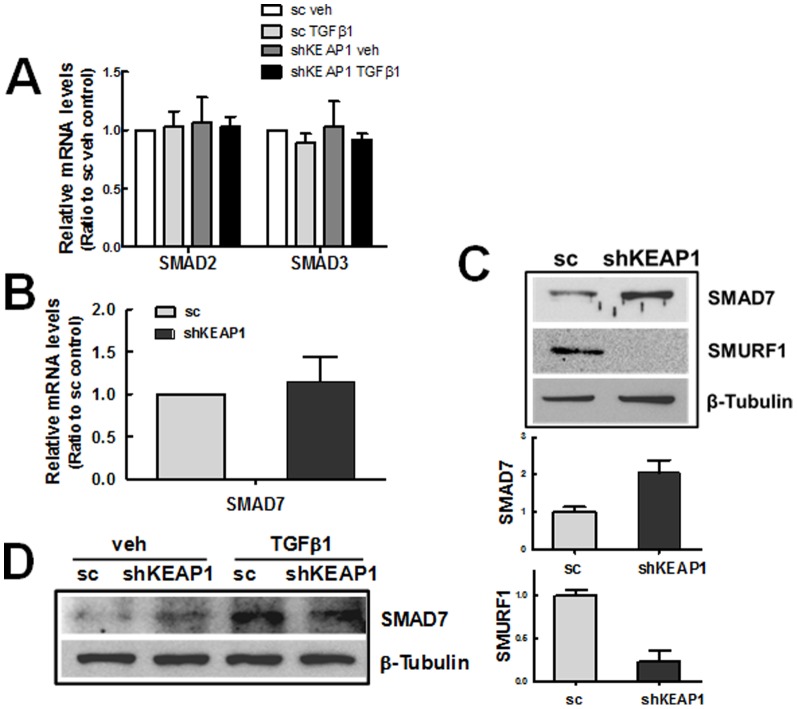
Transforming growth factor β1 (TGFβ1) is a potent stimulator of epithelial-to-mesenchymal transition (EMT) and has been associated with chronic kidney diseases by activating profibrotic gene expression. In this study, we investigated the role of the KEAP1-NRF2 pathway, which is a master regulator of the cellular antioxidant system, in TGFβ1-stimulated EMT gene changes using human renal tubular epithelial HK2. Treatment with TGFβ1 enhanced the levels of reactive oxygen species (ROS) and TGFβ1-stimulated EMT gene changes, including an increase in profibrotic fibronectin-1 and collagen 1A1, were diminished by the antioxidant N-acetylcysteine. In HK2, TGFβ1 suppressed NRF2 activity and thereby reduced the expression of GSH synthesizing enzyme through the elevation of ATF3 level. Therefore, the activation of NRF2 signaling with sulforaphane effectively attenuated the TGFβ1-stimulated increase in fibronectin-1 and collagen 1A1. Conversely, the TGFβ1-EMT gene changes were further enhanced by NRF2 knockdown compared to the control cells. The relationship of NRF2 signaling and TGFβ1-EMT changes was further confirmed in a stable KEAP1-knockdown HK2, which is a model of pure activation of NRF2. The TGFβ1-mediated increase of collagen 1A1 and fibronectin-1 in KEAP1 knockdown HK2 was suppressed. In particular, TGFβ1-SMAD signaling was modulated in KEAP1 knockdown HK2: the TGFβ1-stimulated SMAD2/3 phosphorylation and SMAD transcriptional activity were repressed. Additionally, the protein level of SMAD7, an inhibitor of SMAD signaling, was elevated and the level of SMURF1, an E3 ubiquitin ligase for SMAD7 protein, was diminished in KEAP1 knockdown HK2. Finally, the inhibition of SMAD7 expression in KEAP1 knockdown HK2 restored TGFβ1 response, indicating that SMURF1-SMAD7 may be a molecular signaling linking the NRF2-GSH pathway to TGFβ1-EMT changes. Collectively, these results indicate that the KEAP1-NRF2 antioxidant system can be an effective modulator of TGFβ1-stimulated renal epithelial transition to fibroblastic cells through the SMUR1-SMAD7 signaling, and further implies the beneficial role of NRF2 in chronic renal diseases.
转化生长因子β1(TGFβ1)是上皮-间充质转化(EMT)的强效刺激因子,通过激活促纤维化基因表达与慢性肾脏疾病相关。在本研究中,我们利用人肾小管上皮HK2细胞,研究了细胞抗氧化系统的主要调节因子KEAP1-NRF2通路在TGFβ1刺激的EMT基因变化中的作用。TGFβ1处理可增强活性氧(ROS)水平,而抗氧化剂N-乙酰半胱氨酸可减少TGFβ1刺激的EMT基因变化,包括促纤维化的纤连蛋白-1和胶原蛋白1A1的增加。在HK2细胞中,TGFβ1抑制NRF2活性,从而通过提高ATF3水平降低谷胱甘肽合成酶的表达。因此,用萝卜硫素激活NRF2信号可有效减弱TGFβ1刺激的纤连蛋白-1和胶原蛋白1A1的增加。相反,与对照细胞相比,NRF2基因敲低进一步增强了TGFβ1-EMT基因变化。在稳定敲低KEAP1的HK2细胞(NRF2纯激活模型)中,进一步证实了NRF2信号与TGFβ1-EMT变化之间的关系。KEAP1敲低的HK2细胞中,TGFβ1介导的胶原蛋白1A1和纤连蛋白-1的增加受到抑制。特别是,KEAP1敲低的HK2细胞中TGFβ1-SMAD信号受到调节:TGFβ1刺激的SMAD2/3磷酸化和SMAD转录活性受到抑制。此外,KEAP1敲低的HK2细胞中SMAD信号抑制剂SMAD7的蛋白水平升高,而SMAD7蛋白的E3泛素连接酶SMURF1的水平降低。最后,在KEAP1敲低的HK2细胞中抑制SMAD7表达可恢复TGFβ1反应,表明SMURF1-SMAD7可能是将NRF2-谷胱甘肽通路与TGFβ1-EMT变化联系起来的分子信号。总体而言,这些结果表明,KEAP1-NRF2抗氧化系统可通过SMUR1-SMAD7信号有效调节TGFβ1刺激的肾上皮细胞向成纤维细胞的转变,并进一步暗示了NRF2在慢性肾脏疾病中的有益作用。