Dublineau Isabelle, Souidi Maâmar, Gueguen Yann, Lestaevel Philippe, Bertho Jean-Marc, Manens Line, Delissen Olivia, Grison Stéphane, Paulard Anaïs, Monin Audrey, Kern Yseult, Rouas Caroline, Loyen Jeanne, Gourmelon Patrick, Aigueperse Jocelyne
Institut de Radioprotection et de Sûreté Nucléaire (IRSN), PRP-HOM, SRBE, LRTOX, 31 avenue de la Division Leclerc, BP 17, 92262 Fontenay-aux-Roses Cedex, France.
Institut de Radioprotection et de Sûreté Nucléaire (IRSN), PRP-HOM, SRBE, LRTOX, BP 166, 26702 Pierrelatte Cedex, France.
Biomed Res Int. 2014;2014:181989. doi: 10.1155/2014/181989. Epub 2014 Feb 12.
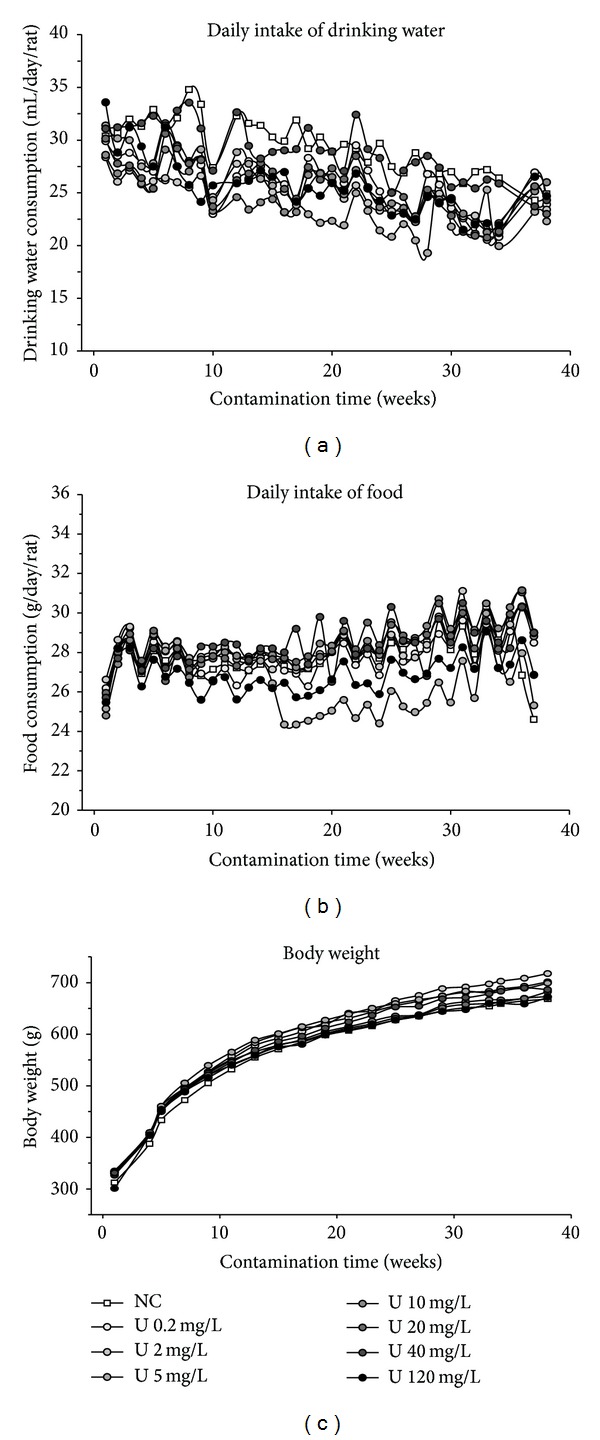
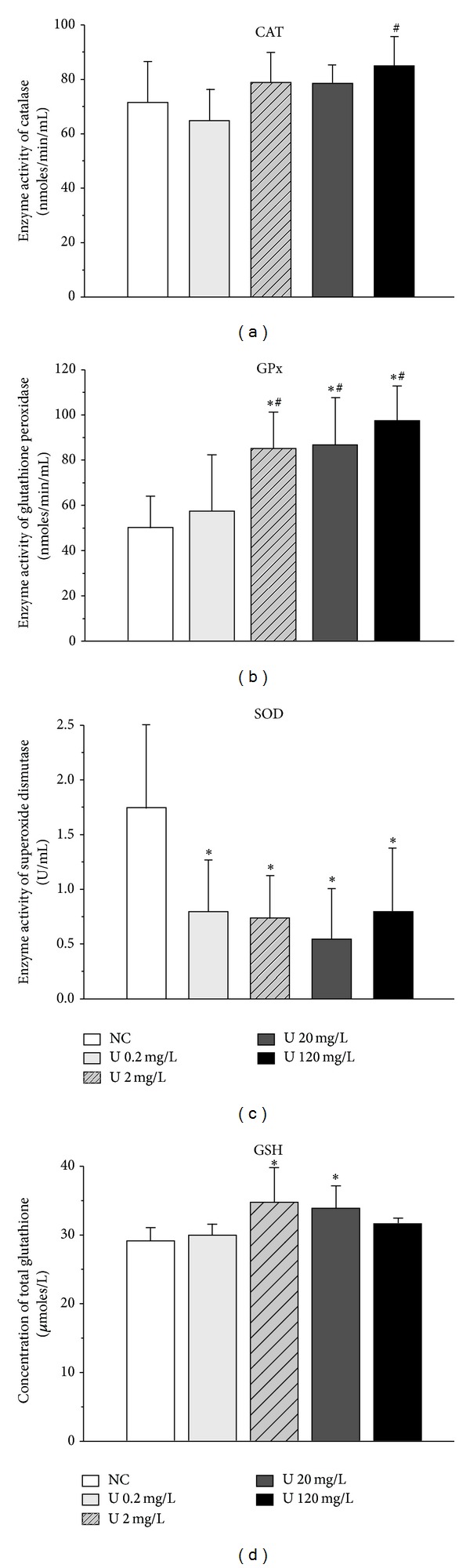
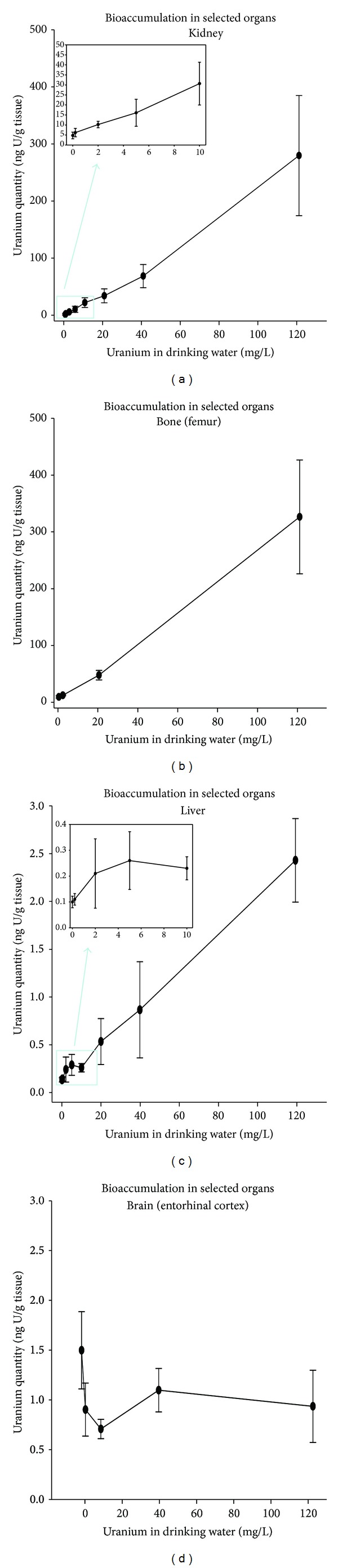
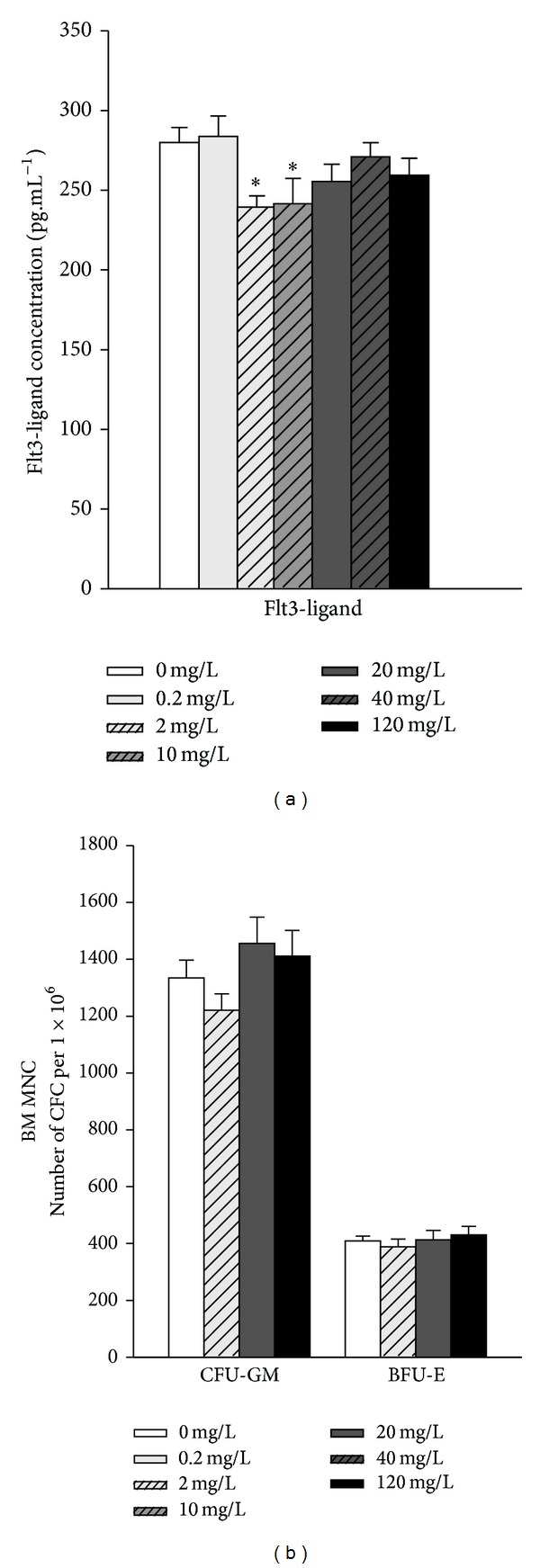
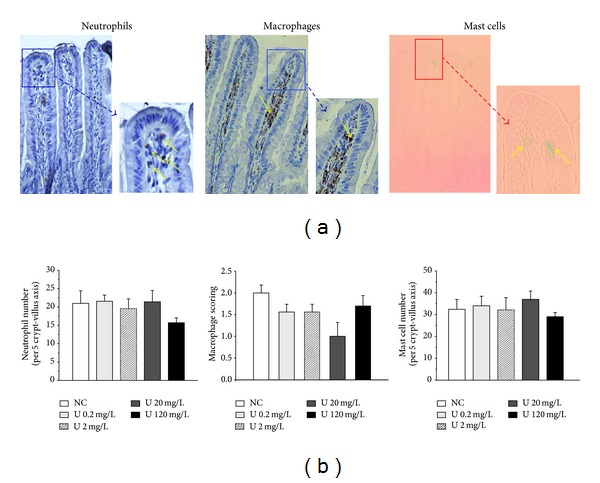
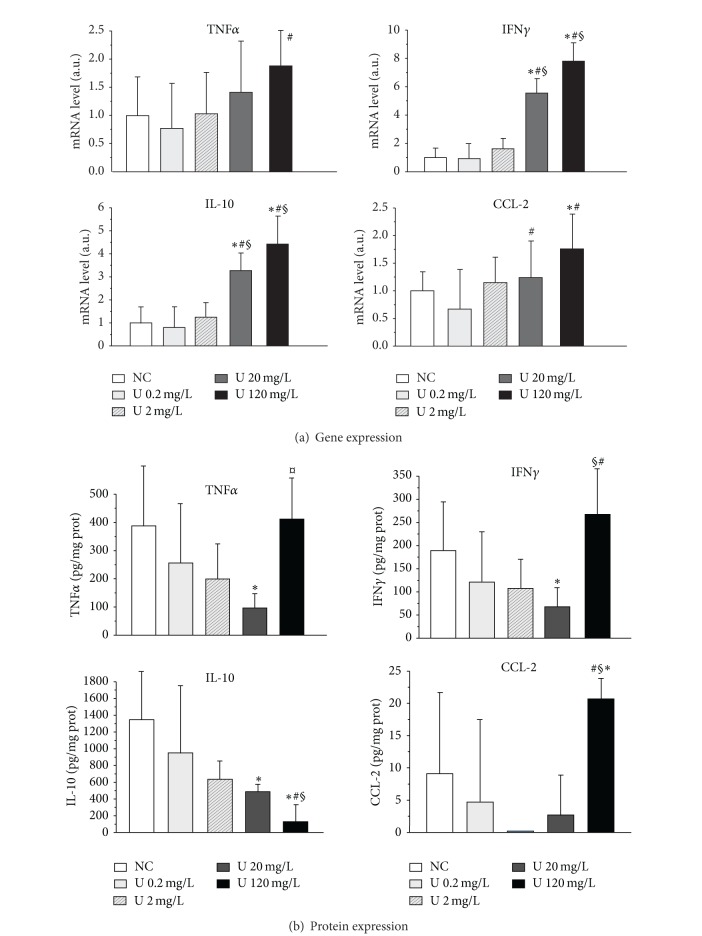
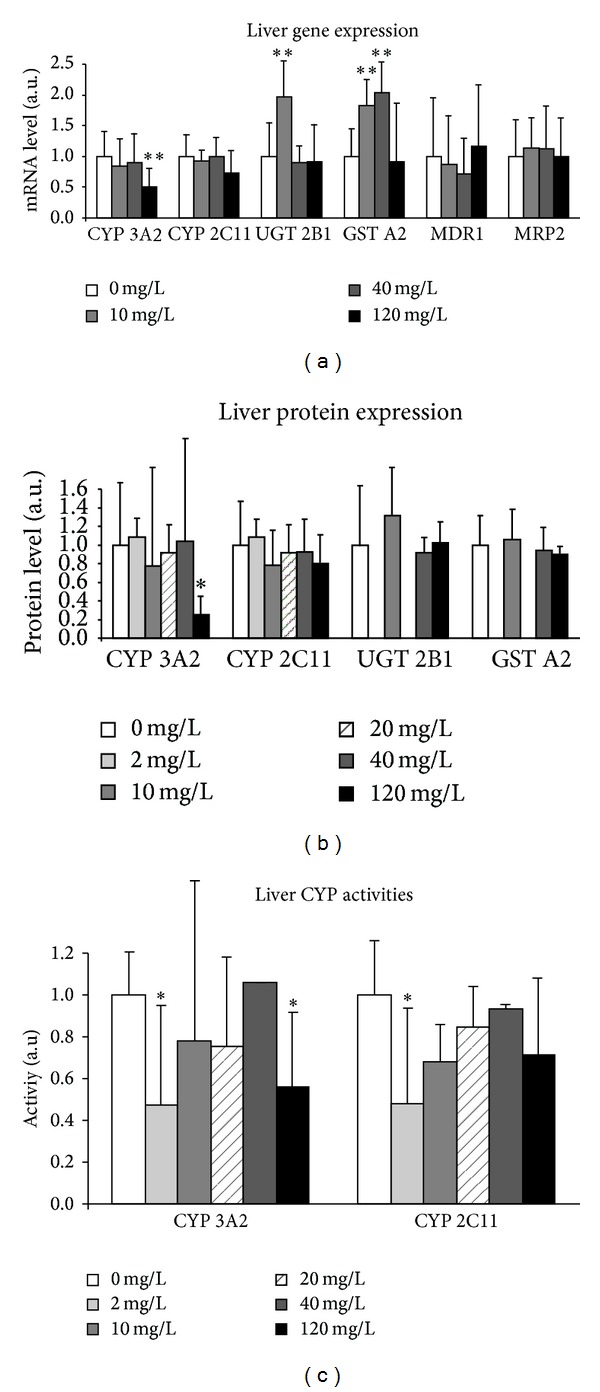
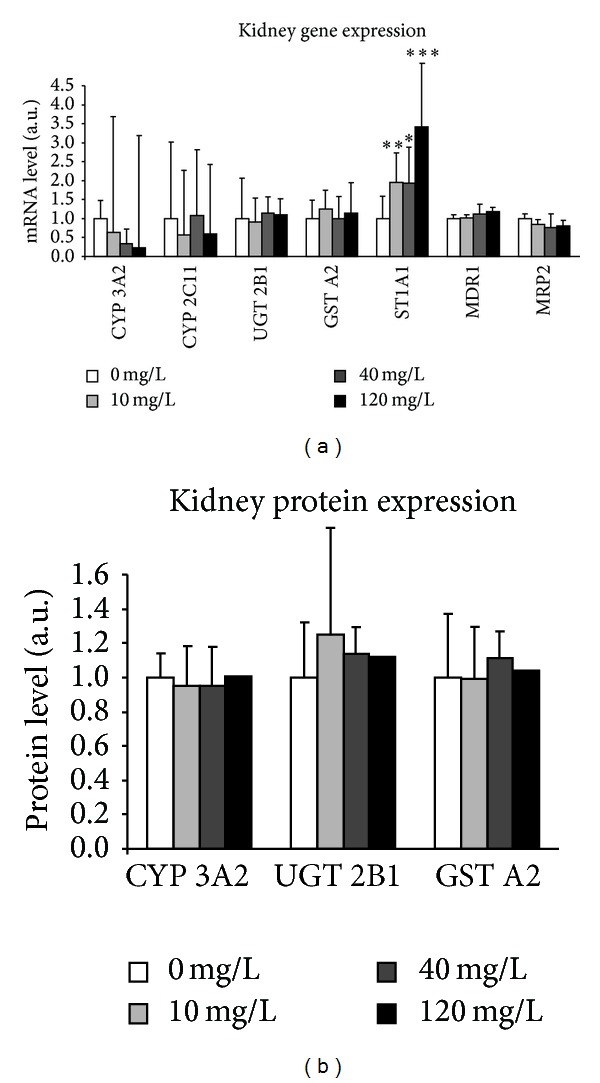
Uranium level in drinking water is usually in the range of microgram-per-liter, but this value may be as much as 100 to 1000 times higher in some areas, which may raise question about the health consequences for human populations living in these areas. Our purpose was to improve knowledge of chemical effects of uranium following chronic ingestion. Experiments were performed on rats contaminated for 9 months via drinking water containing depleted uranium (0.2, 2, 5, 10, 20, 40, or 120 mg/L). Blood biochemical and hematological indicators were measured and several different types of investigations (molecular, functional, and structural) were conducted in organs (intestine, liver, kidneys, hematopoietic cells, and brain). The specific sensitivity of the organs to uranium was deduced from nondeleterious biological effects, with the following thresholds (in mg/L): 0.2 for brain, >2 for liver, >10 for kidneys, and >20 for intestine, indicating a NOAEL (No-Observed-Adverse-Effect Level) threshold for uranium superior to 120 m g/L. Based on the chemical uranium toxicity, the tolerable daily intake calculation yields a guideline value for humans of 1350 μg/L. This value was higher than the WHO value of 30 μg/L, indicating that this WHO guideline for uranium content in drinking water is very protective and might be reconsidered.
饮用水中的铀含量通常在微克每升的范围内,但在某些地区,这一数值可能会高出100到1000倍,这可能会引发人们对生活在这些地区的人群健康后果的质疑。我们的目的是增进对长期摄入铀的化学影响的了解。对通过饮用含贫铀(0.2、2、5、10、20、40或120毫克/升)的水而被污染9个月的大鼠进行了实验。测量了血液生化和血液学指标,并在器官(肠道、肝脏、肾脏、造血细胞和大脑)中进行了几种不同类型的研究(分子、功能和结构方面)。从无害的生物学效应中推断出各器官对铀的特异性敏感性,其阈值如下(毫克/升):大脑为0.2,肝脏大于2,肾脏大于10,肠道大于20,这表明铀的未观察到有害作用水平(NOAEL)阈值高于120毫克/升。基于铀的化学毒性,每日可耐受摄入量的计算得出人类的指导值为1350微克/升。该值高于世界卫生组织(WHO)的30微克/升的值,表明WHO关于饮用水中铀含量的这一指导方针具有很强的保护性,可能需要重新考虑。