Desai Tanay M, Marin Mariana, Chin Christopher R, Savidis George, Brass Abraham L, Melikyan Gregory B
Division of Pediatric Infectious Diseases, Emory University Children's Center, Atlanta, Georgia, United States of America.
Microbiology and Physiological Systems (MaPS) Department, University of Massachusetts Medical School, Worcester, Massachusetts, United States of America.
PLoS Pathog. 2014 Apr 3;10(4):e1004048. doi: 10.1371/journal.ppat.1004048. eCollection 2014 Apr.
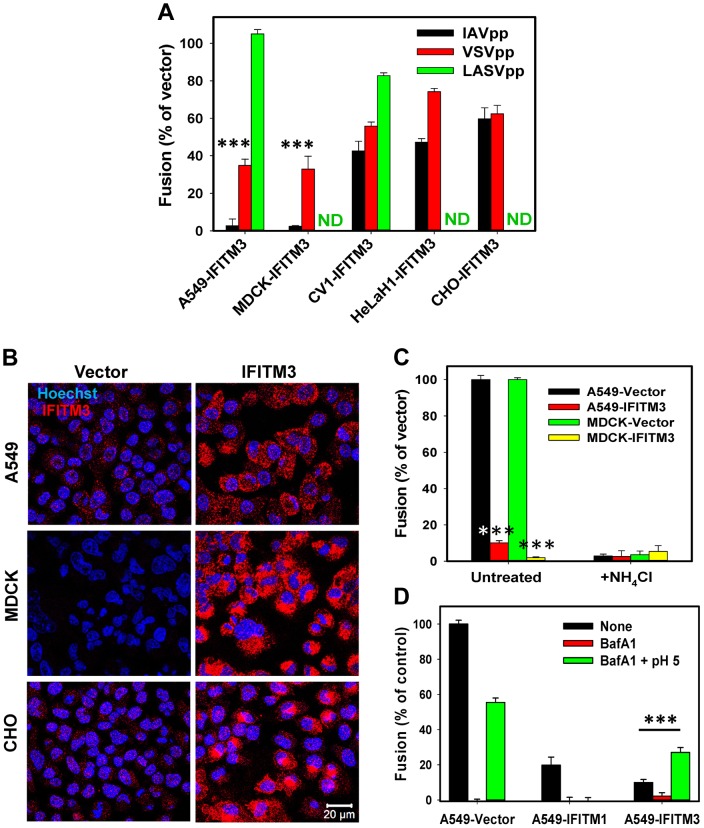
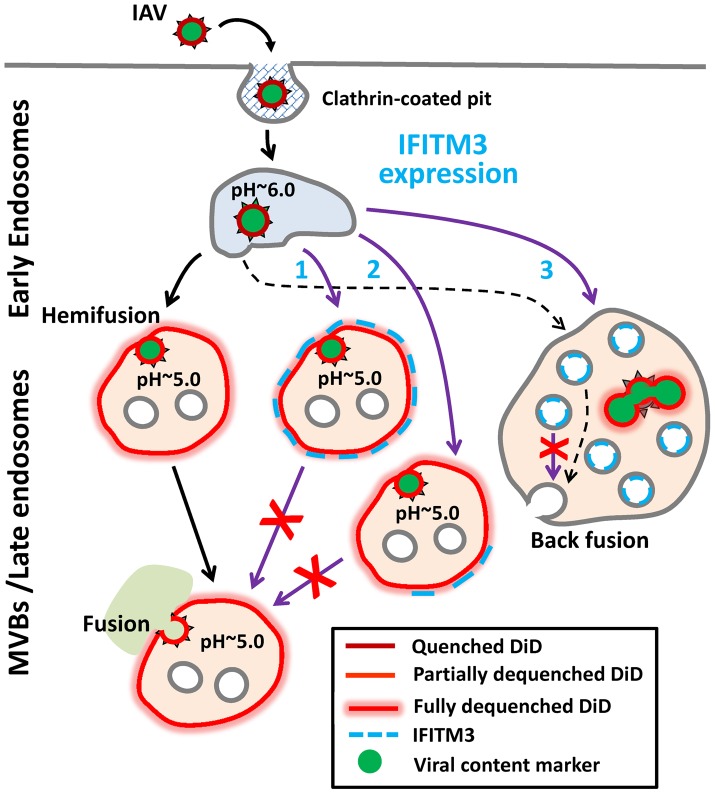
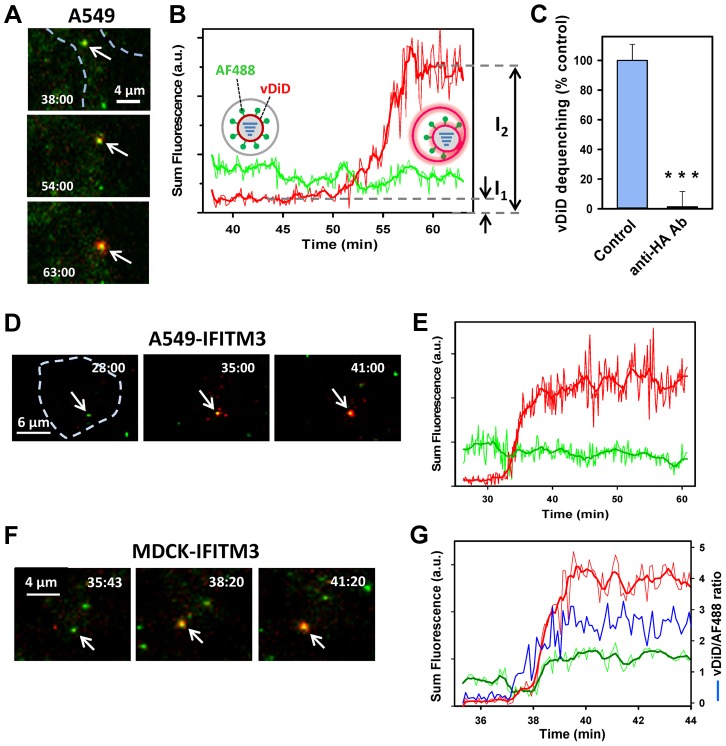
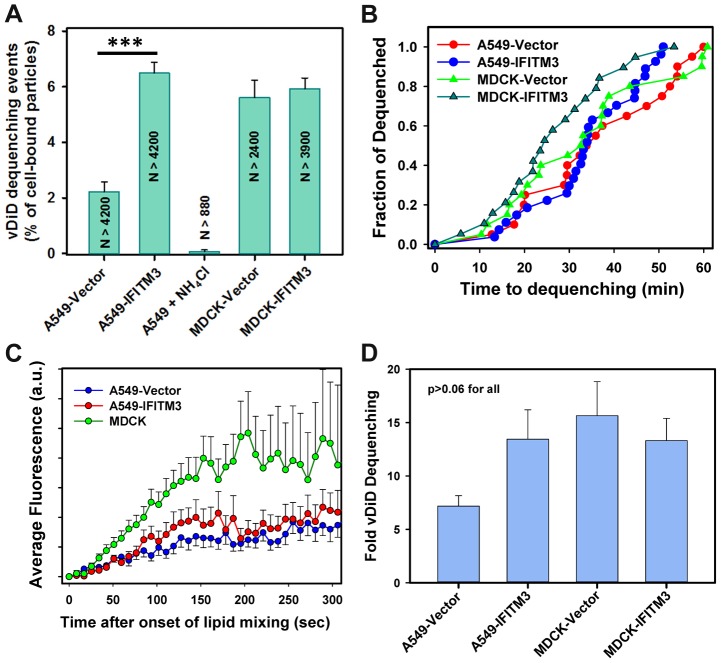
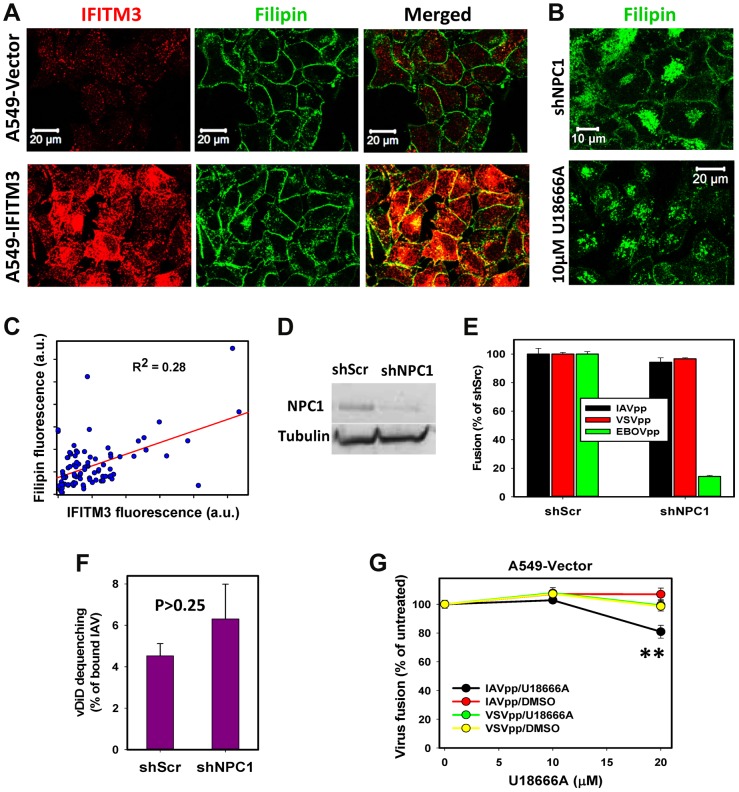
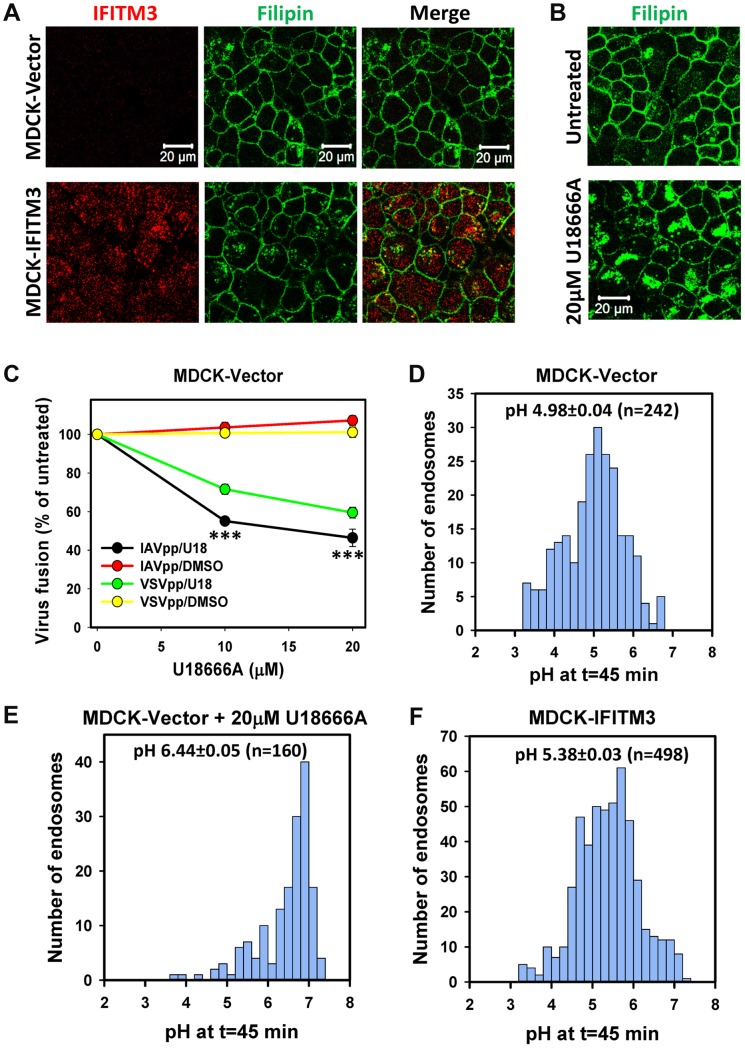
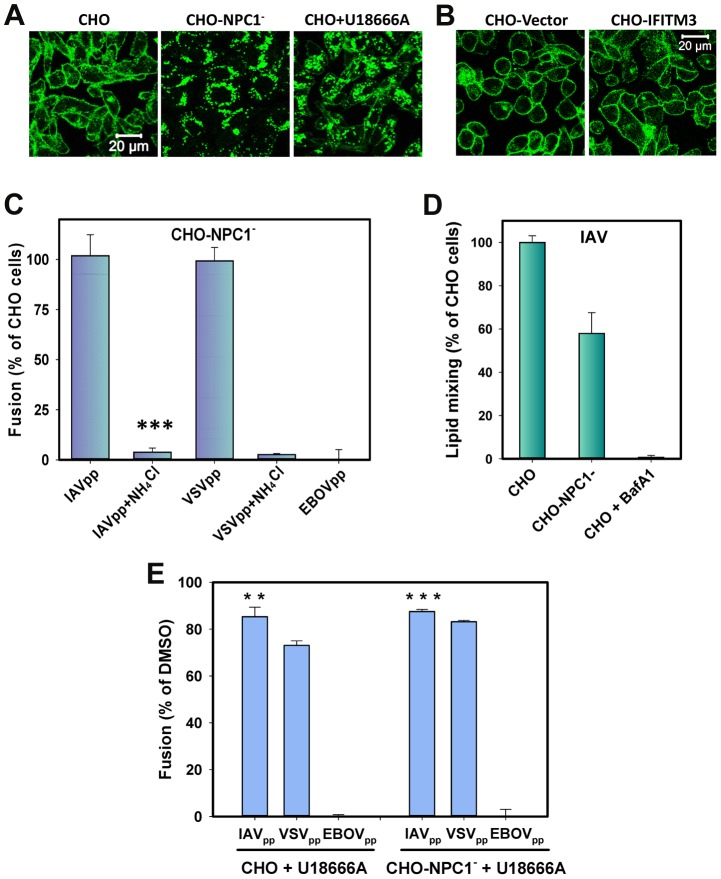
Interferon-induced transmembrane proteins (IFITMs) inhibit infection of diverse enveloped viruses, including the influenza A virus (IAV) which is thought to enter from late endosomes. Recent evidence suggests that IFITMs block virus hemifusion (lipid mixing in the absence of viral content release) by altering the properties of cell membranes. Consistent with this mechanism, excess cholesterol in late endosomes of IFITM-expressing cells has been reported to inhibit IAV entry. Here, we examined IAV restriction by IFITM3 protein using direct virus-cell fusion assay and single virus imaging in live cells. IFITM3 over-expression did not inhibit lipid mixing, but abrogated the release of viral content into the cytoplasm. Although late endosomes of IFITM3-expressing cells accumulated cholesterol, other interventions leading to aberrantly high levels of this lipid did not inhibit virus fusion. These results imply that excess cholesterol in late endosomes is not the mechanism by which IFITM3 inhibits the transition from hemifusion to full fusion. The IFITM3's ability to block fusion pore formation at a post-hemifusion stage shows that this protein stabilizes the cytoplasmic leaflet of endosomal membranes without adversely affecting the lumenal leaflet. We propose that IFITM3 interferes with pore formation either directly, through partitioning into the cytoplasmic leaflet of a hemifusion intermediate, or indirectly, by modulating the lipid/protein composition of this leaflet. Alternatively, IFITM3 may redirect IAV fusion to a non-productive pathway, perhaps by promoting fusion with intralumenal vesicles within multivesicular bodies/late endosomes.
干扰素诱导跨膜蛋白(IFITMs)可抑制多种包膜病毒的感染,包括甲型流感病毒(IAV),据认为该病毒是从晚期内体进入细胞的。最近的证据表明,IFITMs通过改变细胞膜特性来阻断病毒半融合(在不释放病毒内容物的情况下脂质混合)。与这一机制一致,据报道,在表达IFITM的细胞晚期内体中过量的胆固醇可抑制IAV进入。在此,我们使用直接病毒-细胞融合试验和活细胞中的单病毒成像来研究IFITM3蛋白对IAV的限制作用。IFITM3的过表达并未抑制脂质混合,但消除了病毒内容物向细胞质中的释放。尽管表达IFITM3的细胞晚期内体中积累了胆固醇,但其他导致这种脂质异常高水平的干预措施并未抑制病毒融合。这些结果表明,晚期内体中过量的胆固醇不是IFITM3抑制从半融合向完全融合转变的机制。IFITM3在半融合后阶段阻断融合孔形成的能力表明,该蛋白可稳定内体膜的细胞质小叶,而不会对腔小叶产生不利影响。我们提出,IFITM3要么通过分配到半融合中间体的细胞质小叶中直接干扰孔形成,要么通过调节该小叶的脂质/蛋白质组成间接干扰孔形成。或者,IFITM3可能将IAV融合重定向到非生产性途径,也许是通过促进与多囊泡体/晚期内体中的腔内小泡融合来实现。