Gade Neeta D, Qazi Mohiuddin S
Department of Microbiology, Government Medical College, Nagpur, Maharashtra, India.
J Lab Physicians. 2013 Jul;5(2):109-12. doi: 10.4103/0974-2727.119862.
The study aimed to evaluate the utility of various commonly used fluoroquinolones against Staphylococcus aureus isolates.
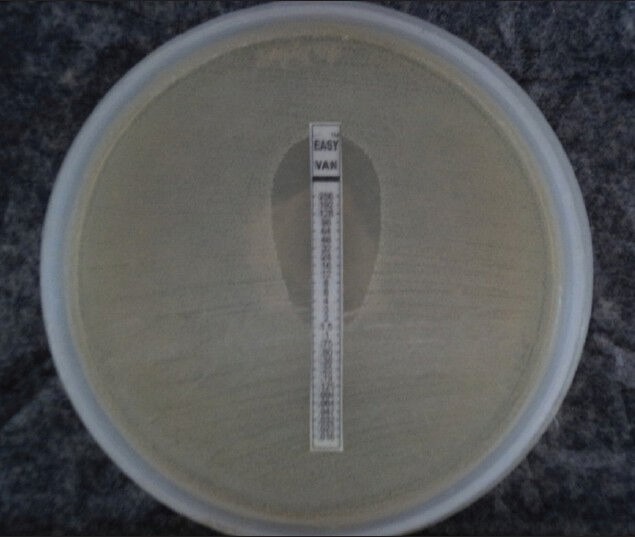
A total of 250 isolates of S. aureus were studied from different clinical specimens like blood, pus, wound swabs, sputum, ear swabs, and body fluids between November 2009 and December 2011. All the isolates were tested for their susceptibility to fluoroquinolones and other antimicrobial agents by Kirby-Bauer disc diffusion method using criteria of standard zone of inhibition. Methicillin-resistant S. aureus (MRSA) detection was done by cefoxitin disk diffusion method. The MRSA isolates were tested for minimum inhibitory concentration (MIC) to vancomycin by E-test strips. All the MRSA strains were sent to National Staphylococcal Phage-typing Centre, Maulana Azad Medical College, New Delhi for phage typing.
A total of 107 strains of S. aureus (42.8%) were detected as MRSA. Multidrug resistance was observed among the MRSA strains more commonly than among the MSSA stains. Among the fluoroquinolones, maximum resistance in MRSA was seen to ciprofloxacin (92.5%), followed by ofloxacin (80.4%). None of the S. aureus isolates showed resistance to vancomycin and linezolid. The MICs of vancomycin for the MRSA tested ranged from 0.5 to 2 μg/ml. Phage typing pattern of 107 MRSA isolates revealed that 37 (34.6%) MRSA isolates were nontypeable and 70 (65.4%) were typeable.
Ciprofloxacin can no longer be used in empirical therapy against MRSA infections. Use of other members of fluoroquinolone should be limited only to those strains that show laboratory confirmation of their susceptibility. Vancomycin remains the drug of choice to treat MRSA infections.
本研究旨在评估各种常用氟喹诺酮类药物对金黄色葡萄球菌分离株的效用。
2009年11月至2011年12月期间,从血液、脓液、伤口拭子、痰液、耳部拭子和体液等不同临床标本中,共研究了250株金黄色葡萄球菌分离株。采用Kirby-Bauer纸片扩散法,依据标准抑菌圈标准,对所有分离株进行氟喹诺酮类及其他抗菌药物的敏感性检测。采用头孢西丁纸片扩散法检测耐甲氧西林金黄色葡萄球菌(MRSA)。通过E-test试纸条检测MRSA分离株对万古霉素的最低抑菌浓度(MIC)。所有MRSA菌株均送至新德里莫拉纳·阿扎德医学院国家葡萄球菌噬菌体分型中心进行噬菌体分型。
共检测出107株金黄色葡萄球菌(42.8%)为MRSA。MRSA菌株中多重耐药现象比甲氧西林敏感金黄色葡萄球菌(MSSA)菌株更为常见。在氟喹诺酮类药物中,MRSA对环丙沙星的耐药性最高(92.5%),其次是氧氟沙星(80.4%)。所有金黄色葡萄球菌分离株对万古霉素和利奈唑胺均未显示耐药性。所检测的MRSA菌株中,万古霉素的MIC范围为0.5至2μg/ml。107株MRSA分离株的噬菌体分型结果显示,37株(34.6%)MRSA分离株无法分型,70株(65.4%)可分型。
环丙沙星不再可用于针对MRSA感染的经验性治疗。氟喹诺酮类的其他成员仅应限于那些经实验室确认敏感的菌株使用。万古霉素仍然是治疗MRSA感染的首选药物。