Vice President R&D, Cellular Technology Ltd., 20521 Chagrin Blvd., Cleveland, OH 44122, USA.
Cognitive Neurology Section, Institute of Neuroscience and Medicine (INM-3), Research Center Juelich, Juelich, Germany.
Cells. 2012 Aug 24;1(3):576-96. doi: 10.3390/cells1030576.
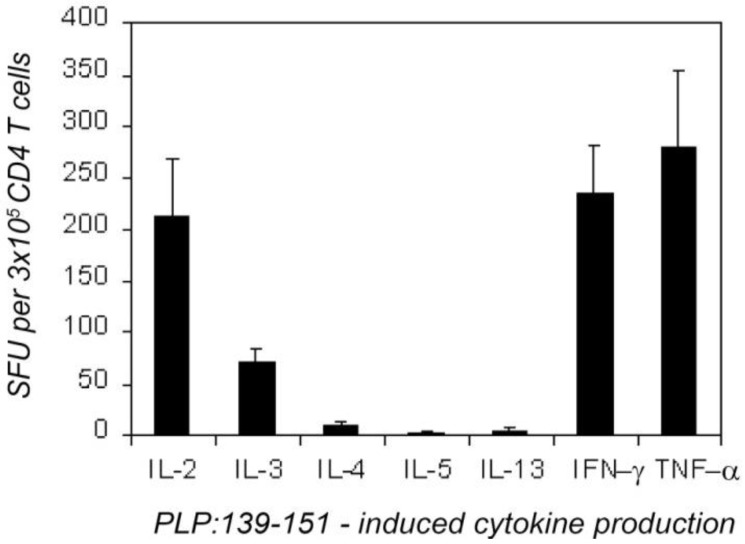
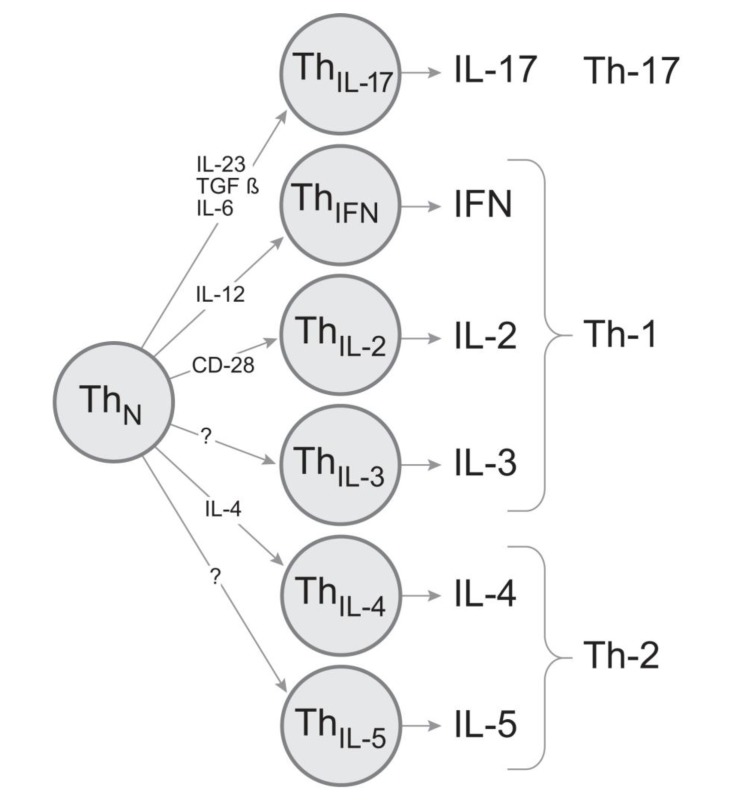
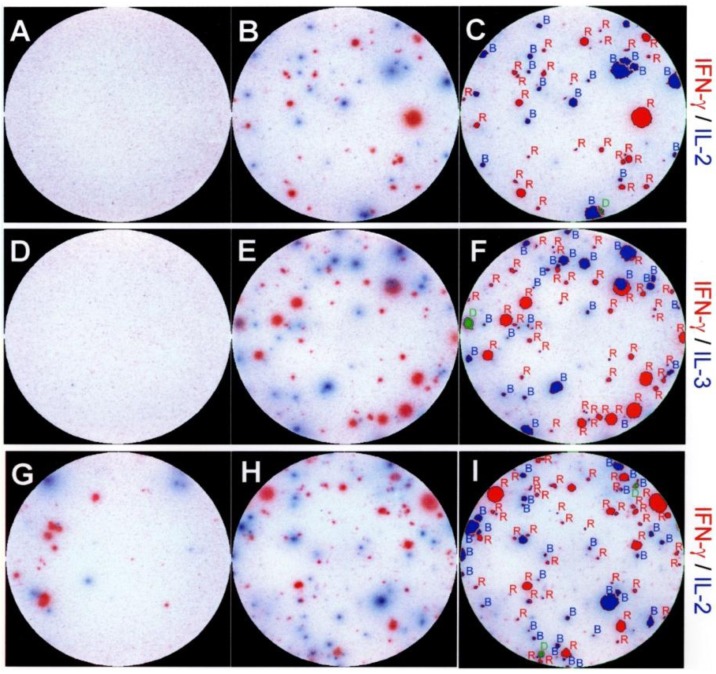
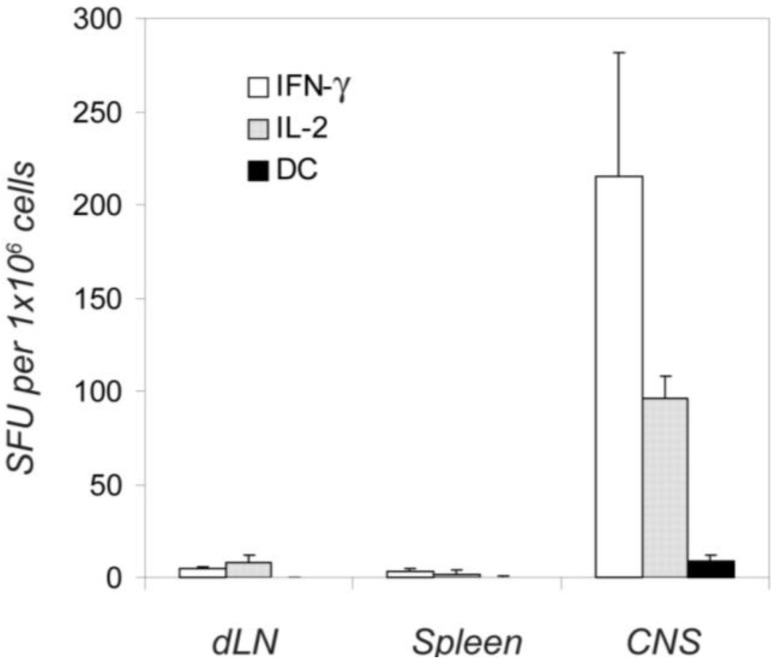
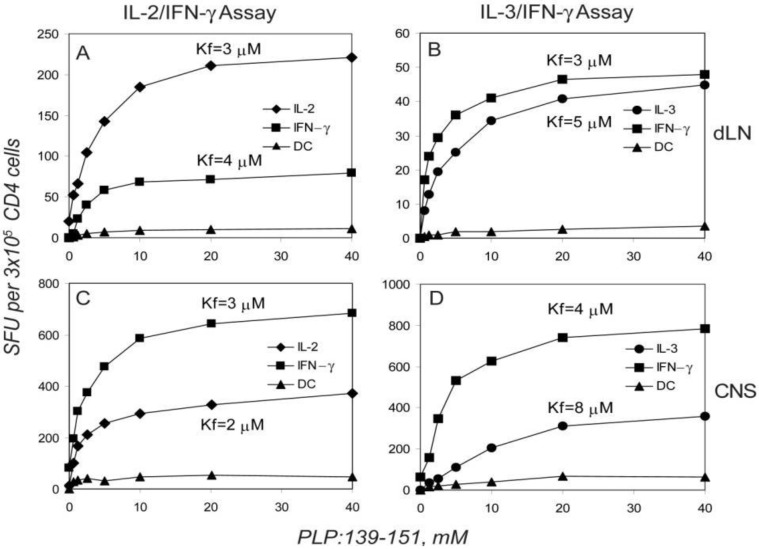
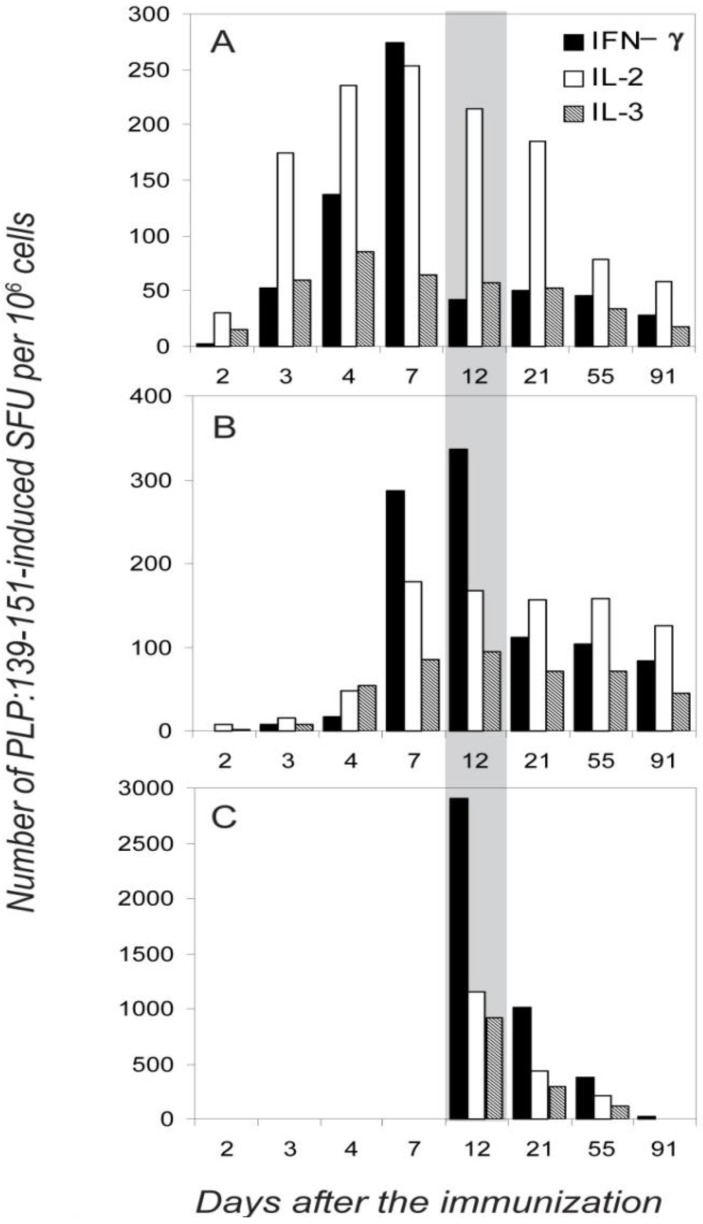
Experimental allergic encephalomyelitis (EAE) is mediated by neuroantigen-specific pro-inflammatory T cells of the Th1 and Th17 effector class. Th-17 cells can be clearly defined by expression of IL-17, but not IFN-γ, IL-2 or IL-3. Th1 cells do not express IL-17, but it is unclear presently to what extent they co-express the cytokines canonically assigned to Th1 immunity (i.e., IFN-γ, IL-2 and IL-3) and whether CD4 cells producing these cytokines indeed belong to a single Th1 lineage. It is also unclear to what extent the Th1 response in EAE entails polyfunctional T cells that co-express IFN-γ and IL-2. Therefore, we dissected the Th1 cytokine signature of neuroantigen-specific CD4 cells studying at single cell resolution co-expression of IFN-γ, IL-2 and IL-3 using dual color cytokine ELISPOT analysis. Shortly after immunization, in the draining lymph nodes (dLN), the overall cytokine signature of the neuroantigen-specific CD4 cells was highly type 1-polarized, but IFN-γ, IL-2, and IL-3 were each secreted by different CD4 cells in a mutually exclusive manner. This single cell - single cytokine profile was stable through the course of chronic EAE-polyfunctional CD4 cells co-expressing IL-2 and IFN-γ presented less than 5% of the neuroantigen-specific T cells, even in the inflamed CNS itself. The neuroantigen-specific CD4 cells that expressed IFN-γ, IL-2 and IL-3 in a mutually exclusive manner exhibited similar functional avidities and kinetics of cytokine production, but showed different tissue distributions. These data suggest that Th1 cells do not belong to a single lineage, but different Th1 subpopulations jointly mediate Th1 immunity.
实验性变态反应性脑脊髓炎(EAE)是由 Th1 和 Th17 效应细胞类别的神经抗原特异性促炎 T 细胞介导的。Th17 细胞可以通过表达 IL-17 而不是 IFN-γ、IL-2 或 IL-3 来明确界定。Th1 细胞不表达 IL-17,但目前尚不清楚它们在多大程度上共同表达经典 Th1 免疫细胞因子(即 IFN-γ、IL-2 和 IL-3),以及产生这些细胞因子的 CD4 细胞是否确实属于单个 Th1 谱系。EAE 中的 Th1 反应在多大程度上需要共表达 IFN-γ 和 IL-2 的多功能 T 细胞也不清楚。因此,我们使用双细胞因子 ELISPOT 分析在单细胞分辨率上研究了神经抗原特异性 CD4 细胞中 IFN-γ、IL-2 和 IL-3 的共表达,以剖析 Th1 细胞因子特征。在免疫后不久,引流淋巴结(dLN)中,神经抗原特异性 CD4 细胞的总体细胞因子特征高度偏 1 型,但 IFN-γ、IL-2 和 IL-3 分别由不同的 CD4 细胞以相互排斥的方式分泌。这种单细胞-单细胞因子谱在慢性 EAE 过程中保持稳定-共表达 IL-2 和 IFN-γ 的多功能 CD4 细胞仅占神经抗原特异性 T 细胞的不到 5%,即使在炎症性中枢神经系统本身也是如此。以相互排斥的方式表达 IFN-γ、IL-2 和 IL-3 的神经抗原特异性 CD4 细胞表现出相似的功能亲和力和细胞因子产生动力学,但表现出不同的组织分布。这些数据表明 Th1 细胞不属于单个谱系,而是不同的 Th1 亚群共同介导 Th1 免疫。