Santos Thiago M A, Lin Ti-Yu, Rajendran Madhusudan, Anderson Samantha M, Weibel Douglas B
Department of Biochemistry, University of Wisconsin-Madison, 440 Henry Mall, Madison, WI, 53706, USA.
Mol Microbiol. 2014 Jun;92(5):985-1004. doi: 10.1111/mmi.12609. Epub 2014 May 2.
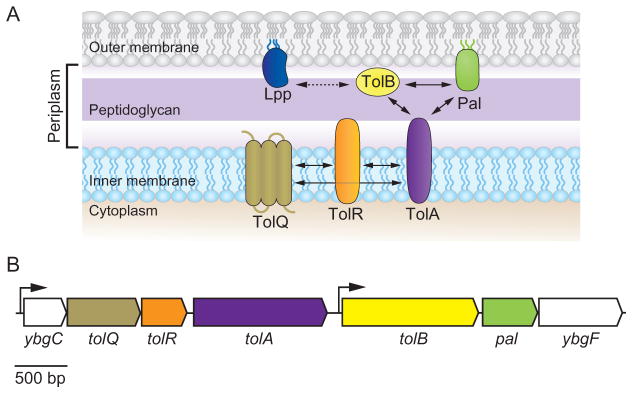
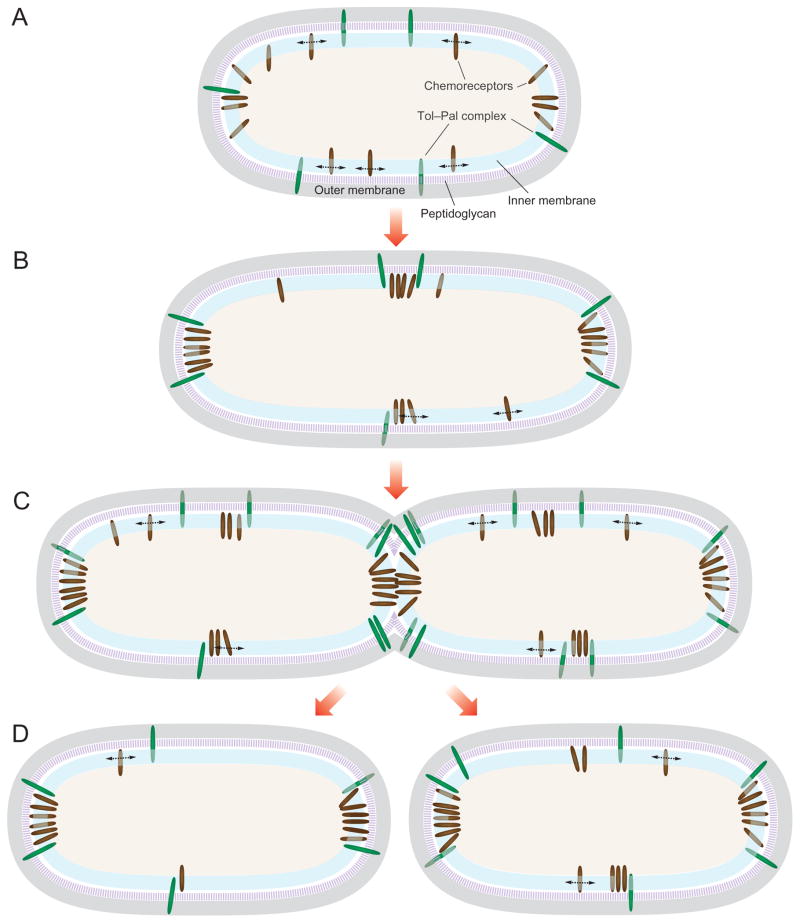
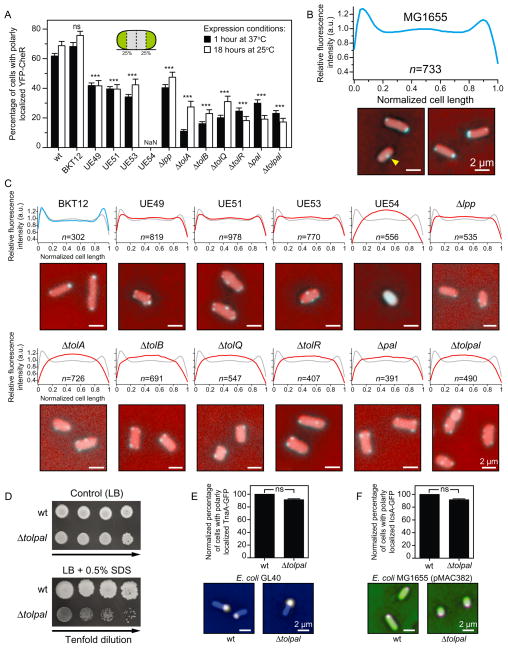
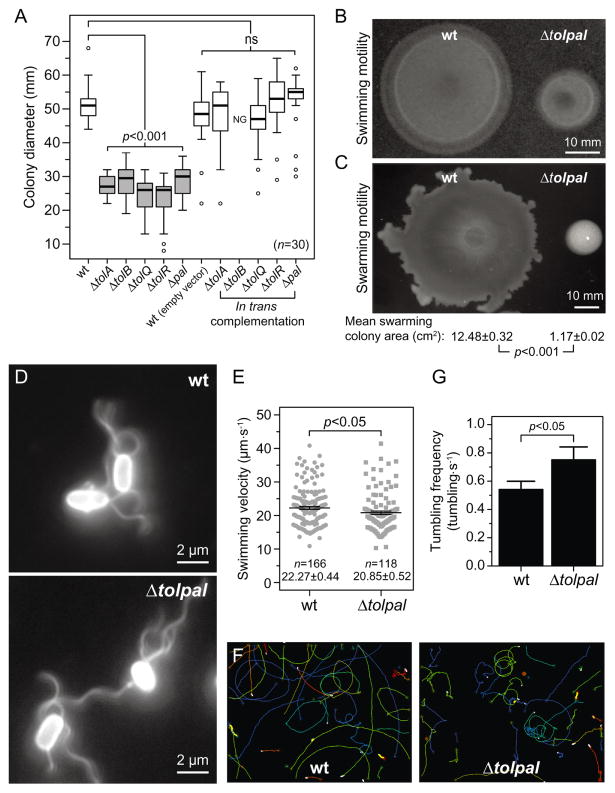
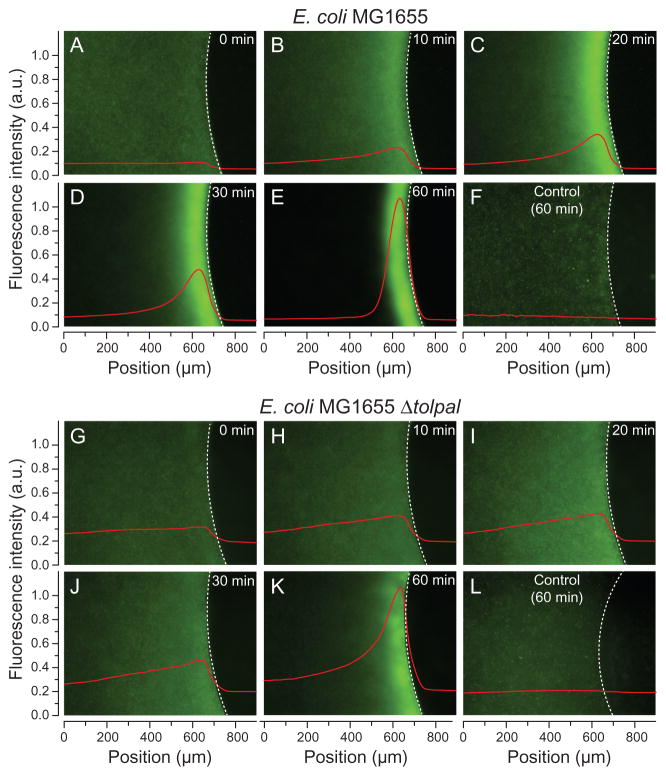
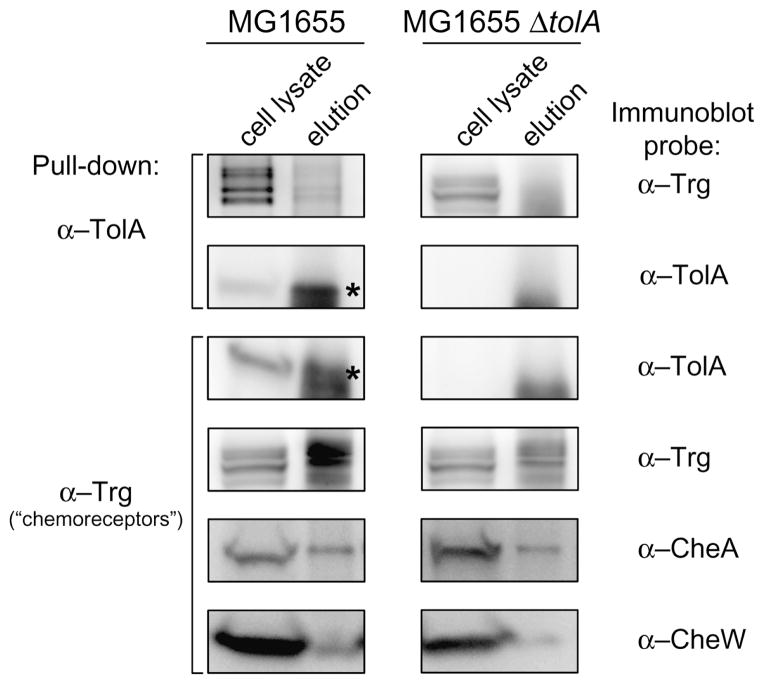
Subcellular biomolecular localization is critical for the metabolic and structural properties of the cell. The functional implications of the spatiotemporal distribution of protein complexes during the bacterial cell cycle have long been acknowledged; however, the molecular mechanisms for generating and maintaining their dynamic localization in bacteria are not completely understood. Here we demonstrate that the trans-envelope Tol-Pal complex, a widely conserved component of the cell envelope of Gram-negative bacteria, is required to maintain the polar positioning of chemoreceptor clusters in Escherichia coli. Localization of the chemoreceptors was independent of phospholipid composition of the membrane and the curvature of the cell wall. Instead, our data indicate that chemoreceptors interact with components of the Tol-Pal complex and that this interaction is required to polarly localize chemoreceptor clusters. We found that disruption of the Tol-Pal complex perturbs the polar localization of chemoreceptors, alters cell motility, and affects chemotaxis. We propose that the E. coli Tol-Pal complex restricts mobility of the chemoreceptor clusters at the cell poles and may be involved in regulatory mechanisms that co-ordinate cell division and segregation of the chemosensory machinery.
亚细胞生物分子定位对于细胞的代谢和结构特性至关重要。蛋白质复合物在细菌细胞周期中的时空分布所具有的功能意义早已得到认可;然而,细菌中产生并维持其动态定位的分子机制尚未完全明晰。在此,我们证明跨膜包膜Tol-Pal复合物(革兰氏阴性菌细胞膜中广泛保守的成分)对于维持大肠杆菌中化学感受器簇的极性定位是必需的。化学感受器的定位与膜的磷脂组成以及细胞壁的曲率无关。相反,我们的数据表明化学感受器与Tol-Pal复合物的成分相互作用,并且这种相互作用对于化学感受器簇的极性定位是必需的。我们发现Tol-Pal复合物的破坏会扰乱化学感受器的极性定位,改变细胞运动性,并影响趋化性。我们提出大肠杆菌Tol-Pal复合物限制了化学感受器簇在细胞极处的移动性,并且可能参与协调细胞分裂和化学感应机制分离的调控机制。