Law Chris, Paquet Michel, Kania Artur
Institut de recherches cliniques de Montréal (IRCM), Montréal, Canada.
Institut de recherches cliniques de Montréal (IRCM), Montréal, Canada; Departments of Anatomy and Cell Biology, and Biology, Division of Experimental Medicine, McGill University Montréal, Montréal, Canada, and Faculté de Médecine, Université de Montréal, Montréal, Canada.
PLoS One. 2014 Apr 10;9(4):e93836. doi: 10.1371/journal.pone.0093836. eCollection 2014.
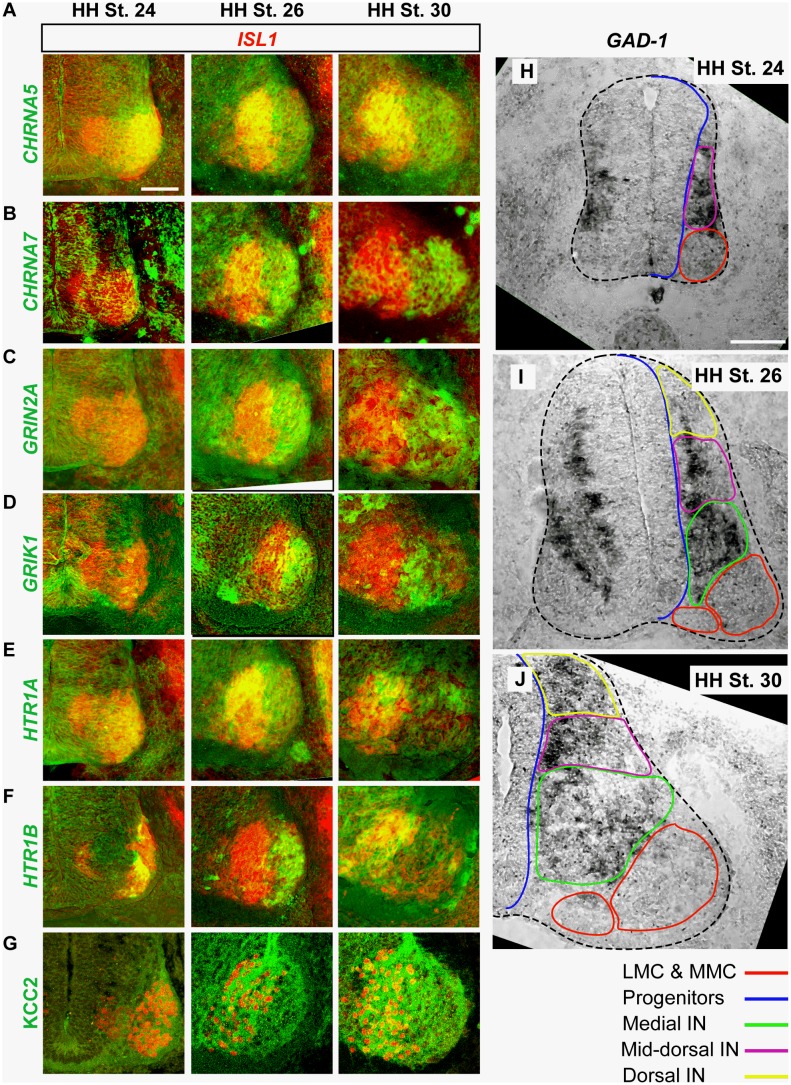
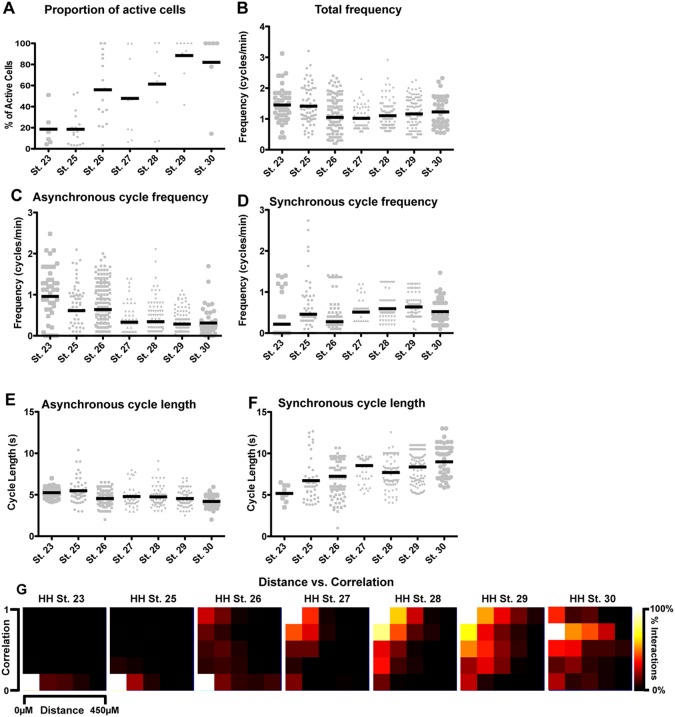
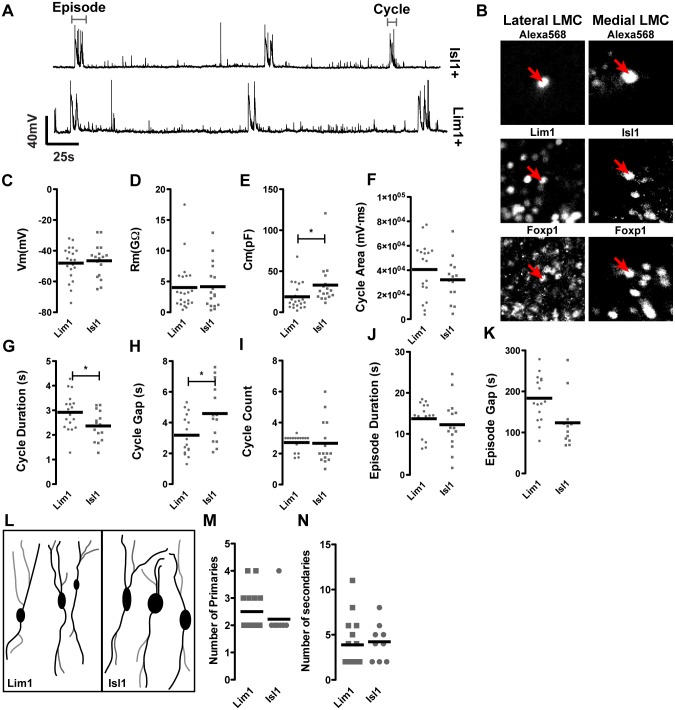
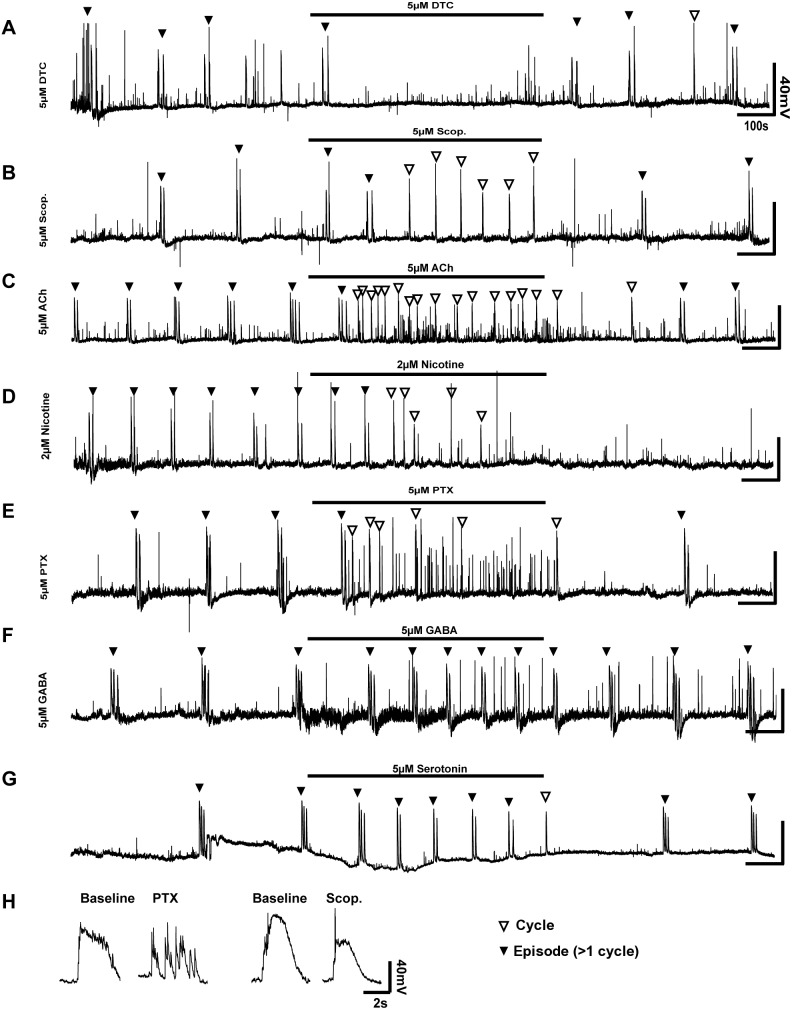
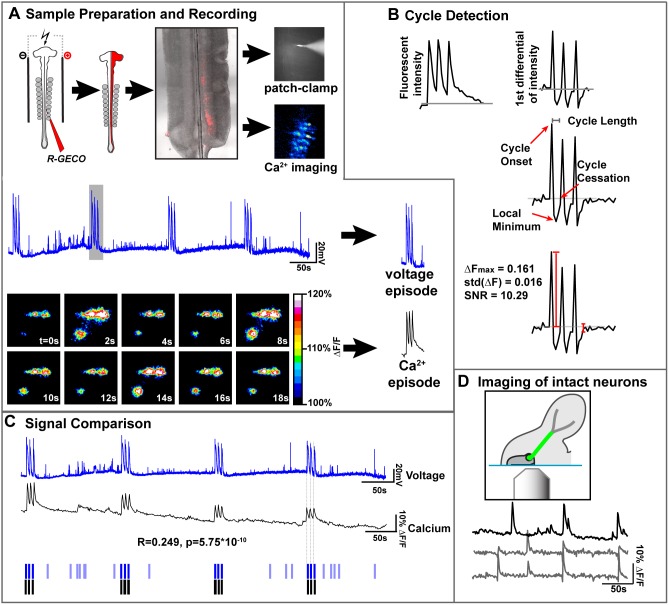
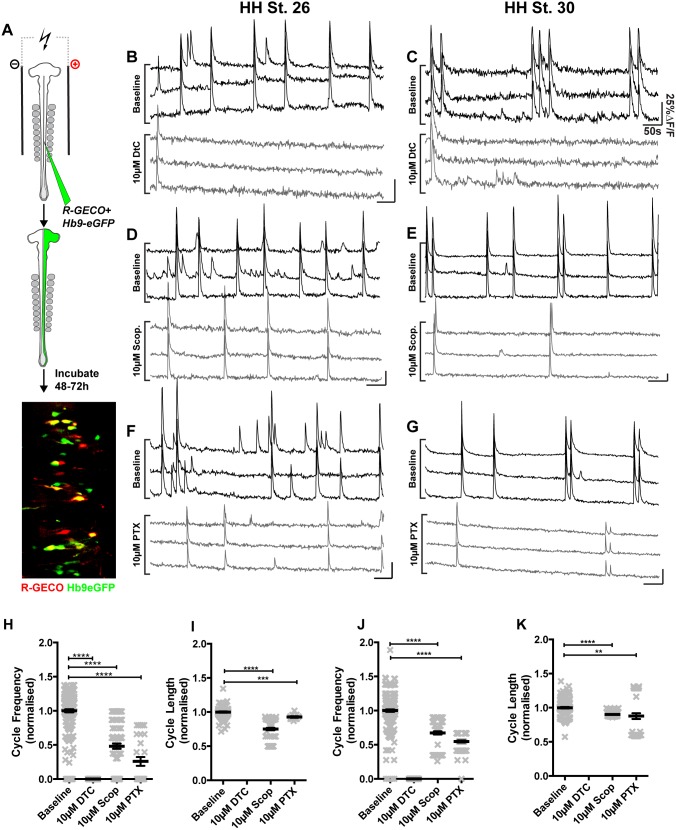
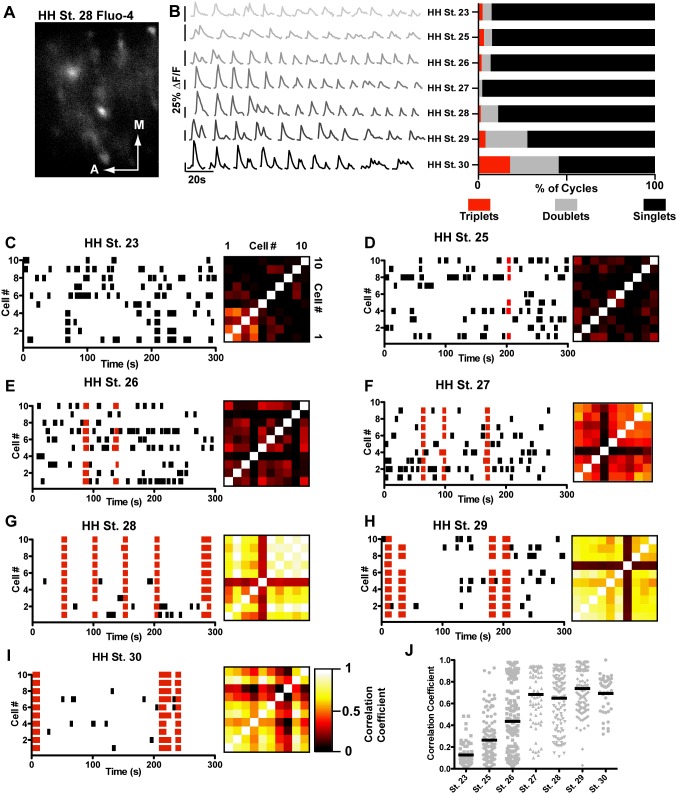
In the developing nervous system, ordered neuronal activity patterns can occur even in the absence of sensory input and to investigate how these arise, we have used the model system of the embryonic chicken spinal motor circuit, focusing on motor neurons of the lateral motor column (LMC). At the earliest stages of their molecular differentiation, we can detect differences between medial and lateral LMC neurons in terms of expression of neurotransmitter receptor subunits, including CHRNA5, CHRNA7, GRIN2A, GRIK1, HTR1A and HTR1B, as well as the KCC2 transporter. Using patch-clamp recordings we also demonstrate that medial and lateral LMC motor neurons have subtly different activity patterns that reflect the differential expression of neurotransmitter receptor subunits. Using a combination of patch-clamp recordings in single neurons and calcium-imaging of motor neuron populations, we demonstrate that inhibition of nicotinic, muscarinic or GABA-ergic activity, has profound effects of motor circuit activity during the initial stages of neuromuscular junction formation. Finally, by analysing the activity of large populations of motor neurons at different developmental stages, we show that the asynchronous, disordered neuronal activity that occurs at early stages of circuit formation develops into organised, synchronous activity evident at the stage of LMC neuron muscle innervation. In light of the considerable diversity of neurotransmitter receptor expression, activity patterns in the LMC are surprisingly similar between neuronal types, however the emergence of patterned activity, in conjunction with the differential expression of transmitter systems likely leads to the development of near-mature patterns of locomotor activity by perinatal ages.
在发育中的神经系统中,即使在没有感觉输入的情况下也会出现有序的神经元活动模式。为了研究这些模式是如何产生的,我们使用了胚胎鸡脊髓运动回路的模型系统,重点关注外侧运动柱(LMC)的运动神经元。在它们分子分化的最早阶段,我们可以检测到内侧和外侧LMC神经元在神经递质受体亚基表达方面的差异,包括CHRNA5、CHRNA7、GRIN2A、GRIK1、HTR1A和HTR1B,以及KCC2转运体体。通过膜片钳记录,我们还证明内侧和外侧LMC运动神经元具有细微不同的活动模式,这反映了神经递质受体亚基的差异表达。通过结合单个神经元的膜片钳记录和运动神经元群体的钙成像,我们证明在神经肌肉接头形成的初始阶段,抑制烟碱能、毒蕈碱能或GABA能活性对运动回路活动有深远影响。最后,通过分析不同发育阶段大量运动神经元的活动,我们表明在回路形成早期出现的异步、无序的神经元活动发展为在LMC神经元支配肌肉阶段明显的有组织、同步的活动。鉴于神经递质受体表达的相当大的多样性,LMC中的活动模式在神经元类型之间惊人地相似,然而模式化活动的出现,连同递质系统的差异表达,可能导致围产期接近成熟的运动活动模式的发展。