Nilsson Christer, Landqvist Waldö Maria, Nilsson Karin, Santillo Alexander, Vestberg Susanna
Department of Memory Disorders, Skåne University Hospital, Lund, Sweden; Clinical Memory Research Unit, Department of Clinical Sciences, Lund University, Lund, Sweden.
Department of Memory Disorders, Skåne University Hospital, Lund, Sweden; Geriatric Psychiatry Unit, Department of Clinical Sciences, Lund University, Lund, Sweden.
PLoS One. 2014 Apr 10;9(4):e94901. doi: 10.1371/journal.pone.0094901. eCollection 2014.
Frontotemporal dementia (FTD) is considered to be a mainly early-onset neurodegenerative disorder with a strong hereditary component. The aim of the study was to investigate age-related incidence and family history in FTD compared to other dementia disorders, especially Alzheimer's disease (AD).
The Swedish Dementia Registry (SveDem) registers all new cases of dementia diagnosed by the participating centres, including data on demographics, diagnosis, and investigations used. Data for the period 2008-2011 were extracted and compared with age-related population data on a regional and national level.
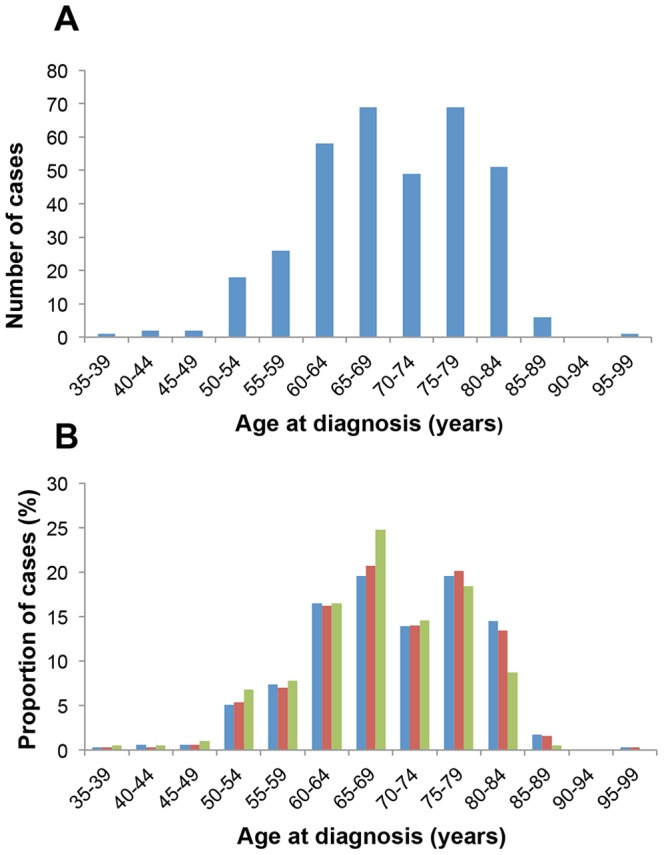
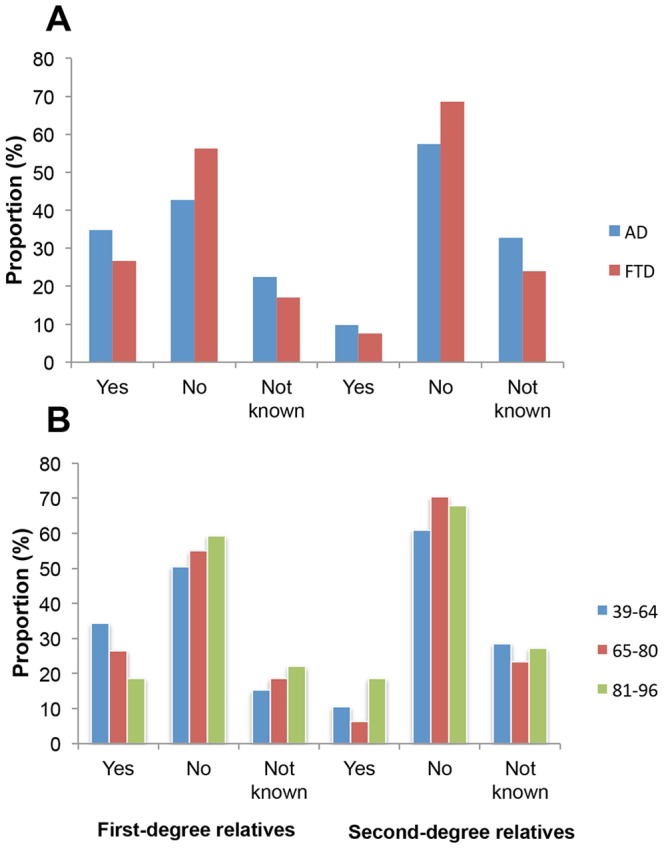
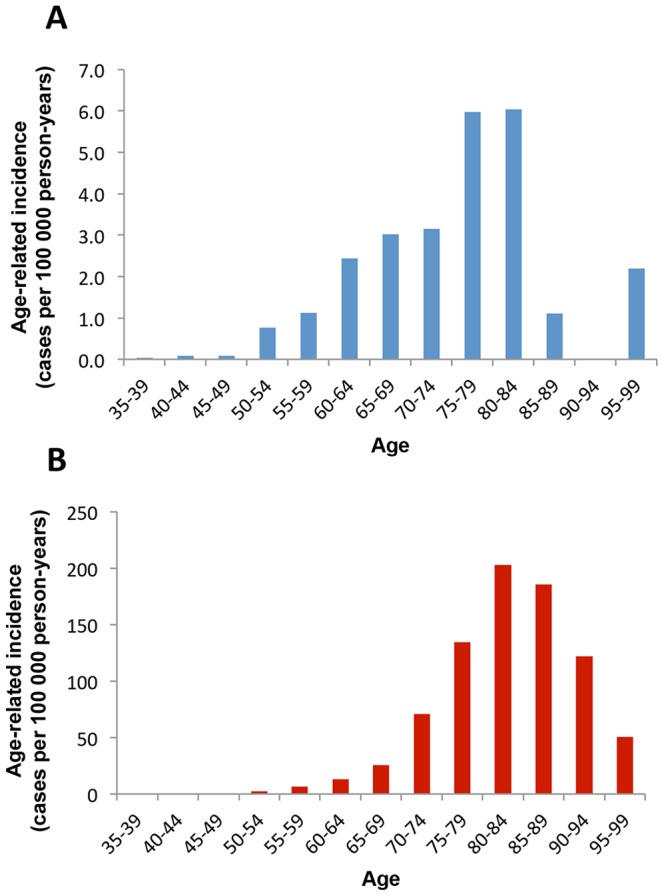
There were 20 305 patients registered in SveDem during 2008-2011, whereof 352 received a diagnosis of FTD. Mean age at diagnosis for FTD was 69.6 years and almost 70% of FTD cases were 65 years or older at the time of diagnosis. Both FTD and AD showed an increased incidence with age, which reached a maximum in the age group 80-84 years at 6.04 and 202 cases per 100 000 person-years, respectively. The proportion of cases with a positive family history was significantly lower in FTD than in AD.
Contrary to general opinion within the field, data from SveDem show that the incidence of FTD increases with age, and that the majority of cases are diagnosed after the age of 65 years. In addition, data from SveDem might suggest that the importance of hereditary factors in general is similar in FTD and AD. The recognition of these findings has important consequences for the diagnosis, treatment and care of patients with FTD.
额颞叶痴呆(FTD)被认为是一种主要为早发性的神经退行性疾病,具有很强的遗传成分。本研究的目的是调查FTD与其他痴呆症,尤其是阿尔茨海默病(AD)相比,与年龄相关的发病率和家族史。
瑞典痴呆症登记处(SveDem)记录了参与中心诊断出的所有痴呆症新病例,包括人口统计学、诊断和所采用的检查数据。提取了2008 - 2011年期间的数据,并在区域和国家层面与年龄相关的人口数据进行了比较。
2008 - 2011年期间,SveDem登记了20305名患者,其中352人被诊断为FTD。FTD诊断时的平均年龄为69.6岁,近70%的FTD病例在诊断时年龄为65岁或以上。FTD和AD的发病率均随年龄增加,在80 - 84岁年龄组达到最高,分别为每10万人年6.04例和202例。FTD中有家族史阳性的病例比例显著低于AD。
与该领域的普遍观点相反,SveDem的数据显示FTD的发病率随年龄增加,且大多数病例在65岁以后被诊断。此外,SveDem的数据可能表明,一般来说遗传因素在FTD和AD中的重要性相似。认识到这些发现对FTD患者的诊断、治疗和护理具有重要意义。