1. Graduate School of Life and Environmental Sciences, University of Tsukuba, 1-1-1 Tennodai, Tsukuba 305-8577, Japan.
1. Graduate School of Life and Environmental Sciences, University of Tsukuba, 1-1-1 Tennodai, Tsukuba 305-8577, Japan. ; 2. Center for Tsukuba Advanced Research Alliance, University of Tsukuba, 1-1-1 Tennodai, Tsukuba 305-8577, Japan.
J Cancer. 2014 Mar 23;5(5):336-43. doi: 10.7150/jca.7202. eCollection 2014.
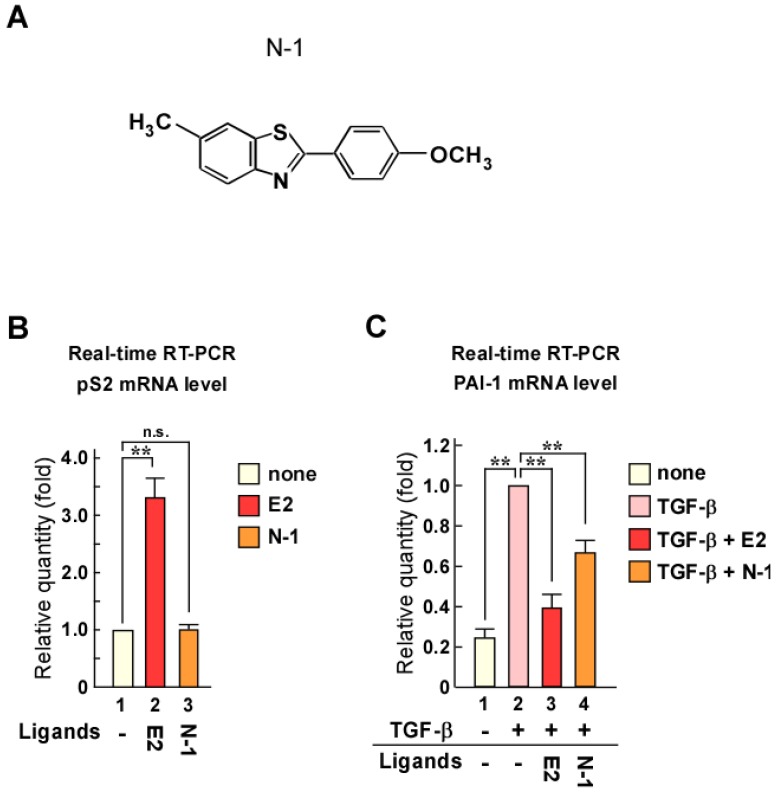
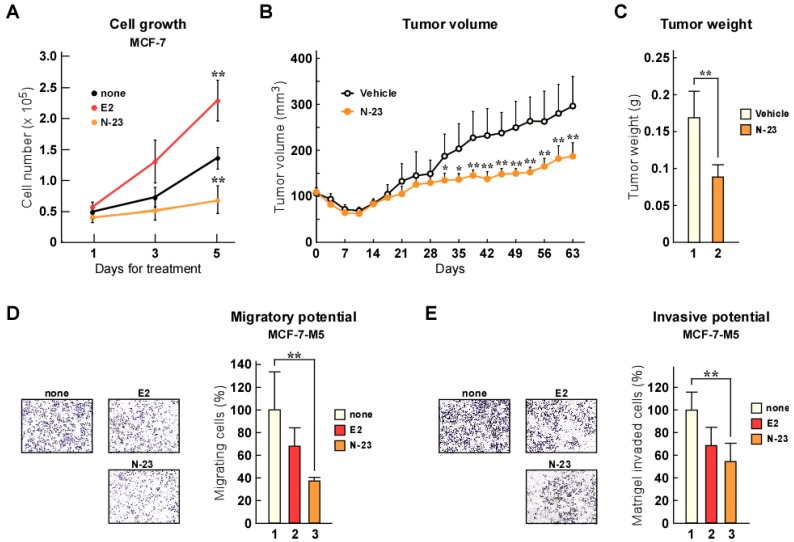
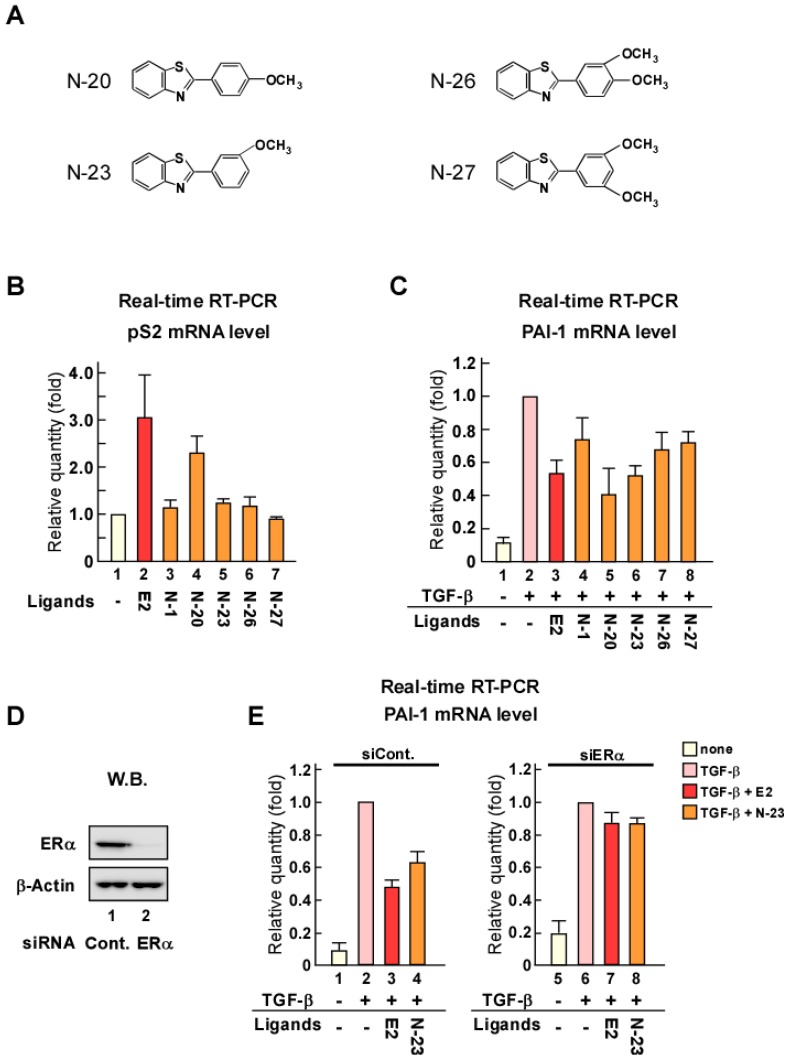
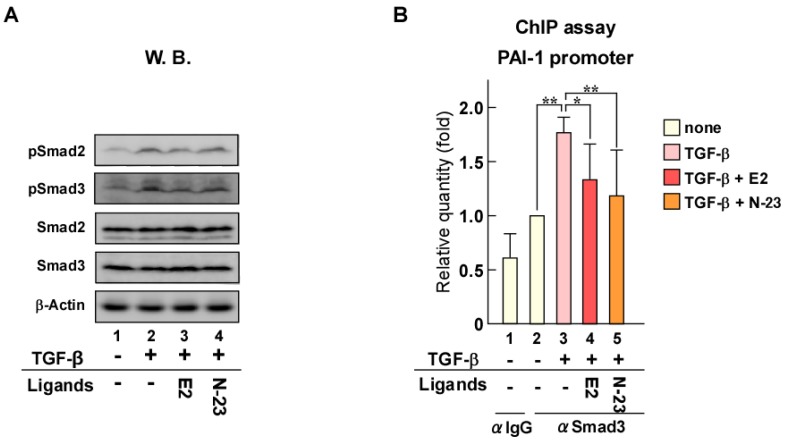
Breast cancer is the most frequently diagnosed cancer and the leading cause of death by cancer among females worldwide. An overwhelming majority of these deaths is because of metastasis. Estrogen stimulates and promotes growth of breast tumors, whereas transforming growth factor-beta (TGF-β) signaling promotes invasion and metastasis. We previously reported that estrogen and estrogen receptor alpha (ERα) suppressed breast cancer metastasis by inhibiting TGF-β signaling, whereas antiestrogens that suppress breast cancer growth, such as the selective ER modulator tamoxifen (TAM) or the pure antiestrogen fulvestrant (ICI 182,780), cannot suppress TGF-β signaling or breast cancer invasiveness. Therefore, we predicted that a compound that inhibits TGF-β signaling but does not facilitate ERα signaling would be ideal for suppressing breast cancer invasiveness and growth. In the present study, we identified an ideal candidate compound, N-23. Like estrogen, N-23 strongly decreased expression of TGF-β/Smad target gene plasminogen activator inhibitor-1 (PAI-1), but it did not increase the expression of ERα target gene pS2. While estrogen decreased the levels of phosphorylated Smad2 and Smad3, N-23 had no effect. In addition, TGF-β-dependent recruitment of Smad3 to the PAI-1 gene promoter was inhibited in the presence of estrogen or N-23. We also investigated the effects of N-23 on proliferation, migration, and invasion of breast cancer cells. In contrast to estrogen, N-23 inhibited the cellular proliferation of breast cancer cells. Moreover, we showed that N-23 suppressed the migration and invasion of breast cancer cells to the same extent as by estrogen. Taken together, our findings indicate that N-23 may be a candidate compound that is effective in inhibiting breast cancer progression.
乳腺癌是全球女性最常见的癌症,也是癌症死亡的主要原因。这些死亡病例中绝大多数是由于转移。雌激素刺激并促进乳腺癌肿瘤的生长,而转化生长因子-β(TGF-β)信号通路则促进侵袭和转移。我们之前曾报道过,雌激素和雌激素受体-α(ERα)通过抑制 TGF-β信号通路来抑制乳腺癌转移,而抑制乳腺癌生长的抗雌激素,如选择性雌激素受体调节剂他莫昔芬(TAM)或纯抗雌激素氟维司群(ICI 182,780),则不能抑制 TGF-β信号通路或乳腺癌的侵袭性。因此,我们预测,一种既能抑制 TGF-β信号通路又不促进 ERα信号通路的化合物将是抑制乳腺癌侵袭性和生长的理想选择。在本研究中,我们确定了一种理想的候选化合物 N-23。与雌激素一样,N-23 强烈降低了 TGF-β/Smad 靶基因纤溶酶原激活物抑制剂-1(PAI-1)的表达,但它并没有增加 ERα 靶基因 pS2 的表达。虽然雌激素降低了磷酸化 Smad2 和 Smad3 的水平,但 N-23 没有作用。此外,雌激素或 N-23 的存在抑制了 TGF-β 依赖性的 Smad3 募集到 PAI-1 基因启动子。我们还研究了 N-23 对乳腺癌细胞增殖、迁移和侵袭的影响。与雌激素不同,N-23 抑制了乳腺癌细胞的细胞增殖。此外,我们还表明,N-23 抑制乳腺癌细胞的迁移和侵袭的程度与雌激素相同。综上所述,我们的研究结果表明,N-23 可能是一种有效的抑制乳腺癌进展的候选化合物。