Villegas Victoria E, Rahman Mohammed Ferdous-Ur, Fernandez-Barrena Maite G, Diao Yumei, Liapi Eleni, Sonkoly Enikö, Ståhle Mona, Pivarcsi Andor, Annaratone Laura, Sapino Anna, Ramírez Clavijo Sandra, Bürglin Thomas R, Shimokawa Takashi, Ramachandran Saraswathi, Kapranov Philipp, Fernandez-Zapico Martin E, Zaphiropoulos Peter G
Department of Biosciences and Nutrition, Karolinska Institutet, Huddinge, Sweden; Faculty of Natural Sciences and Mathematics & Doctoral Program in Biomedical Sciences, Universidad del Rosario, Bogotá, Colombia.
Department of Biosciences and Nutrition, Karolinska Institutet, Huddinge, Sweden.
Mol Oncol. 2014 Jul;8(5):912-26. doi: 10.1016/j.molonc.2014.03.009. Epub 2014 Mar 22.
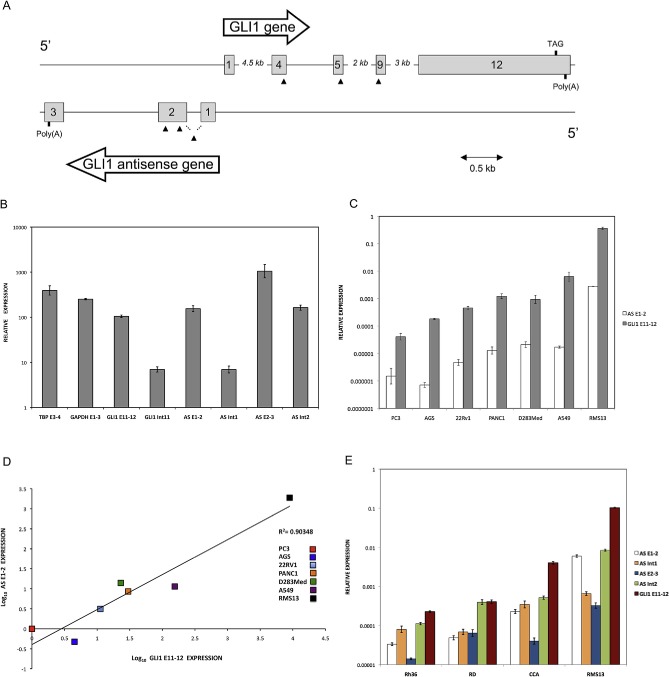
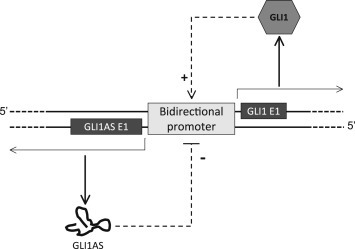
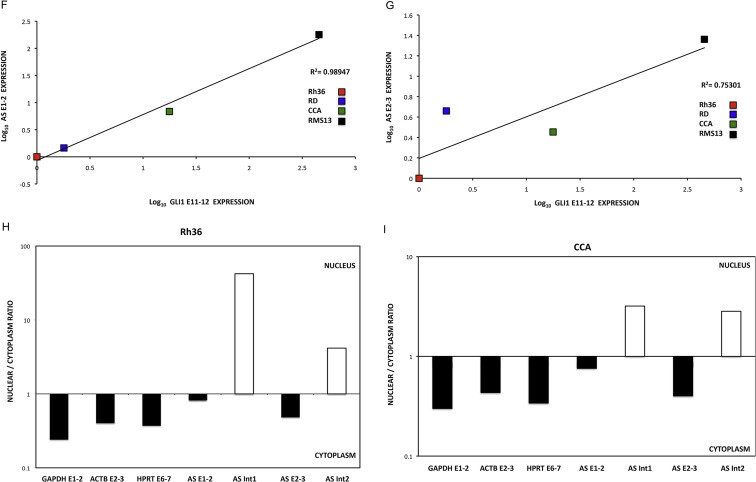
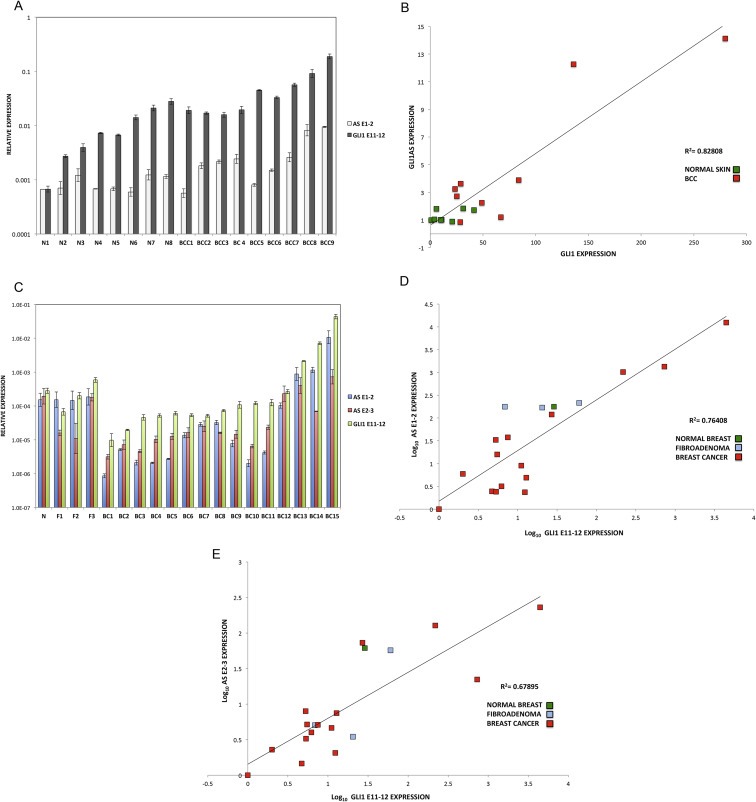
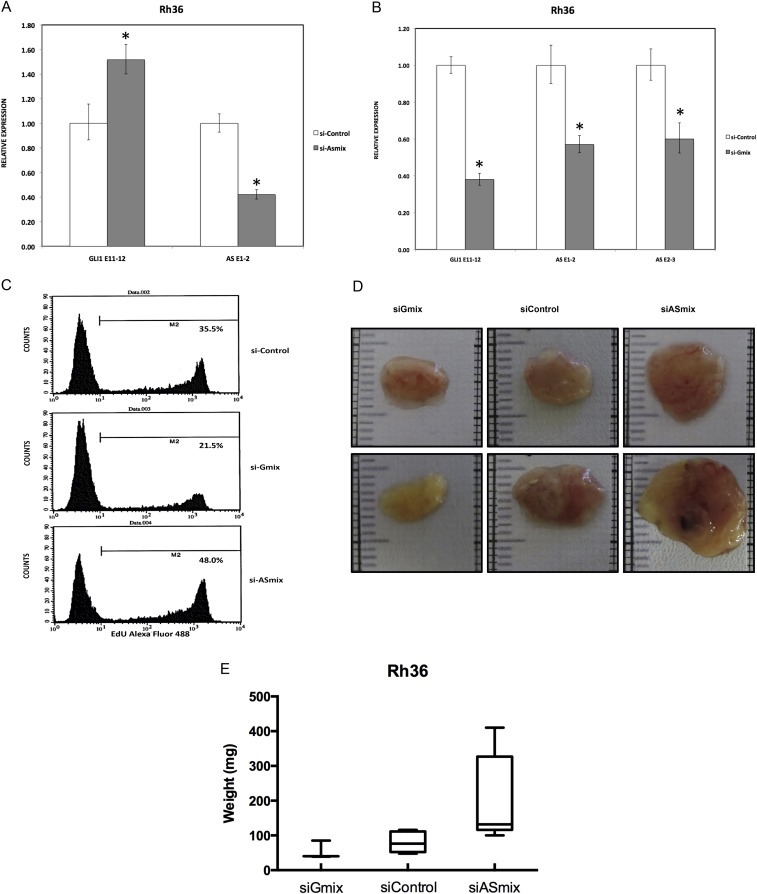
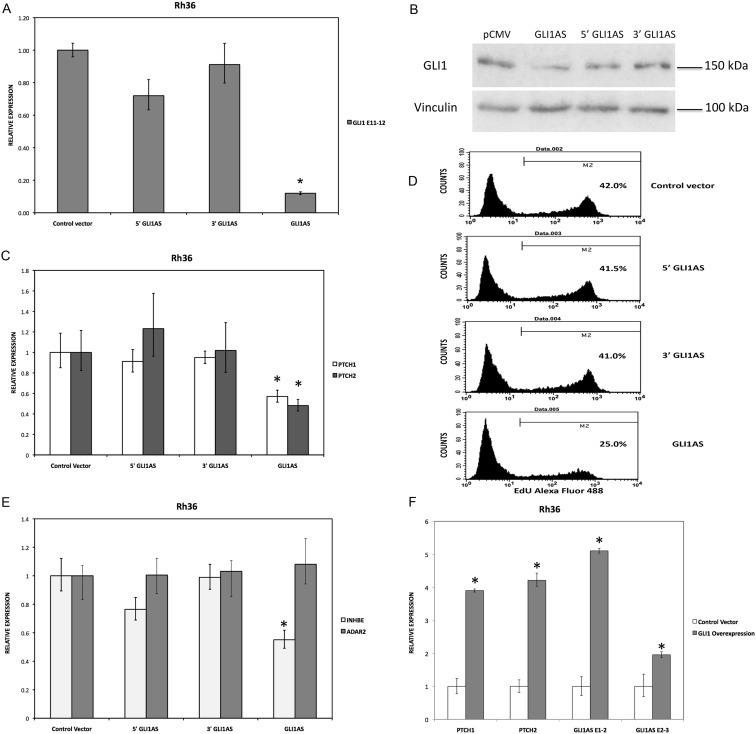
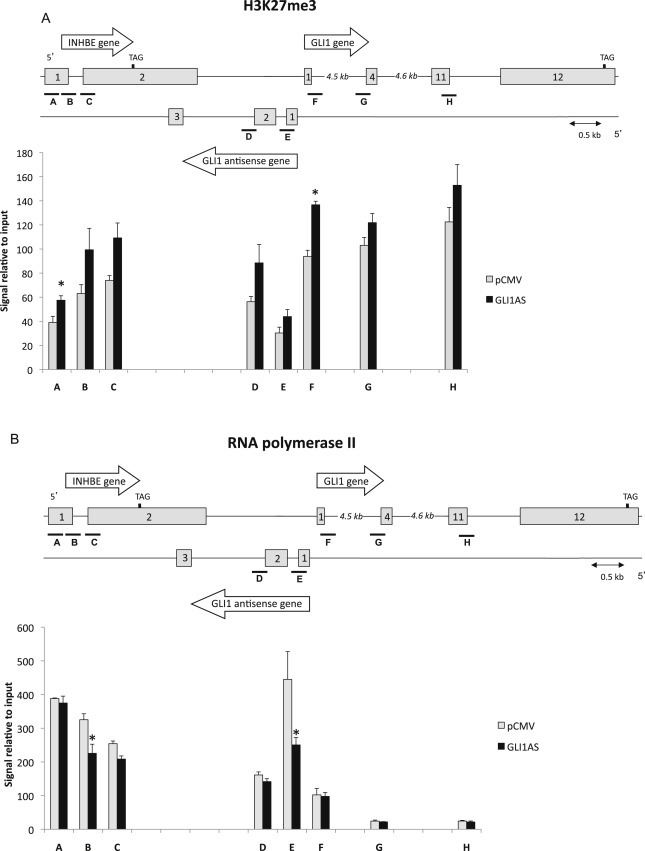
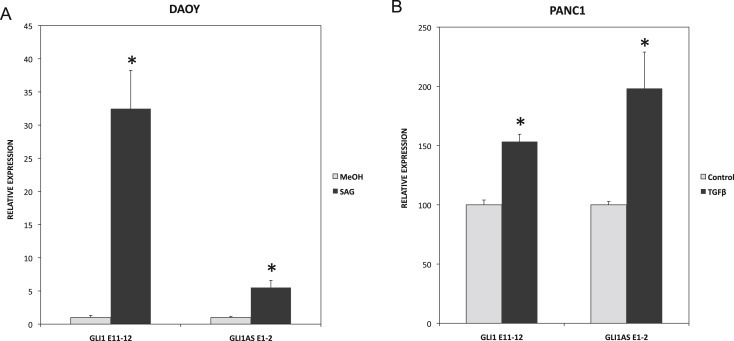
Non-coding RNAs are a complex class of nucleic acids, with growing evidence supporting regulatory roles in gene expression. Here we identify a non-coding RNA located head-to-head with the gene encoding the Glioma-associated oncogene 1 (GLI1), a transcriptional effector of multiple cancer-associated signaling pathways. The expression of this three-exon GLI1 antisense (GLI1AS) RNA in cancer cells was concordant with GLI1 levels. siRNAs knockdown of GLI1AS up-regulated GLI1 and increased cellular proliferation and tumor growth in a xenograft model system. Conversely, GLI1AS overexpression decreased the levels of GLI1, its target genes PTCH1 and PTCH2, and cellular proliferation. Additionally, we demonstrate that GLI1 knockdown reduced GLI1AS, while GLI1 overexpression increased GLI1AS, supporting the role of GLI1AS as a target gene of the GLI1 transcription factor. Activation of TGFβ and Hedgehog signaling, two known regulators of GLI1 expression, conferred a concordant up-regulation of GLI1 and GLI1AS in cancer cells. Finally, analysis of the mechanism underlying the interplay between GLI1 and GLI1AS indicates that the non-coding RNA elicits a local alteration of chromatin structure by increasing the silencing mark H3K27me3 and decreasing the recruitment of RNA polymerase II to this locus. Taken together, the data demonstrate the existence of a novel non-coding RNA-based negative feedback loop controlling GLI1 levels, thus expanding the repertoire of mechanisms regulating the expression of this oncogenic transcription factor.
非编码RNA是一类复杂的核酸,越来越多的证据支持其在基因表达中发挥调控作用。在此,我们鉴定出一种与编码胶质瘤相关癌基因1(GLI1)的基因头对头排列的非编码RNA,GLI1是多种癌症相关信号通路的转录效应因子。这种三外显子的GLI1反义(GLI1AS)RNA在癌细胞中的表达与GLI1水平一致。在异种移植模型系统中,用小干扰RNA敲低GLI1AS可上调GLI1并增加细胞增殖和肿瘤生长。相反,过表达GLI1AS可降低GLI1及其靶基因PTCH1和PTCH2的水平以及细胞增殖。此外,我们证明敲低GLI1可降低GLI1AS,而过表达GLI1则增加GLI1AS,这支持了GLI1AS作为GLI1转录因子靶基因的作用。转化生长因子β(TGFβ)和Hedgehog信号通路是已知的GLI1表达调节因子,它们的激活可使癌细胞中的GLI1和GLI1AS一致地上调。最后,对GLI1和GLI1AS之间相互作用的潜在机制分析表明,这种非编码RNA通过增加沉默标记H3K27me3并减少RNA聚合酶II在此位点的募集,引发染色质结构的局部改变。综上所述,这些数据证明存在一种基于新型非编码RNA的负反馈环来控制GLI1水平,从而扩展了调节这种致癌转录因子表达的机制。