Morton L M, Gibson T M, Clarke C A, Lynch C F, Anderson L A, Pfeiffer R, Landgren O, Weisenburger D D, Engels E A
Division of Cancer Epidemiology and Genetics, National Cancer Institute, National Institutes of Health, DHHS, Bethesda, MD, USA.
1] Cancer Prevention Institute of California, Fremont, CA, USA [2] Department of Health Research and Policy, Stanford Cancer Institute, Palo Alto, CA, USA.
Leukemia. 2014 Dec;28(12):2317-23. doi: 10.1038/leu.2014.132. Epub 2014 Apr 14.
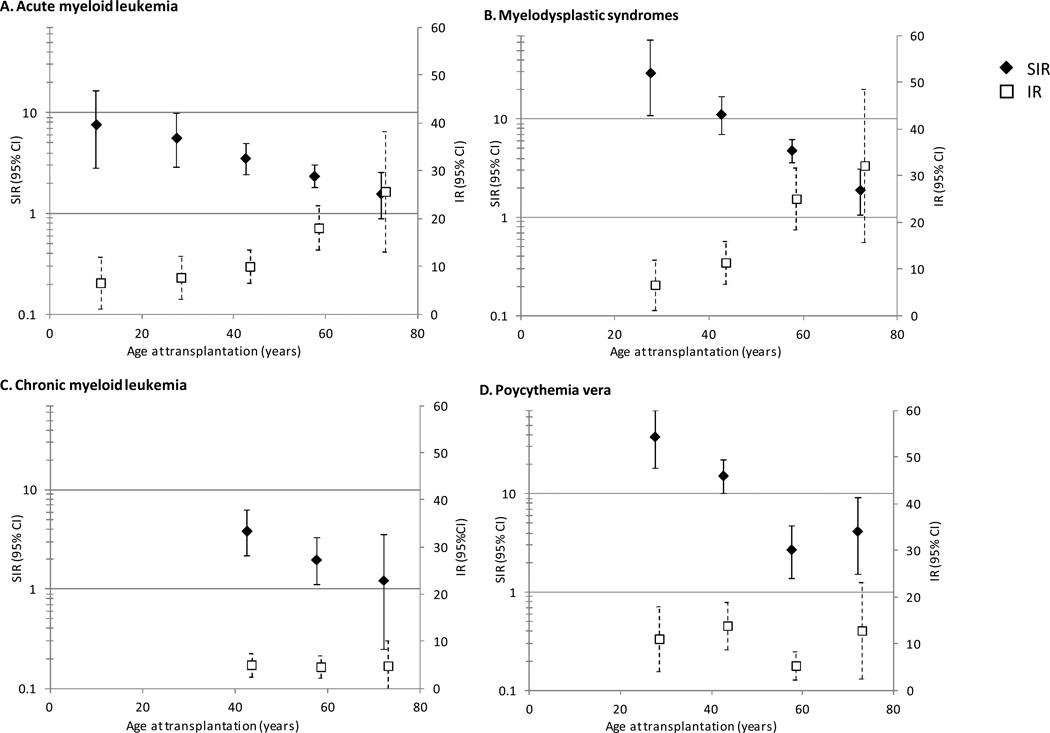
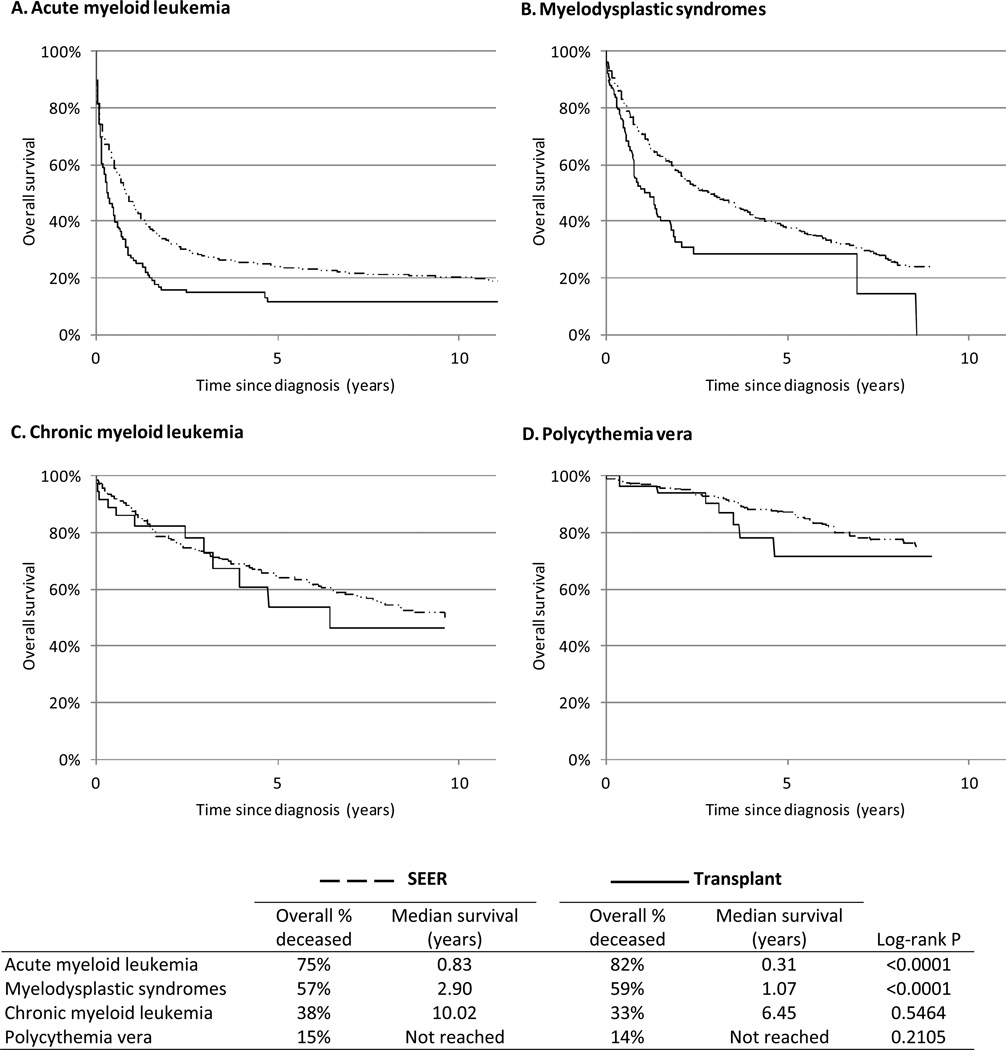
Solid organ transplant recipients have elevated cancer risks, owing in part to pharmacologic immunosuppression. However, little is known about risks for hematologic malignancies of myeloid origin. We linked the US Scientific Registry of Transplant Recipients with 15 population-based cancer registries to ascertain cancer occurrence among 207 859 solid organ transplants (1987-2009). Solid organ transplant recipients had a significantly elevated risk for myeloid neoplasms, with standardized incidence ratios (SIRs) of 4.6 (95% confidence interval 3.8-5.6; N=101) for myelodysplastic syndromes (MDS), 2.7 (2.2-3.2; N=125) for acute myeloid leukemia (AML), 2.3 (1.6-3.2; N=36) for chronic myeloid leukemia and 7.2 (5.4-9.3; N=57) for polycythemia vera. SIRs were highest among younger individuals and varied by time since transplantation and organ type (Poisson regression P<0.05 for all comparisons). Azathioprine for initial maintenance immunosuppression increased risk for MDS (P=0.0002) and AML (2-5 years after transplantation, P=0.0163). Overall survival following AML/MDS among transplant recipients was inferior to that of similar patients reported to US cancer registries (log-rank P<0.0001). Our novel finding of increased risks for specific myeloid neoplasms after solid organ transplantation supports a role for immune dysfunction in myeloid neoplasm etiology. The increased risks and inferior survival should heighten clinician awareness of myeloid neoplasms during follow-up of transplant recipients.
实体器官移植受者患癌风险升高,部分原因是药物免疫抑制。然而,对于髓系起源的血液系统恶性肿瘤风险知之甚少。我们将美国移植受者科学登记处与15个基于人群的癌症登记处相链接,以确定207859例实体器官移植受者(1987 - 2009年)中的癌症发生情况。实体器官移植受者患髓系肿瘤的风险显著升高,骨髓增生异常综合征(MDS)的标准化发病比(SIR)为4.6(95%置信区间3.8 - 5.6;N = 101),急性髓系白血病(AML)为2.7(2.2 - 3.2;N = 125),慢性髓系白血病为2.3(1.6 - 3.2;N = 36),真性红细胞增多症为7.2(5.4 - 9.3;N = 57)。SIR在较年轻个体中最高,并且因移植后的时间和器官类型而异(所有比较的泊松回归P<0.05)。用于初始维持免疫抑制的硫唑嘌呤增加了MDS(P = 0.0002)和AML(移植后2 - 5年,P = 0.0163)的风险。移植受者中AML/MDS后的总生存期低于向美国癌症登记处报告的类似患者(对数秩检验P<0.0001)。我们关于实体器官移植后特定髓系肿瘤风险增加的新发现支持免疫功能障碍在髓系肿瘤病因学中的作用。风险增加和生存期较差应提高临床医生在移植受者随访期间对髓系肿瘤的认识。